


Your Headshot day should feel relaxed, joyful, and completely yours.
I’m Alex Kaplan, a Headshot Photographer and videographer based in New Milford, NJ, serving Northern.
Browse by Category:
headshots
view more

REQUEST INFORMATION
Want to feel like THIS on your Headshot day?
Availability is limited. Check Your Date Here
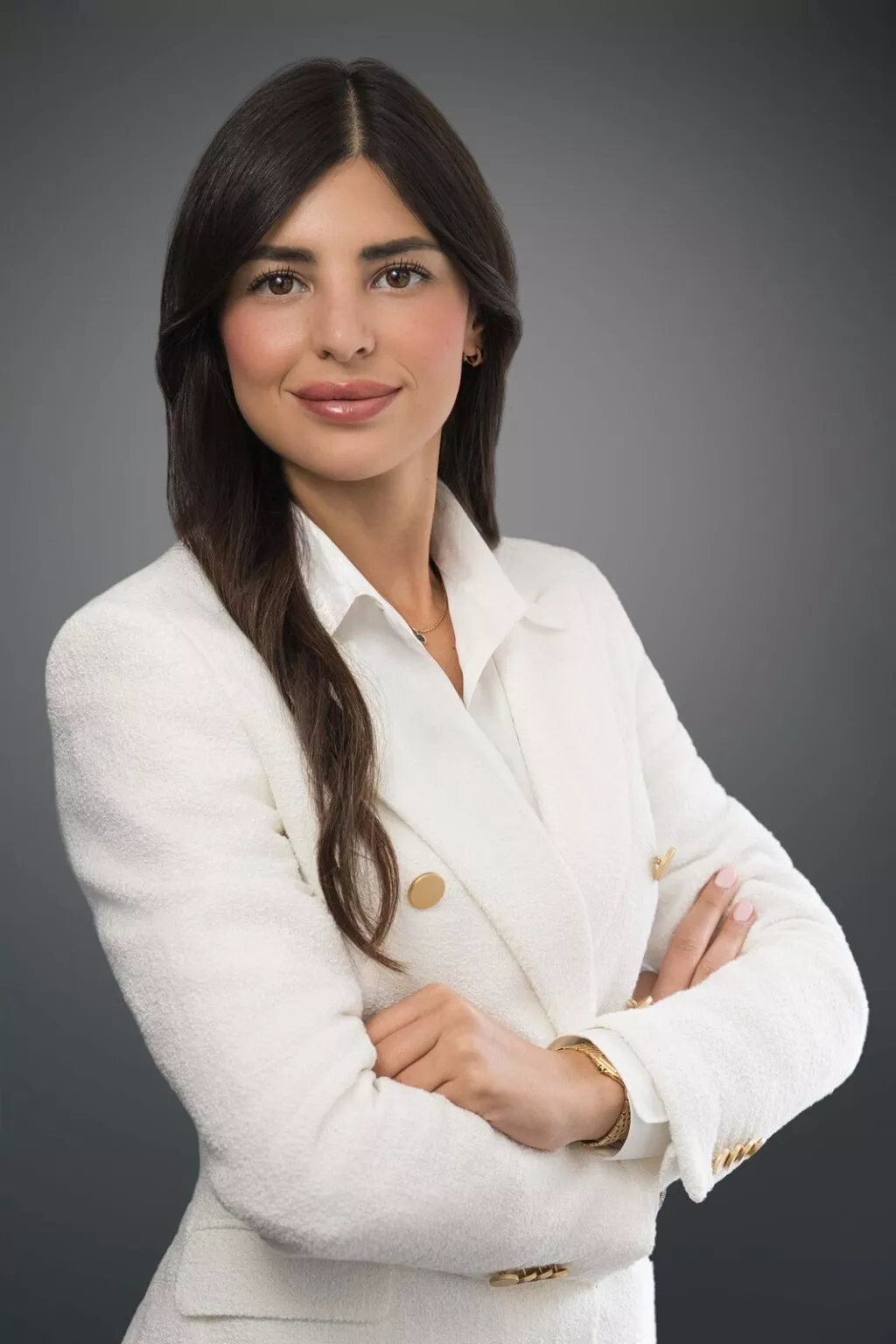

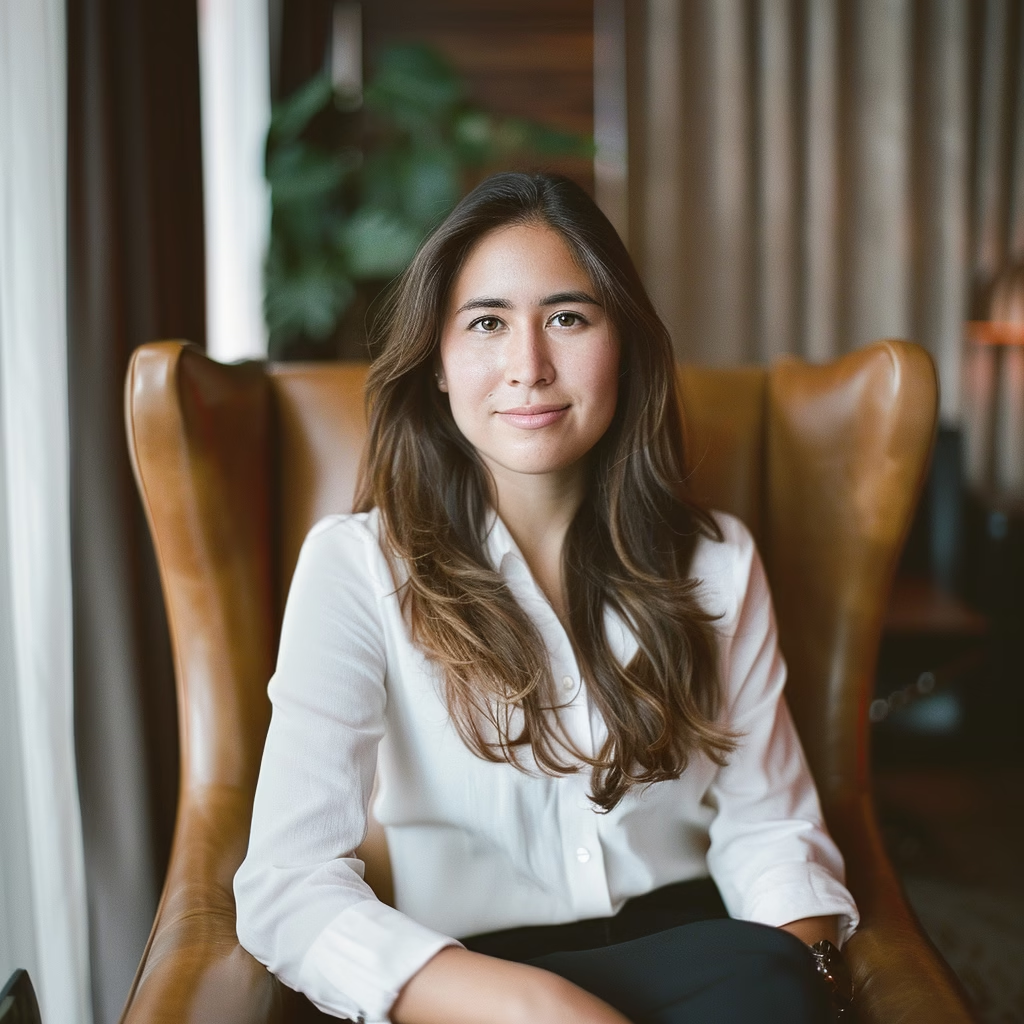
Most actors do not need a suitcase full of clothes. They need enough variety to show a few believable sides of the same person. For most sessions that means two to four purposeful actor headshot outfits, often built from just a few tops and layers. Past that point, wardrobe starts taking time away from expression, posture, and getting comfortable in front of the camera.
After more than thirty years behind a camera, I would rather work with three strong choices than fifteen maybes. A smaller wardrobe gives us more time for what the photograph is actually about: your face and your presence.
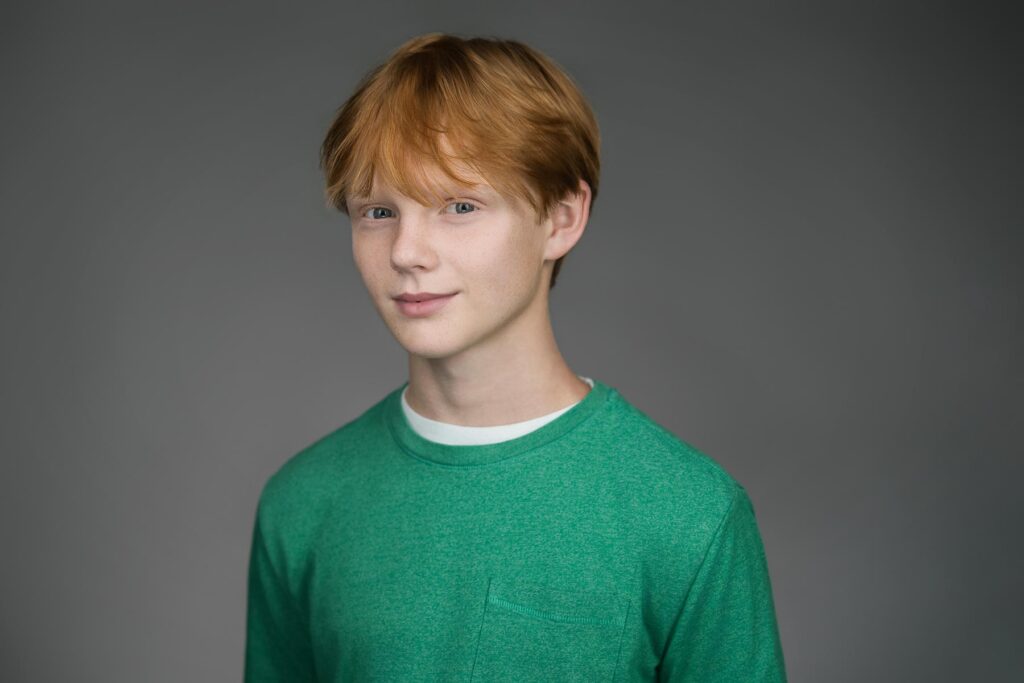
How Many Actor Headshot Outfits Should You Bring?
Most actors should bring enough clothing for two to four distinct looks. That does not necessarily mean two to four full outfit changes. Two or three tops plus one or two simple layers can create enough variety for most sessions without turning the shoot into a wardrobe rotation.
If you are still deciding on fabrics, necklines, patterns, or individual pieces, start with my guide on what to wear for actor headshots. This article is about the next decision: how many looks deserve time during the session.
Why Variety Matters More Than Volume
Backstage recommends having at least two distinct headshot looks, commonly a more serious theatrical image and a warmer commercial image. That is not a rule about owning more clothes. Your final images should give casting more than one useful way to read you.
A strong set might include an approachable commercial option, a grounded theatrical option, and a more polished professional direction. My professional actor headshots sessions are planned around that kind of range.
Build Each Look Around a Real Casting Goal
Before choosing clothes, name the types of roles you are actually pursuing. A wardrobe choice becomes useful when you can explain what it is meant to communicate.
A relaxed top supports an approachable read. A structured layer shifts the image toward authority. A quieter look lets the expression carry more dramatic weight. You can see how this plays out on my actor headshots in NYC and New Jersey page. Actor headshot outfits should produce meaningfully different photographs while still looking like the same person.
A Real Three-Look Actor Session
One published example from my New Milford studio is my session with actor Maximo Masefield: three distinct looks in about an hour, a casual hoodie, a zip-up layer, and a polished blazer. The wardrobe changed. He still looked like himself in every frame. You can see the full Maximo Masefield actor headshot session.
Do Not Bring Your Entire Closet
Overpacking creates a problem that has nothing to do with photography. It creates decisions, and that is attention you could be spending on settling in front of the camera.
Bring your strongest options pressed and on hangers. If you are unsure between two similar pieces, send me photographs beforehand. My About page explains more about how I work.
Casual and Professional Looks Can Share the Same Base
Not every new look requires a complete outfit change. Sometimes removing a layer, opening a collar, or adding a tie gives the finished photograph enough of a shift.
That matters because range comes from more than clothing. Expression, posture, camera distance, and lighting all influence how a headshot reads. A different shirt cannot rescue an image that still feels like the same performance.
One actor arrived for a corporate look in a structured blazer and a crisp shirt. The wardrobe was right. His posture was not. Without touching the lighting, the background, or the clothing, I gave him one direction: take a breath, drop your shoulders on the exhale, and look at the lens like it owes you money. The shift was immediate. His jaw loosened, the tension left his neck, and his eyes settled into something that actually looked like authority. Same outfit. Different photograph.
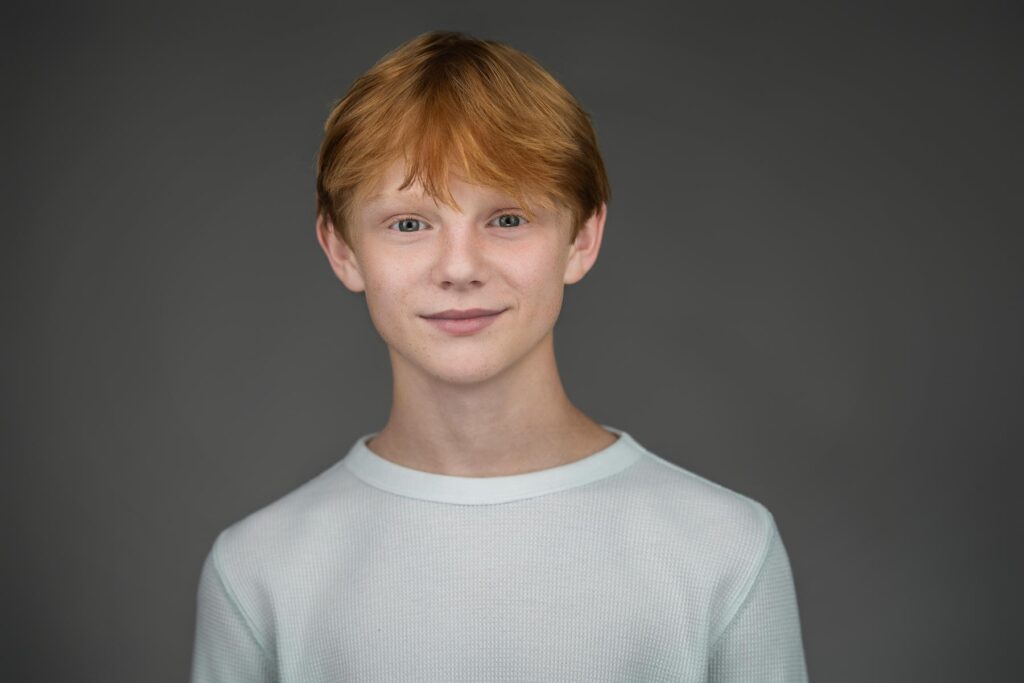
How Do Wardrobe Changes Work During the Session?
Keep changes simple and arrive with your options already organized. A full clothing change takes longer than adding or removing a layer, because we also recheck hair, collars, lint, and how the new neckline sits in frame. Fewer, better-planned changes keep the session moving.
I usually prefer to begin with the look that feels most natural to you. Once you stop thinking about the camera, we can move into the more formal or specific actor headshot outfits you planned.
What Should Young Actors Bring?
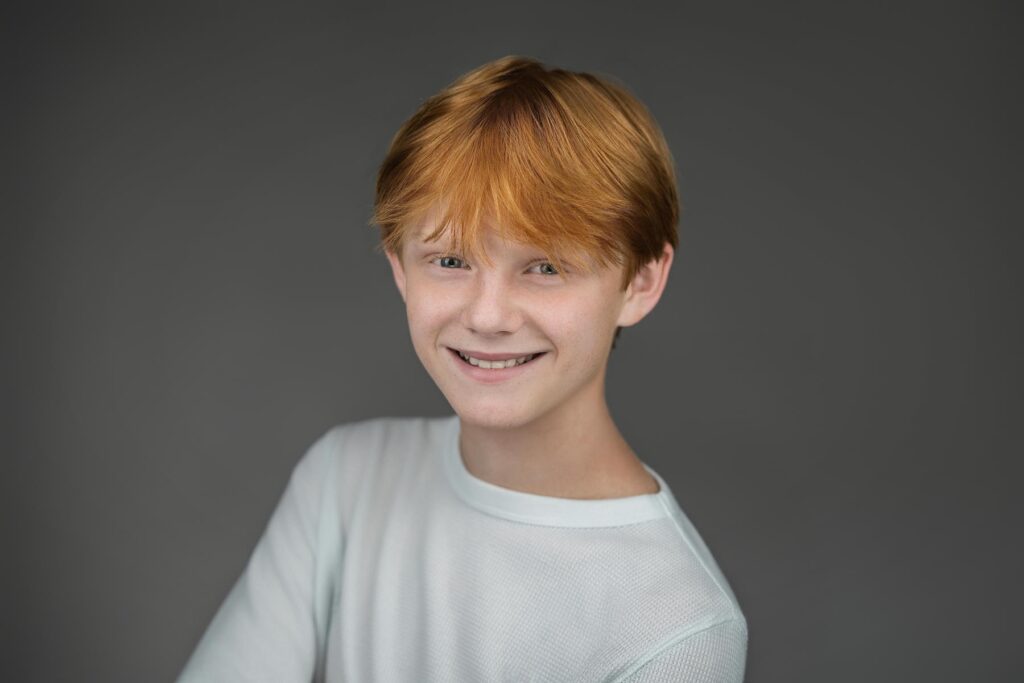
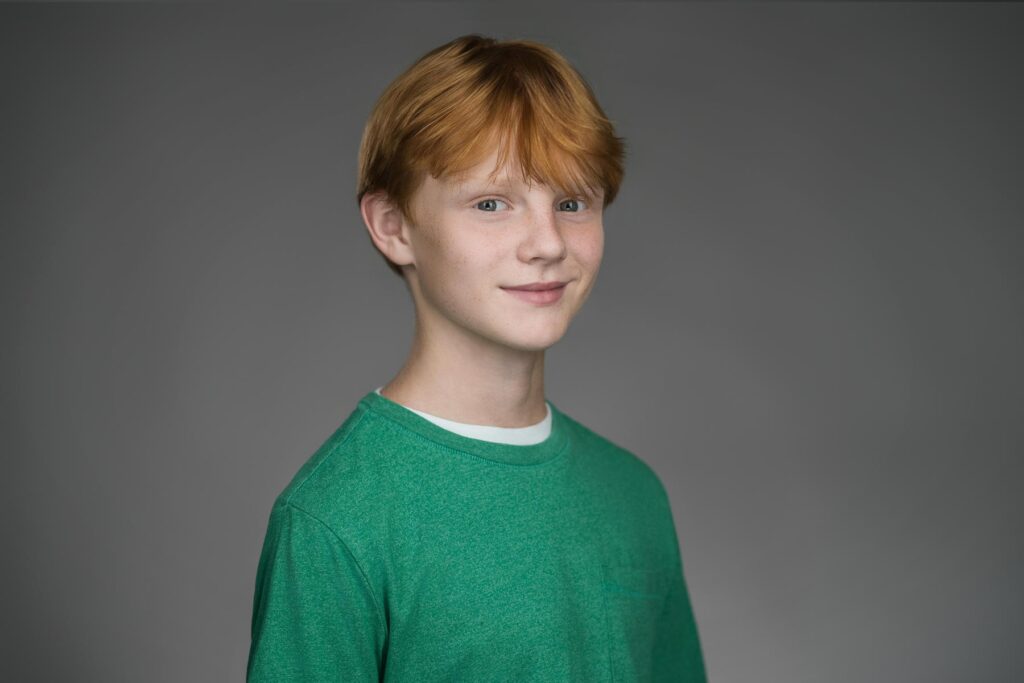
Young actors follow the same principle, but I keep the session age-appropriate and flexible. The right number depends on the child’s age, attention span, and what the agency or casting submission actually asks for.
I would rather get two strong looks from a relaxed child than force extra changes after the energy is gone. For colors, fabrics, fit, and age-specific clothing choices, see my guide to what to wear for child actor headshots.
What Should a Beginner Bring?
For a first session, three useful looks are usually enough: approachable, grounded, and polished. You do not need a niche wardrobe for a type you have never submitted for. If you are still defining those types, my guide to building an acting career in New Jersey is a good place to start. Bring clothing you can imagine wearing in the world of the roles you want.
Actor Headshot Outfit Questions
Do all of my looks need to be completely different outfits?
No. A useful change can be as simple as removing a layer, opening a collar, or adding a jacket over the same base. What matters is whether the finished images give casting meaningfully different photographs. If they do, the clothing has done its job without requiring a complete wardrobe change.
How many outfit changes should I plan for a two-hour session?
Do not plan around the clock alone. Plan two to four useful looks, then decide how many actual changes those looks require. Layer changes are faster than complete changes, while hair, grooming, background, or styling adjustments can take additional time. The goal is range without turning the session into a changing-room schedule.
Should I bring extra clothing even if I already chose my looks?
Bring one backup only when it solves a real problem, such as fit, wrinkles, or uncertainty about how a neckline will photograph. A small backup is useful. A second suitcase usually is not. The more clearly you choose before the session, the easier it is to focus once the camera is up.
Getting the Most From Your Actor Headshot Session
If you are an actor coming to my New Milford studio from elsewhere in Northern New Jersey or from New York City, bring two to four purposeful looks and know what each one is meant to communicate. That is enough range for most sessions.
If you want help narrowing your actor headshot outfits before you arrive, contact Alex Kaplan Photography and tell me what kinds of roles you are currently submitting for.
Reply...


