


Your Headshot day should feel relaxed, joyful, and completely yours.
I’m Alex Kaplan, a Headshot Photographer and videographer based in New Milford, NJ, serving Northern.
Browse by Category:
headshots
view more

REQUEST INFORMATION
Want to feel like THIS on your Headshot day?
Availability is limited. Check Your Date Here


Casting professionals decide fast. Before anyone reads a resume or clicks a reel, your photograph has already answered the only question that matters in that first moment: what kind of person is this, and what could I put them in?
That is the actual job of casting range headshots. Not to prove you can transform into anybody, but to show a few believable versions of who you already are.
One frame can only carry so much. A single image pins you to a single impression, and when that impression is narrow, so is the list of roles anyone thinks to consider you for.
That is why headshots for casting directors work best as a small, deliberate set rather than one hero shot.
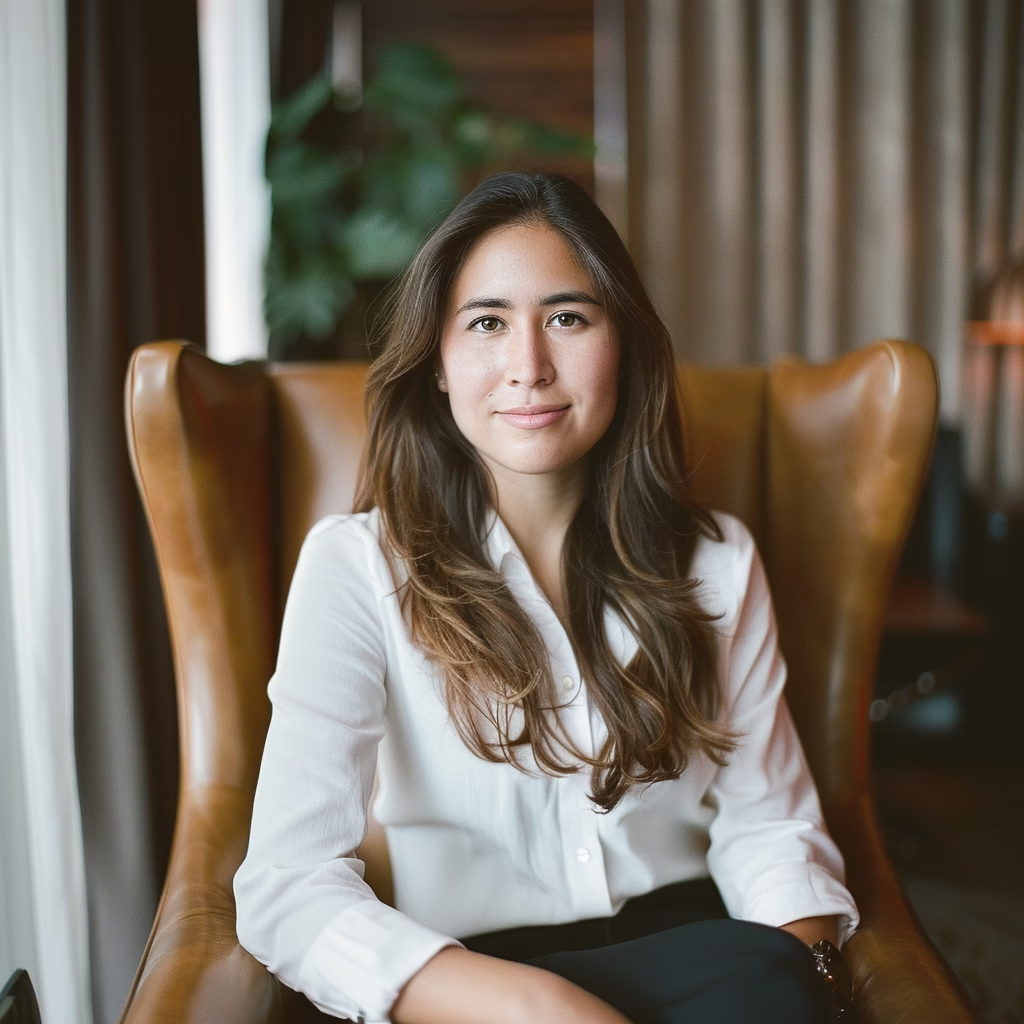
Lakes Webb’s recent studio session illustrates this cleanly. Same person, same afternoon, same lighting. Three noticeably different reads.


Lakes
Verified Google review
Google
5.0 out of 5
Easily one of the best and what a fast professional service he provides. Thank you Alex! I will be back for sure.
Actor Headshots
Headshots and portraits
What Does “Casting Range” Mean for an Actor?
Casting range is the set of roles a casting director could believably picture you playing right now. It covers your apparent age range, your natural energy, and whether you read as warm or serious, polished or casual, lighter or more dramatic. It describes credible possibilities, not costume changes.
Most actors underestimate how much of this is decided before they speak. Age range is rarely about your birthday. It is about how you photograph and what a viewer assumes.
Personality and energy do similar work. Some people read as steady and grounded, others as quick and bright.
Neither is better. They simply open different doors, which is the whole argument for acting headshots for different roles rather than one universal portrait.
Then there is the professional-versus-casual axis, the simplest to influence and the most frequently ignored. The same face in a collared shirt and in a soft tee suggests two different worlds.
Actor casting types are useful shorthand, but a starting point, not a cage. If you are still mapping out the early steps of this career, my guide to becoming an actor in New Jersey covers where headshots fit into the wider process.
Your Headshots Should Look Like You, Not Different People
This is where the idea of range most often goes wrong. Range gets mistaken for transformation, and the wardrobe starts reaching toward wigs, heavy character styling, and personalities well outside anything the actor has actually been cast as.
The logic does not hold. A casting director who calls you in based on a photograph expects that person to walk through the door.
When someone noticeably different arrives, you have not demonstrated range. You have demonstrated that your materials cannot be trusted.
The same logic governs retouching. Smoothing a face into something poreless does not make you more castable, it makes you harder to match against the human being in the audition room.
If you want the longer version of that argument, I broke down the retouching choices that read as fake in a separate post.
Different looks should reveal different dimensions of the same actor. That is the whole standard, and it is stricter than it sounds.
How Different Headshot Looks Can Communicate Casting Range
The changes that actually shift a portrait are smaller than most people expect. You do not need a new identity, you need a different setting on the one you have.
Strong actor headshot looks are built from four adjustable inputs: expression, wardrobe, styling, and framing. Casting range headshots come from moving those dials, not from becoming someone else.
You can see actor headshot examples across recent sessions on my actor headshots page.
Look at the three frames below. Nothing dramatic changed between them. The impression changed completely.
Expression
Expression is the fastest lever in the room. A level gaze with a closed mouth reads as composed and self-possessed. Release the jaw slightly and the same face reads as open.
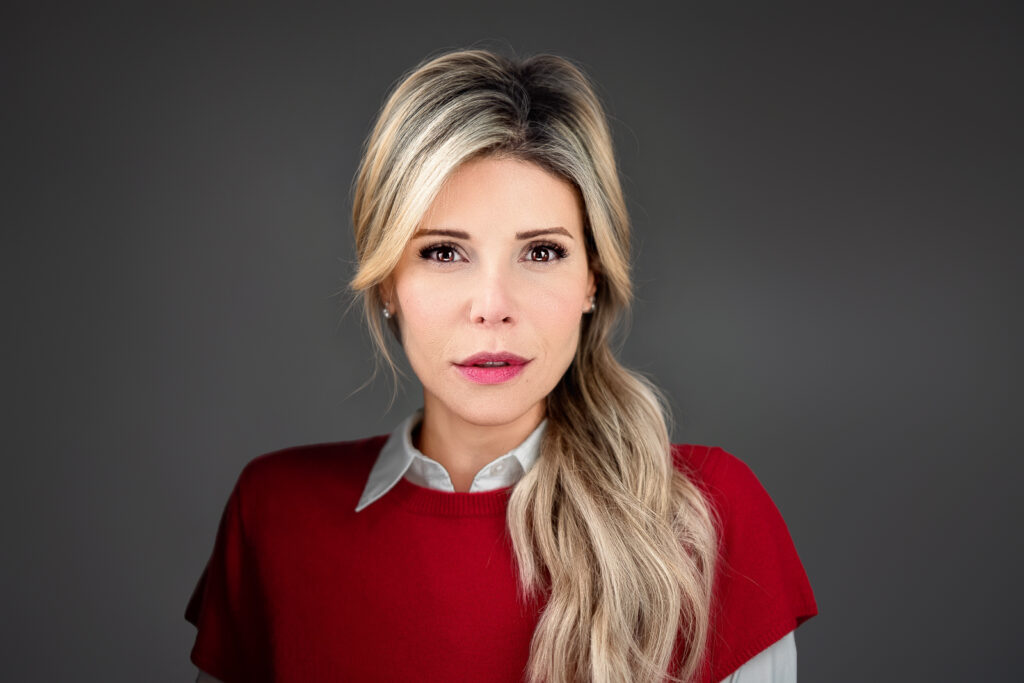
The frame above is doing quiet, serious work. It suits a breakdown asking for authority, someone who runs a room rather than reacts to it.
Intensity is not something you push into your face. It comes from stillness, and actors who try to manufacture it photograph as tense rather than deep.
Wardrobe
Wardrobe suggests a direction. It should never become a costume.
Compare that denim shirt to the structured red and white collar in the previous frame. Same face, same backdrop, entirely different casting conversation.
The denim reads accessible. Neighbor, colleague, the person in the commercial who seems to actually like the product. The collared layer reads composed and professional.
Neither outfit performs a character. Both give the viewer permission to imagine one, which is the line versatile actor headshots must walk.
Hair and Styling
Styling changes should be modest enough that you could recreate them on an ordinary Tuesday. Hair swept back opens the eyes and sharpens the read. Worn loose and forward, it softens everything.
That is enough of a shift. If your styling requires a professional you cannot afford to book again, it is not an honest representation of you.
Framing, Pose, and Body Language
Crop and posture carry more weight than most actors realize. A square shoulder line and straight-on crop feel confident. Angle the shoulders away and the same expression turns considered, even guarded.
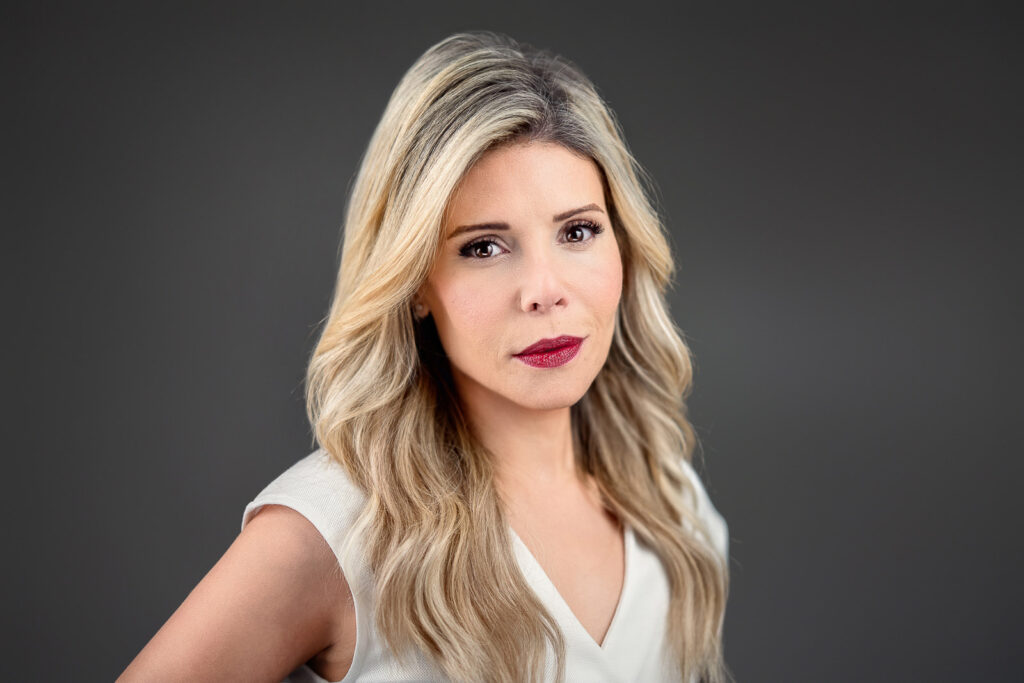
The turned shoulder in that frame introduces distance the other two do not have. It reads more sophisticated and slightly more withheld, which suits dramatic material and character-driven casting.
None of this required a different person. It required attention to what each small adjustment was communicating.
How Many Different Looks Do Actors Actually Need?
Fewer than you think. Most actors are well served by two or three looks, provided each one is aimed at a distinct kind of role. Two purposeful images will always outperform six that blur into one another and leave a casting director guessing.
The test is simple. If you cannot name the specific kind of role a look is aimed at, that look is taking up space without earning it.
Casting headshots are working documents, not a gallery of your favorite photographs. Decide what each one is for before deciding how many.
Commercial and Theatrical Looks Aren’t the Same as Your Entire Casting Range
Commercial and theatrical are useful categories, and most agents expect both. They are not a complete map of what you can be cast as.
Two actors can both hold a strong commercial image and still be castable in completely different directions.
One reads as the harried parent. One reads as the confident young executive. The label alone does not capture that.
Treat the categories as submission buckets, not as the boundaries of your range. If you want the full breakdown of how the two differ, I covered commercial versus theatrical headshots in detail.
Choosing Headshots That Work Together as a Portfolio
Selection is where a good session gets quietly wasted. Actors gravitate toward the images they personally like best, and those are frequently near-duplicates.
Ask a different question. Not “which is my favorite,” but “what does each one add that the others do not.”
A useful set might move from approachable to confident to something with more edge, or from warm to sophisticated to vulnerable. The right spread depends on your actual castability, not a formula.
Two images that communicate the same thing are one image and a spare. If you are assembling your materials for the first time, my post on building your first acting portfolio walks through what belongs in the toolkit.
Work With a Photographer Who Understands Actor Headshots
Actor headshot photography is not the same skill as making someone look nice. Plenty of technically clean portraits are useless for submissions because nobody was thinking about casting.
I have been photographing people for more than 30 years, and I have shot well over fifteen thousand headshots. What that time buys an actor is not better gear. It is someone who can look at a frame and tell you what a casting director will assume about you from it.
That judgment shapes the lighting, the direction, the wardrobe order, and which frames I tell you to keep. Actors come to me from Hoboken, Newark, across Northern New Jersey, and over the river from Manhattan, and the conversation is always the same: what are you going out for, and do these images support it?
The full session approach is laid out on my professional actor headshots in New Jersey page. Actors booking casting range headshots in NJ and NYC usually start there.
Your Best Range Still Has to Be Believable
The strongest portfolio does not prove how many people you can pretend to be. It shows a casting professional several credible possibilities while keeping you recognizable in every single frame.
That is the entire discipline behind good casting range headshots. Believable variation, never disguise.
If you are an actor in Northern New Jersey or NYC and your current images are only telling one story about you, let’s talk about a session. Bring the roles you are chasing, and we will build a set that actually argues for them.
Reply...


