


Your Headshot day should feel relaxed, joyful, and completely yours.
I’m Alex Kaplan, a Headshot Photographer and videographer based in New Milford, NJ, serving Northern.
Browse by Category:
headshots
view more

REQUEST INFORMATION
Want to feel like THIS on your Headshot day?
Availability is limited. Check Your Date Here


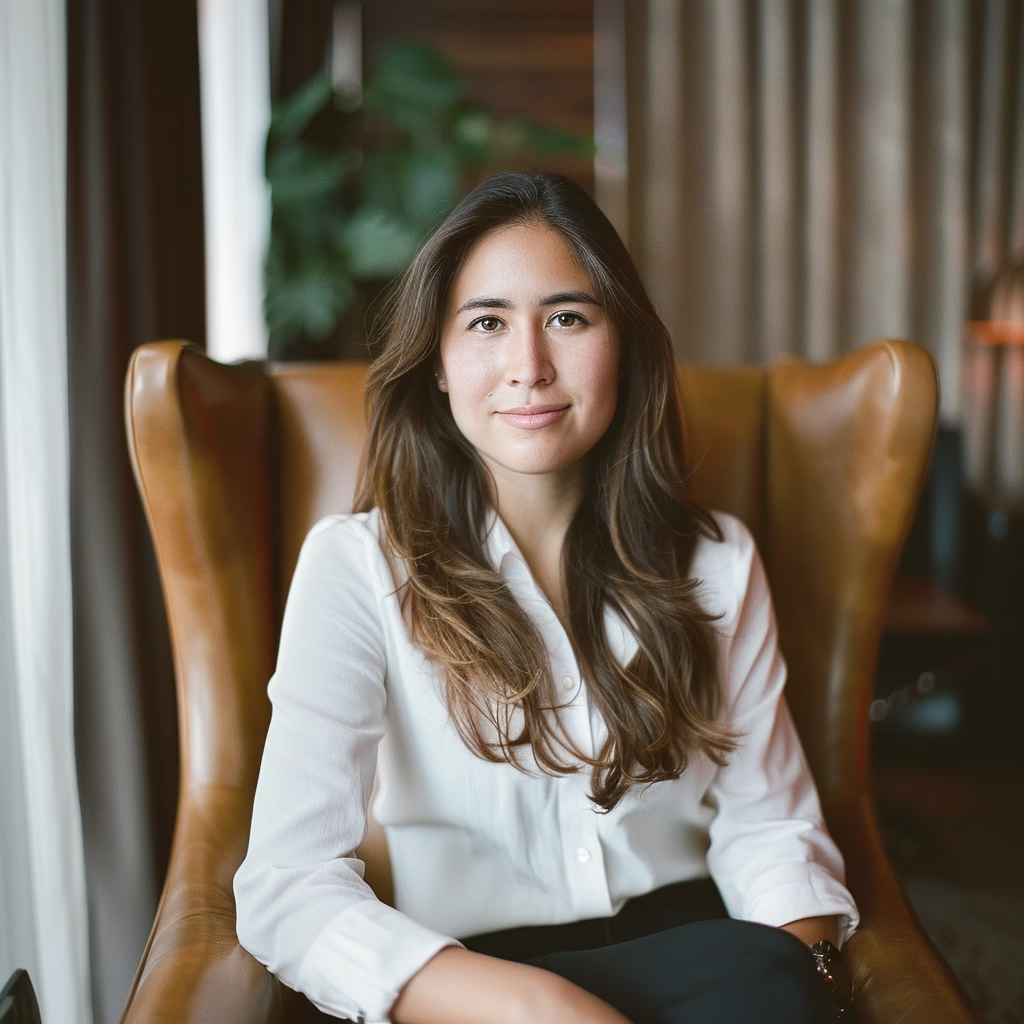
Most people booking a headshot have the same fear: they don’t want to look fake. What if I come out looking like a wax version of myself, skin like plastic, features digitally rearranged until I’m technically flawless but somehow unrecognizable?
It’s a real fear. And honestly? The industry caused this. Years of over-Photoshopped magazine covers and aggressive retouching have conditioned clients to distrust the editing process entirely.
Here’s the truth: headshot retouching done right is invisible. When it works, nobody thinks “great editing.” They just think, “that’s a great photo.” The goal of professional headshot retouching is not transformation—it’s refinement. And there’s a very clear line between the two.

What Is Headshot Retouching—and What Should It Actually Do?
Headshot retouching refers to the post-processing work done to a portrait after the shoot: adjusting skin tone, removing temporary blemishes, managing stray hairs, correcting exposure inconsistencies, and refining overall color. Done correctly, it’s the final layer of polish that closes the gap between a good photograph and a great one.
What it should not do is change who you are. Your face—its lines, its character, its humanity—is what makes people trust you. LinkedIn profiles with natural, authentic headshots generate significantly more profile views and connection requests than those with heavily filtered or stylized images. Credibility is built on recognition, and recognition requires that your headshot actually look like you.
The best professional headshot retouching covers three things: subtle skin cleanup, removing genuinely temporary distractions (a cold sore, a scratch, yesterday’s breakout), and keeping your texture, tone, and identity completely intact. Everything else is noise—or worse, damage. I work with corporate headshot clients across Northern NJ and NYC, and this is the standard I hold every edit to.
The Biggest Problem: Over-Retouching
Over-retouching doesn’t just look bad aesthetically. It actively undermines you professionally. When a potential client, employer, or connection meets you in person and you don’t look like your headshot, there’s an immediate—if unconscious—erosion of trust. The thought isn’t articulated, but it’s felt: This person isn’t quite what I expected.
I can usually tell within a few seconds whether a headshot was over-retouched. Most clients coming in for headshots in NJ have been burned by this before—or they’ve seen it happen to a colleague and they come in specifically worried about it. It’s especially common when retouching is outsourced to generalist editors who don’t specialize in portraits, or when photographers use aggressive presets designed for fashion work rather than business photography. The result is a face that’s technically “clean” but feels doctored—too smooth, too bright, too uniform. Real skin has pores. Real faces have subtle asymmetries. Real people have character.
Heavy-handed headshot retouching also ages poorly. A headshot that looks over-edited today will look worse in two years. Natural retouching holds up. Plastic doesn’t.

5 Headshot Retouching Mistakes That Make You Look Fake
These are the five most common ways retouching ruins an otherwise excellent headshot. I can usually spot which one happened within the first few frames.
1. Over-Smoothing Skin The single most common offense. Aggressive skin softening removes every pore, line, and texture until the face looks like it was modeled in clay. Skin should look clean—not synthetic. If your forehead has no texture at all, the retouching has gone too far.
2. Removing Natural Lines and Texture Fine lines around the eyes, laugh lines, subtle skin texture—these aren’t flaws, they’re features. They communicate experience, warmth, and approachability. Erasing them doesn’t make you look younger; it makes you look artificial. The face on the screen no longer matches the person on the Zoom call.
3. Over-Brightening or Whitening Teeth A smile should look like a smile, not a dental ad. Extreme whitening creates an uncanny valley effect—the teeth become the first thing you notice in the photo, which is never the goal. A subtle, natural lift is appropriate; anything that reads as a before-and-after whitening strip ad is too much.
4. Altering Skin Tone Unnaturally Shifting warmth too aggressively, over-correcting redness into a flat neutral tone, or applying a “glow” that doesn’t match the subject’s real complexion all produce the same result: a photo that doesn’t look like the person. Skin tone adjustments should be corrective, not cosmetic.
5. Over-Sharpening or Cranking Contrast Heavy sharpening on fine facial details—particularly around the eyes, pores, or hair—creates an HDR-style hyper-real look that belongs in landscape photography, not a LinkedIn profile. Contrast should serve dimension, not create drama. When every edge crackles, the photo feels processed rather than polished.

How Much Retouching Is Actually Right?
This is the question most clients want answered before they book—and in Northern NJ and NYC, where professionals are using these images across LinkedIn, company websites, and speaking bios, the stakes are real. Here’s the straightforward answer:
Good headshot retouching should remove temporary blemishes, redness, or minor skin irregularities that wouldn’t be there on an average day. It should lighten under-eye shadows only enough to look rested—not enough to restructure the eye area. It cleans up obvious flyaway hairs without reshaping the overall style, balances minor color or exposure inconsistencies from the lighting setup, and leaves all natural skin texture, facial lines, and identifying features fully intact.
The result should match how you actually look in person—on a good day. That’s the only honest benchmark.
Natural vs. Retouched Headshots: What Clients Actually Trust More
The psychology here is straightforward. Trust is built on consistency between expectation and reality. When your headshot looks like you—genuinely, naturally like you at your best—it sets an accurate expectation for every first meeting, every video call, every conference introduction that follows.
Natural headshots outperform heavily retouched ones not because they look more casual or humble, but because they’re credible. A corporate headshot on a firm’s website needs to project competence, warmth, and professionalism. What it cannot do is make the viewer feel, even subconsciously, that something is slightly off. That friction—that split-second of this doesn’t quite look real—is a trust leak. Over-retouched headshots create it constantly.
For LinkedIn specifically, this matters even more. Your headshot is doing sales work every time someone lands on your profile. A natural, confident, well-lit portrait builds instant rapport. A digitally smoothed, plasticky version makes people look twice for the wrong reasons.
What to Expect From a Professional Headshot Session
One of the most overlooked reasons headshots end up over-retouched is that the photography itself required heavy editing to be usable. Flat lighting, poor exposure, or unflattering angles all push the work downstream into post-processing—and the more that needs to be “fixed,” the greater the risk of going too far.
The right approach works in the opposite direction. When the session is handled well—professional lighting that sculpts naturally, a shooting environment calibrated for your skin tone and wardrobe, directional guidance that produces authentic expression—the editing burden drops dramatically. The images come out of camera looking 85% of the way there. Retouching handles the remaining 15%, which is exactly what it should be asked to do.
That’s the foundation of every session I shoot across Northern NJ and NYC. The lighting, the pacing, the way I work with clients who’ve told me they hate being in front of a camera—all of it is designed so that what you get back looks effortlessly natural because it was.

A Headshot Should Still Look Like You—That’s the Standard
A headshot should still look like you. That’s the whole point. Not a filtered version. Not a retouched approximation. You—confident, polished, and completely yourself.
If you’re thinking about updating your headshot, the goal is simple: it should look like you on your best day, not a filtered version of you.
That’s what I focus on in every session—clean lighting, natural expression, and retouching that doesn’t take away what makes you recognizable.
If you want something that actually feels like you, I’m happy to help guide you through it.
📞 201-834-4999
📞 917-992-9097
📧 alex@alexkaplanphoto.com
Reply...


