


Your Headshot day should feel relaxed, joyful, and completely yours.
I’m Alex Kaplan, a Headshot Photographer and videographer based in New Milford, NJ, serving Northern.
Browse by Category:
headshots
view more

REQUEST INFORMATION
Want to feel like THIS on your Headshot day?
Availability is limited. Check Your Date Here


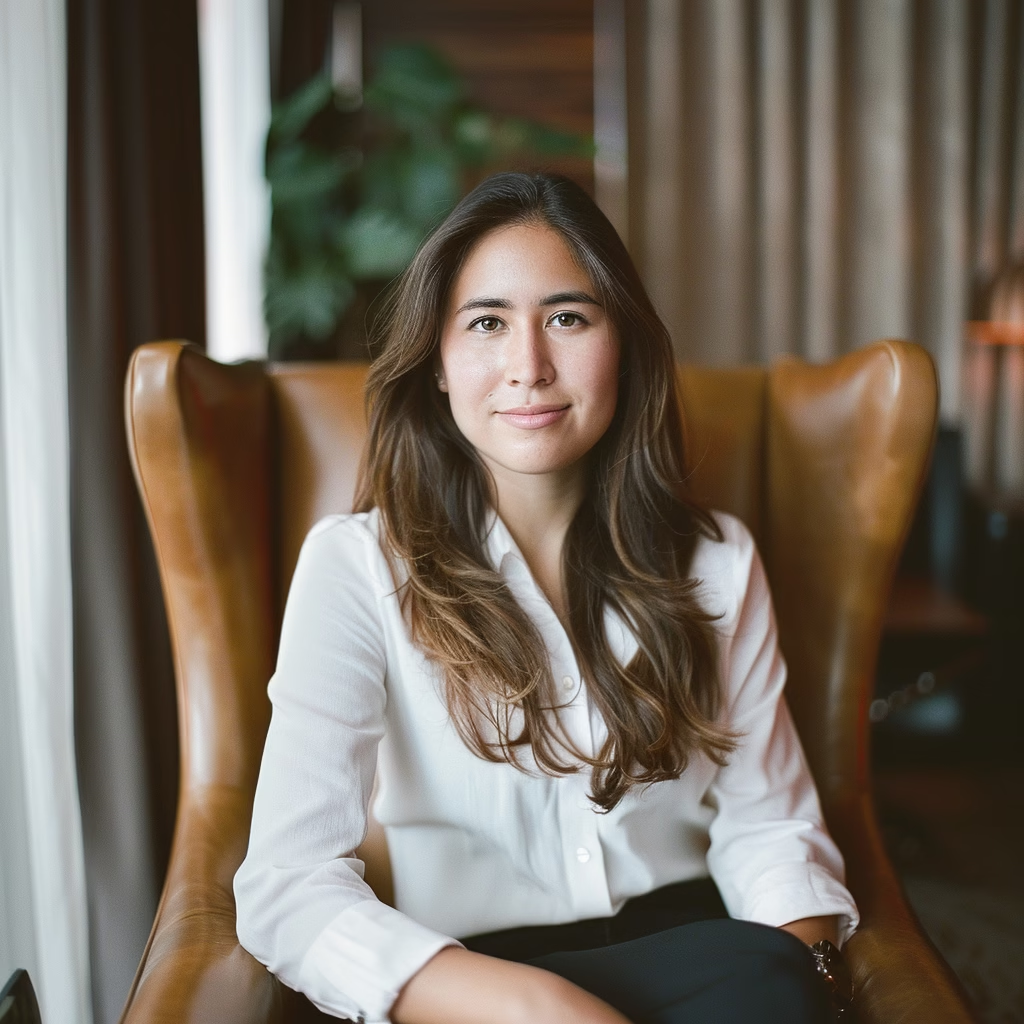
Most of the people who book executive headshots in New Jersey with me are not new to their careers. They are partners, founders, physicians, and senior leaders who have been photographed before.
The phrase they eventually type into Google is usually some version of executive headshots New Jersey, and what they are really asking is whether the picture they already have is still doing its job.
Then they pull it up on their phone and go quiet for a second. The photo is fine. It just belongs to a version of them that no longer walks into the room.
If you want to see what current work looks like before we go further, you can browse recent sessions on my Executive Headshots in New Jersey page.
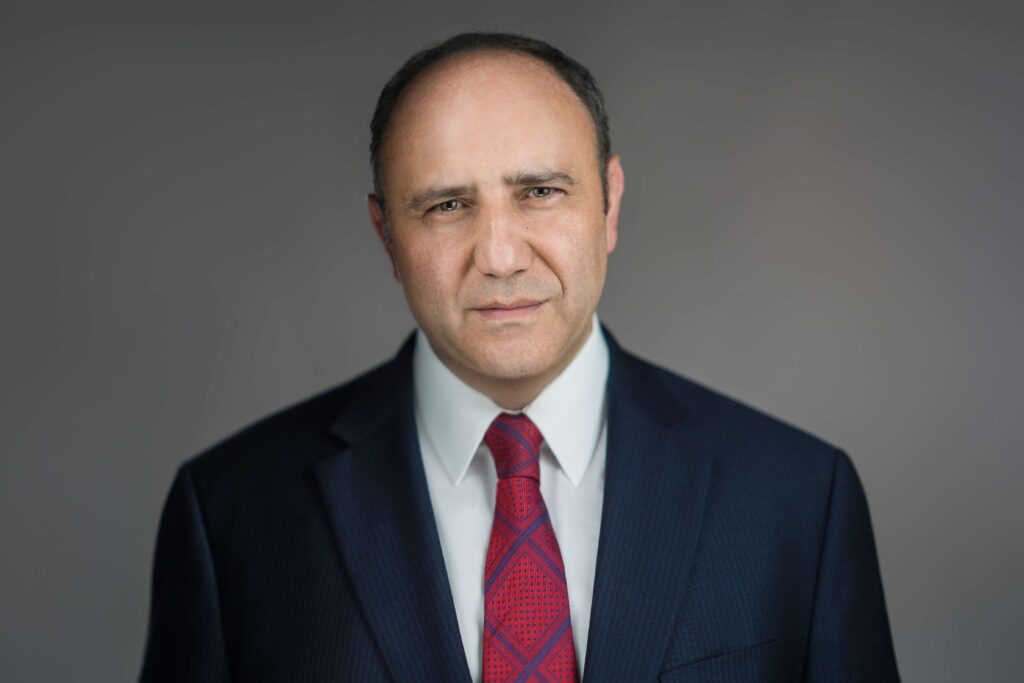
Your Leadership Has Grown. Has Your Headshot?
Careers move in visible ways. You take on a division, you make partner, you start speaking at conferences, you get named to a board.
The headshot rarely moves with any of it. In thirty years behind the camera I have watched the same pattern repeat: people update their title within a week and their photo within a decade. You can read more about my background as a New Jersey headshot photographer if you are curious.
Part of it is practical. Nobody schedules a portrait session the way they schedule a physical, so the photo simply stays where it is until something forces the question.
The rest is quieter. There is a small vanity tax on being photographed again, and plenty of accomplished people would rather keep a picture from a season when they felt sharper.
I understand that completely. The irony is that most of my clients look more like leaders now than they did at forty, because presence is something you accumulate, not something you lose.
Where an Outdated Executive Headshot Hurts Your Professional Brand
The damage is rarely dramatic. It shows up as small friction across a lot of surfaces at once, and each one carries a slightly different cost:
- LinkedIn, where recruiters and prospective clients form an impression before they read a single line of your profile
- Company websites and leadership pages, where mismatched photos make a firm look loosely managed
- Speaking engagements, where the program prints an image that does not match the person who walks on stage
- Press releases and media coverage, where the outlet keeps whatever file you sent for years
- Board memberships, where annual reports and investor materials sit alongside colleagues with recent portraits
- Industry publications and award listings, where a dated image signals a dated practice
LinkedIn executive headshots get the roughest treatment, because they are viewed as thumbnails next to direct competitors all day long. That side-by-side comparison is exactly what executive branding photography exists to win.
Attorneys feel this fast. Clients in Hackensack and across Bergen County compare firms visually before they ever compare credentials, which is why I treat professional attorney headshots as a credibility asset rather than a formality.
The same is true for leadership teams. When half a company page shows current work and half shows three photographers across two eras, the inconsistency reads as disorganization, and a coordinated corporate headshots session solves it in an afternoon. That is also why executive headshots New Jersey firms commission are increasingly scheduled on a cycle rather than by accident.
What Makes an Executive Headshot Feel Current
Style in portraiture changes slowly, but it does change, and the differences are easy to spot once you know where to look.
Lighting is the biggest one. Older corporate portraits tend to be lit hard and evenly from the front, which flattens the face and gives everything a slightly formal, mid-2000s stiffness.
Contemporary executive portraits use softer, more directional light that lets shadow do some of the work. It reads as dimensional and human rather than processed.
Posing has relaxed too. The squared shoulders and crossed-arms stance have given way to an easier, slightly angled position that suggests approachability without giving up authority.
Backgrounds have simplified. Gradient blues, marbled canvas, and bookshelf composites gave way to clean neutral tones or genuinely blurred environments that keep attention on the face.
Retouching is where I see the most damage from older work. Skin smoothed to plastic ages a photo faster than the photo itself ages, so my approach is to remove the temporary and keep the permanent.
Wardrobe matters more than people expect. Lapel widths, shirt collars, and tie proportions all date a picture, and a well-fitted current suit does more for a portrait than any amount of post-processing. That shift toward cleaner, more natural work is exactly what I described in my piece on modern executive portraits.
An Updated Portrait Reflects Your Current Leadership
A good portrait is not a beauty exercise. It is a compression of everything you want someone to assume about you before you speak.
Confidence comes through in the eyes and the set of the jaw, not in a rigid posture. Experience shows in details people notice without cataloging them: the fit of the jacket, the steadiness of the gaze.
Accessibility is the quality most executives underestimate. Boards and clients want competence, but they also want to believe you are someone they can call, and a portrait that feels guarded costs you that.
Credibility is the sum of all of it. I go deeper on this dynamic in my article on what clients notice first in a professional headshot, because that read happens faster than most people believe.
None of this requires you to say a word. That is precisely why it deserves more than a decade of neglect.
Who Should Update Their Executive Headshot?
The short answer is anyone whose face represents an organization. CEOs, executives, attorneys, financial advisors, physicians, consultants, entrepreneurs, board members, and partners all fall into that category by definition.
The more useful answer is anyone approaching a moment where they will be looked up. A funding round, a merger, a move to a new firm, a nomination: all of these generate searches, and the photo is what greets them.
The people searching executive headshots New Jersey in any given month are usually a few weeks out from something visible. I photograph a steady stream of professionals from Newark and Jersey City for exactly that reason, and you can see the local service details on my New Jersey headshots page.
How Often Should Executives Update Their Professional Headshots?
Every two to three years, or immediately after any significant change in appearance or role. Hair, weight, glasses, and facial hair all shift the read of a portrait more than people expect. Professional executive headshots are a maintenance item, not a monument, and a photo that no longer matches you in person creates a credibility gap the moment you meet someone.
Is a Five-Year-Old Executive Headshot Still Acceptable?
Usually not. Five years is long enough for lighting styles, retouching norms, and wardrobe cuts to visibly date an image, and long enough for most people’s appearance to have moved. If your photo predates your current role, it is telling a story about a job you no longer hold.
Executive Headshots New Jersey: What Should Executives Wear?
Wear what you would wear to your most important meeting, in solid or subtly textured fabrics that fit properly through the shoulders. Navy and charcoal photograph reliably, and white or light blue shirts keep the face clean. I ask clients to bring two or three options so we can compare them on screen during the session.
Should Executives Smile in Professional Headshots?
The useful question is which smile. A relaxed, eye-engaged expression usually reads as more approachable than either a forced grin or a hard neutral, though the right answer depends on the person and the industry. LinkedIn’s own LinkedIn Profile Photo Tips make a similar point: choose an expression that feels natural to you.
How I Help New Jersey Executives Look Like the Leaders They Are Today
My sessions are unhurried on purpose. We talk before I pick up a camera, because the difference between a stiff portrait and a strong one is usually what happened in the ten minutes prior.
I direct closely. You will not be left guessing what to do with your hands, and we review images together on a large screen as we shoot so nothing is a surprise at the end.
Individual sessions and corporate executive headshots follow the same principle, whether I am photographing one managing partner or a full leadership floor in a single morning.
Your experience deserves a headshot that reflects where your career is today. If you are updating your LinkedIn profile, your company website, or preparing for your next leadership opportunity, I would be glad to help you create executive headshots that represent your current professional brand.
If you lead a team in Northern New Jersey or NYC and it has been a few years, let’s fix that. Contact me to schedule your Executive Headshots session in New Jersey.
Reply...


