


Your Headshot day should feel relaxed, joyful, and completely yours.
I’m Alex Kaplan, a Headshot Photographer and videographer based in New Milford, NJ, serving Northern.
Browse by Category:
headshots
view more

REQUEST INFORMATION
Want to feel like THIS on your Headshot day?
Availability is limited. Check Your Date Here


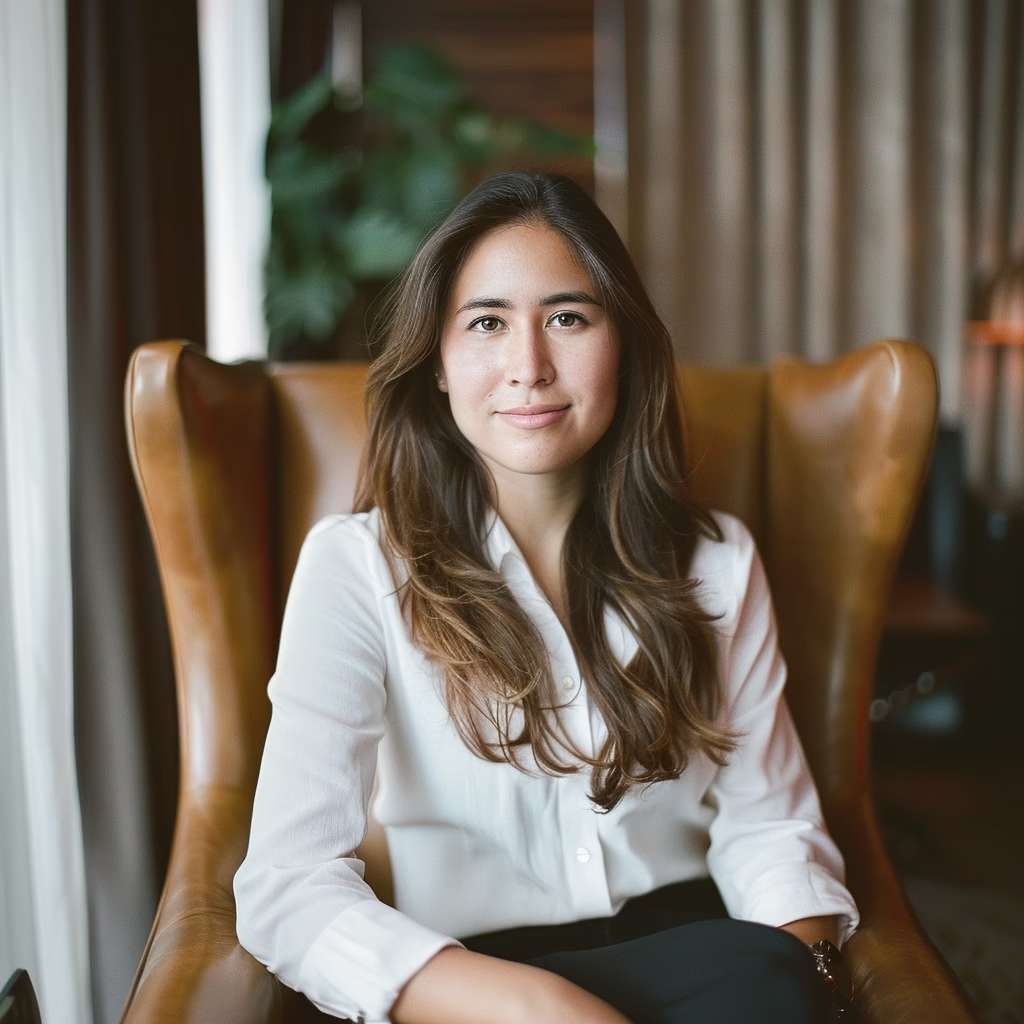
Something changes the week job applications stop being hypothetical.
You open LinkedIn and see your own profile the way a recruiter sees it. The cropped photo from someone’s graduation party is not funny anymore.
That is when most people come to me for young professional headshots in New Jersey. Not out of vanity. Out of a sudden awareness that a stranger is forming an opinion before reading one line of the resume.
Thirty years behind a camera. Fifteen thousand headshots and 667 five-star Google reviews later, the first-timers are still the sessions I remember most. You can read how I got here on my About page.
Why Your First Impression Happens Online
Your photograph introduces you before you speak. It sits on LinkedIn, on a company team page, in your email signature, on the graduate program portal.
A picture will not carry a weak interview. It does decide whether everything else on your profile reads as current or abandoned.
The judgment happens fast. Someone forms a read on you in about the time it takes to scroll past, which means a blurry crop is not a neutral choice.
LinkedIn is blunt about this in its own profile photo guidelines. The image has to reflect your actual likeness, which rules out the workarounds people reach for when they are avoiding the real fix.
I wrote at length about how this plays out here in a piece on the LinkedIn headshot and why it matters in Northern New Jersey. The people booking executive headshots with me worked it out a decade into their careers. You get to work it out at the start.
When Is the Right Time to Get Your First Professional Headshot?
The right moment is when your name starts appearing in places you did not put it yourself: a department directory, a client-facing bio, a conference attendee list.
Most people wait until the photo is due tomorrow. Rushing strips out every choice that makes a headshot worth having.
There is a scheduling reality underneath that too. A calm hour and a wardrobe you actually like do not assemble themselves the night before a deadline.
Young Professional Headshots New Jersey: Timing by Career Stage
Graduating college. Book before everyone scatters. One strong file will cover LinkedIn and every application that follows it.
Starting a first job. Plenty of employers ask for a photo during onboarding week. Arriving with one already made is a quiet signal about how you operate.
Launching something of your own. Investors and first hires look you up immediately. For a company nobody has heard of yet, your face carries a large share of the credibility.
Applying to graduate programs. Interview packets and department directories increasingly include photographs. A considered one reads as seriousness about the field.
Building an acting portfolio. Different rules entirely. Expression range and crop matter more than polish, so plan that session on its own.
I photograph people at every one of these stages at my New Milford studio. The wider range of work sits on my professional headshots in Bergen County page.
Professional Doesn’t Mean You Have to Look Older
This is the correction I make most often. People in their early twenties arrive convinced they need to read as thirty-five.
It never works. Aging yourself in a photograph looks like costume, and viewers feel the gap between the image and the person without being able to name it.
What builds trust is looking like yourself on a good day: present, awake, recognizably the person who will walk into the interview.
I see the same instinct in law students and first-year analysts. Their industries signal maturity so loudly that people assume the photograph should do that work too, when the photograph should be doing the opposite.
There is a practical version of the argument too. If your headshot flatters someone who does not exist, every real meeting afterward opens from a small deficit.
Approachable competence is the target. That combination is what makes a stranger comfortable sending the first email.
You Don’t Need a Suit to Look Professional
Solid colors. Correct fit. That covers most of it.
Patterns compete with your face and date the photograph, which shortens how long you can keep using it. A well-fitted plain sweater beats a borrowed blazer with the shoulders in the wrong place, and it is not close.
Skip large logos and anything reflective near your collar. Those pull the eye away from your expression, which is the only thing the picture is actually about.
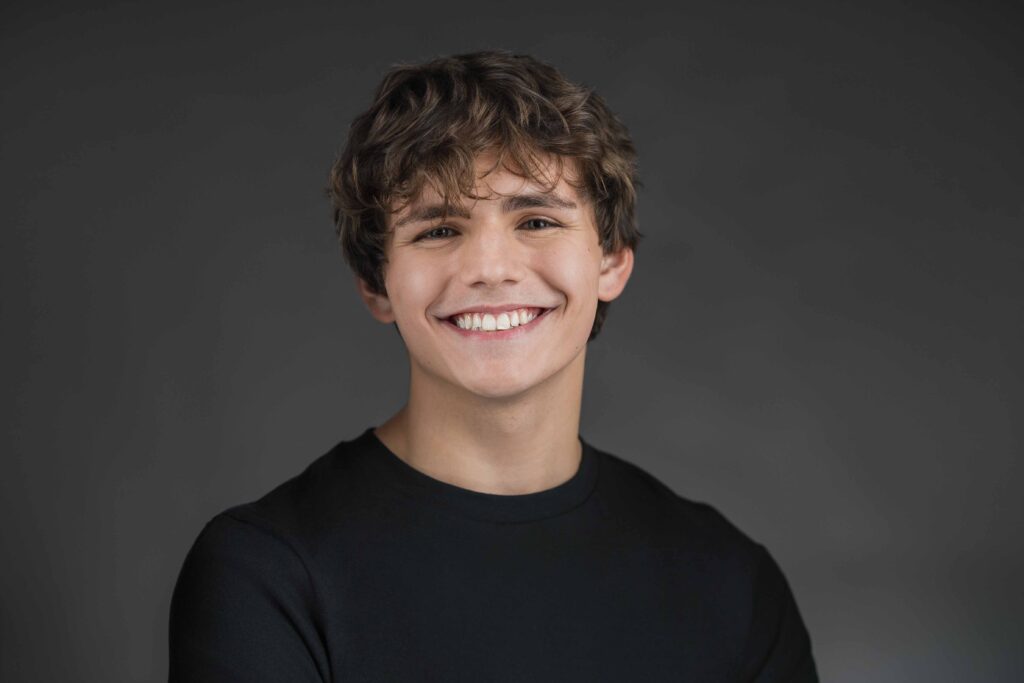
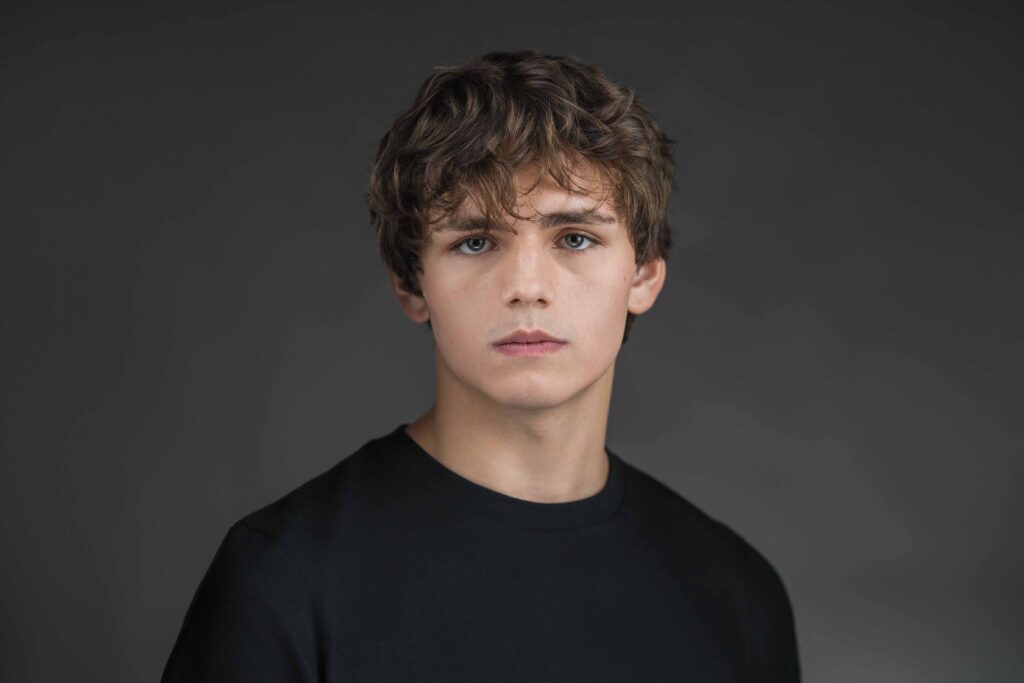
The two frames in this article make the point. Same black crewneck, same background, captured five minutes apart. Nothing about the wardrobe had to get louder.
For the longer version, I keep a guide on what to wear for professional headshots.
Your First Headshot Can Grow With Your Career
Look again at those two frames. Only the expression changed.
That is the whole case for doing this properly once. A real session hands you range, and range is what lets a single shoot cover several years of different needs.
Think of it as one asset with several jobs rather than a single picture. The same afternoon can serve a job search now, a promotion announcement in two years, and a panel bio you have not been invited to yet.
The warm frame goes wherever you want to seem reachable. The composed frame belongs on a conference bio or an audition submission, where a steadier read serves you better.
Update the images when your appearance or your role shifts enough that the photograph stops matching you. For most people that lands somewhere near two to three years, though the mismatch matters more than the calendar.
Why Working With a Professional Photographer Makes a Difference
Nearly everyone opens with some version of “I am not photogenic.” I stopped treating that as information years ago.
What people mean is that nobody has ever directed them. Left alone in front of a lens, most of us hold our breath and lock the jaw, and that is exactly what ends up in the phone photos we delete.
The work is not the camera. It is talking you into your own face: where your weight sits, what your hands do, which small adjustment turns a polite smile into a real one.
I will ask you something offhand and photograph the two seconds after you answer. That is where the honest version lives.
Bring the context with you. If you tell me the file is headed for a law firm directory rather than a startup team page, the direction shifts and so does the framing.
Lighting and background stay on my side of the room. Sessions run twenty to forty-five minutes, and you leave with retouched files sized for web and print. I take out the temporary things and leave the rest of your face alone.
Frequently Asked Questions About Your First Professional Headshot
Do recent college graduates need professional headshots?
A headshot earns its place the moment your name becomes searchable in a career context. It gives graduates one current image for LinkedIn, applications, and employer bios. It will not replace qualifications, though it does stop an outdated photo from undercutting an otherwise careful profile.
Can you look professional without wearing a suit?
Yes. A well-fitted solid top photographs better than a suit that fits poorly, and it stays useful across more industries. Match the clothing to the field you are entering, prioritize fit over formality, and remember that a clean neckline does more for the picture than an expensive label.
How often should you update a professional headshot?
Update it when your appearance or your role changes enough that the image stops feeling accurate. For many people that happens every two to three years. The better test is recognition: someone meeting you should connect you to the photograph without hesitating.
Does a professional headshot improve a LinkedIn profile?
It changes how the whole profile reads. LinkedIn requires the photo to reflect your likeness, and a clear portrait makes the rest of the page feel deliberate rather than neglected.
What makes a professional headshot look authentic?
A real expression, correct fit, and restrained retouching. Authenticity fails when the file is over-processed, or when the subject is performing someone they are not.
Professional Headshots for Young Professionals Across New Jersey
If you are finishing school, starting a first role, or building something of your own, this is the moment. You are early enough that one good photograph compounds for years.
I photograph young professionals at my New Milford studio and on location across Northern New Jersey and New York City. Sessions are short, guided, and far less painful than people expect.
Bring one solid top you feel good in. I will handle the rest.
Reply...


