


Your Headshot day should feel relaxed, joyful, and completely yours.
I’m Alex Kaplan, a Headshot Photographer and videographer based in New Milford, NJ, serving Northern.
Browse by Category:
headshots
view more

REQUEST INFORMATION
Want to feel like THIS on your Headshot day?
Availability is limited. Check Your Date Here



“I already have a decent LinkedIn photo.”
I hear that often, and most people who say it are right. Their current photo is sharp, friendly, and perfectly usable. It simply was not built to carry the weight of a professional first impression.
This professional headshot before and after comparison shows why that distinction matters. The person did not need to look younger, more serious, or like someone else. The photograph needed to be more intentional: clearer eye contact, stronger body language, and enough visual separation to hold attention on her face.
I have photographed professionals for more than thirty years from my studio in New Milford and on location across the region. Better equipment helps, but it is rarely the reason one portrait reads as more credible than another. Direction, light, composition, and expression do most of that work. You can read more about my background and approach on the About Alex Kaplan page.
The Before: A Good Photo With a Different Job

Her original profile image is a warm, approachable photograph. The subject is smiling, the frame is close, and the bright wall creates a casual setting. It works well as a personal photograph.
The limitation is not that the image is bad. It is that the image was never designed to function as a professional portrait across LinkedIn, a company website, a speaker biography, or a press feature.
The light appears to come from above and behind the subject. That keeps the frame bright, but it reduces facial modeling and lets parts of the hair blend into the wall. The square crop leaves little room for posture, shoulder position, or deliberate composition.
A snapshot records a pleasant moment. An executive headshot has a narrower job: stay clear at small sizes, work across several professional platforms, and communicate presence without looking stiff.
That difference is easy to miss because both images can be flattering. The real question is not whether you look good in the photo. It is whether the photograph supports the way you want to be understood professionally.
The After: A More Deliberate Executive Portrait
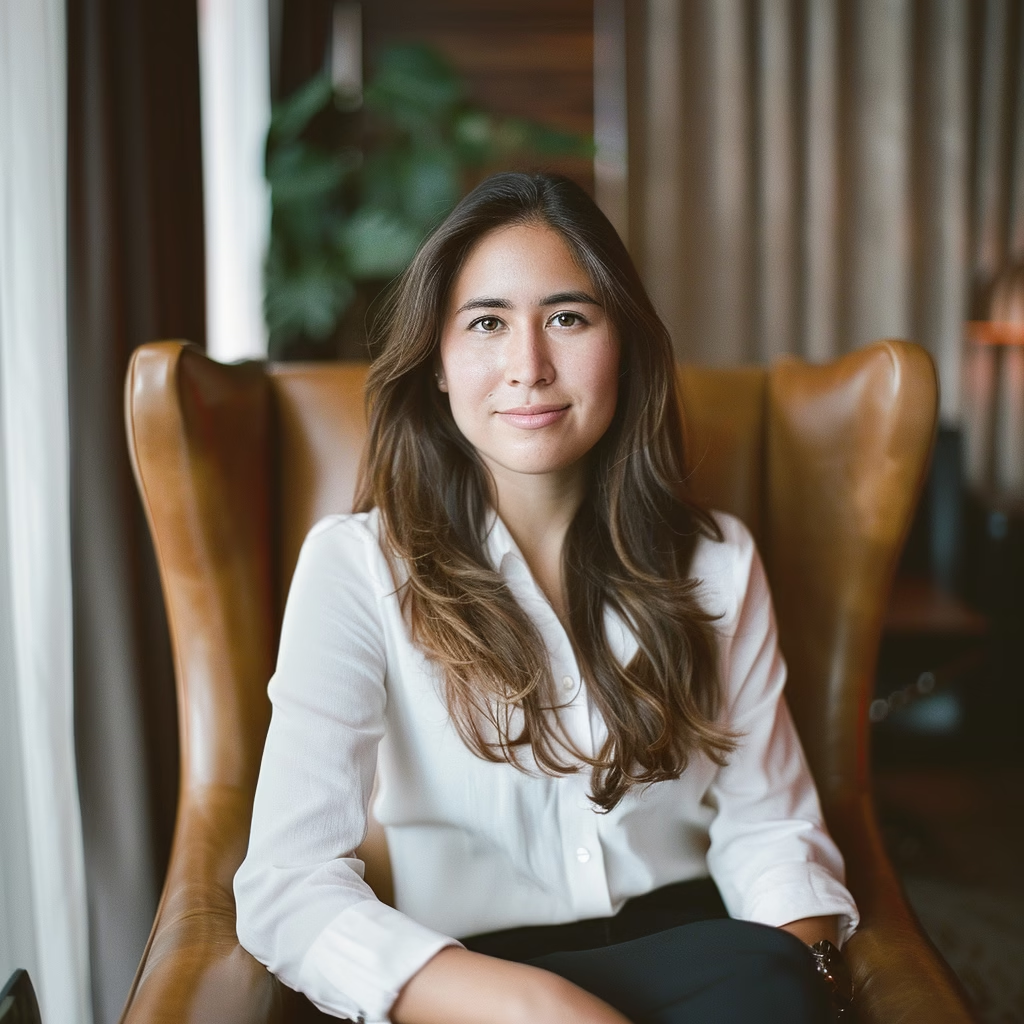
The finished portrait was captured on a Sony ILCE-1 with a 50mm lens at f/1.2, and the camera record confirms that no flash fired. What the frame communicates matters more than the gear that made it.
The subject looks directly into the lens with an expression that reads calm and engaged. Her shoulders are turned away from the camera while her face returns toward it, creating a natural diagonal through the frame. The pose is composed without being rigid.
The wider crop matters too. Keeping more of the upper body visible lets posture contribute to the impression. A very tight crop can work, but it discards much of the body language that makes a portrait feel grounded.
The background falls softly out of focus, separating the subject from her surroundings without erasing all sense of place. Her face stays the clearest and brightest point in the frame, so the viewer never has to hunt for where to look.
None of those decisions transforms the person. They change how the photograph organizes attention.
That is the practical goal behind corporate headshots across NYC and Jersey City. The image should look polished enough for a leadership page and still feel believable when the person walks into the meeting.
What Actually Changes Between the Two Frames

A useful comparison measures more than sharpness or camera quality. It shows how several small choices compound.
What a Professional Headshot Before and After Really Measures
Expression is the first thing people notice, but asking someone to smile naturally rarely produces a natural result. Most people get more self-conscious the moment a camera comes up. Good direction gives them something specific to do, then waits for the moment the tension leaves.
Posture needs the same restraint. Small adjustments to chin, shoulders, and weight distribution improve the line of the body without forcing a theatrical power pose. You should still recognize how you carry yourself.
Wardrobe supports the image rather than leading it. A solid, matte top keeps the emphasis on the face, which is why simple clothing tends to outperform interesting clothing. My guide on what to wear for headshots covers how to choose pieces that fit your role and still feel like you.
Why Retouching Is the Wrong Place to Fix This
Lighting and lens choice shape whatever structure already exists in front of the camera. In this frame, soft directional light builds dimension across the face while the wide aperture lets the background recede.
Almost all of the meaningful improvement should happen before editing begins. Retouching can soften temporary distractions, but it should never have to manufacture confidence, rebuild posture, or invent a believable expression.
Why Small Visual Changes Matter on LinkedIn
Princeton researchers Janine Willis and Alexander Todorov studied how quickly people form trait impressions from unfamiliar faces. Judgments made after a 100-millisecond exposure correlated closely with judgments made with no time limit at all (Willis & Todorov, 2006).
That study does not measure how long a recruiter looks at a profile, and it does not prove a headshot changes hiring outcomes. What it does show is that impressions from a face can begin forming almost immediately, which is a good reason to choose that image deliberately rather than treat it as decoration.
Your photograph usually arrives before the rest of your information is read. It appears in search results, connection requests, team pages, conference programs, email signatures, and article bylines.
Consistency matters across those surfaces. One current, recognizable portrait makes it easier for people to connect the profile, the name, and the person they eventually meet, and it stops an outdated image from competing with the professional identity you built elsewhere.
A strong headshot does not create expertise. It removes friction between your expertise and the person trying to understand who you are.
That is why many clients start with LinkedIn headshots and later expand into personal branding photography when they need a broader library for websites, speaking materials, and press use.
Professional Headshots Are Not About Looking Different
Many people arrive worried that a professional session will make them look overly formal or heavily retouched. That concern is reasonable. A technically polished portrait still fails when it stops feeling connected to the person in it.
The goal is not to construct a new identity. It is to make a clearer photograph of the one already there.
Compare the two images again. The subject is warm and approachable in both. The finished portrait gives that warmth a more deliberate structure through direct eye contact, controlled framing, background separation, and visible posture.
Retouching follows the same principle. Temporary distractions can be softened, but permanent features and natural facial structure stay recognizable. The reaction you want is not that it looks like a different person. It is that it looks like you, better prepared.
That accuracy pays off when the photograph is doing professional work. A portrait should make the first in-person meeting feel consistent, not surprising.
Could Your Current Profile Photo Be Holding You Back?
Open your current profile photo at full size and go through this honestly.
- It was taken more than three years ago, or before a major role change
- It was cropped from a group photo, a wedding, or a vacation image
- The light comes mainly from overhead or behind you
- Your current appearance no longer matches the photograph
- The file goes soft or pixelated when enlarged
- The clothing no longer reflects how you work or meet clients
- Your eyes are turned away, or the expression feels uncertain
- It looks noticeably different from the portrait on your company website
One or two of these may not justify replacing a photo you still like. Several together usually mean the image has stopped doing the job you need from it. I wrote more about that specific problem in how outdated headshots undermine trust.
Frequently Asked Questions About Professional Headshots
Is a professional headshot worth it?
A professional headshot earns its cost when clients, employers, colleagues, or event organizers are likely to see your image online before meeting you. The value is in having one current, recognizable portrait that works consistently across LinkedIn, company pages, press materials, and speaking profiles.
How often should I update my LinkedIn headshot?
Every two to three years for most professionals, or sooner after a significant role change or a noticeable change in appearance. The practical test is simple: someone meeting you for the first time should recognize you easily from the photograph.
What is the difference between a professional headshot and a regular portrait?
A professional headshot is built for a specific communication job. It has to stay effective at small sizes, keep emphasis on the face and expression, and suit business platforms. A regular portrait can allow more atmosphere, wider composition, and personal storytelling without carrying that immediate professional message.
What should I wear for a professional headshot?
Wear what you would choose for an important meeting. Solid, matte fabrics and simple necklines keep attention on the face, while prominent logos, reflective materials, and very tight patterns pull it away. Bring two or three options so we can match the wardrobe to the background and lighting.
Ready for Your Own Professional Headshot Before and After
This is for professionals who have outgrown a casual, outdated, or inconsistent profile image and want a portrait that feels current without feeling manufactured.
I photograph executives, attorneys, physicians, architects, and other professionals from my New Milford studio and on location throughout Northern New Jersey and the New York City area. You get clear direction the whole way through, and you review the photographs as we work, so you are never left guessing about your expression, posture, or hands.
After more than thirty years behind the camera, the result I still care about most is a portrait that looks immediately recognizable and strong enough to use without hesitation. Contact Alex Kaplan Photo and tell me what your next headshot needs to communicate.
Reply...


