


Your Headshot day should feel relaxed, joyful, and completely yours.
I’m Alex Kaplan, a Headshot Photographer and videographer based in New Milford, NJ, serving Northern.
Browse by Category:
headshots
view more

REQUEST INFORMATION
Want to feel like THIS on your Headshot day?
Availability is limited. Check Your Date Here


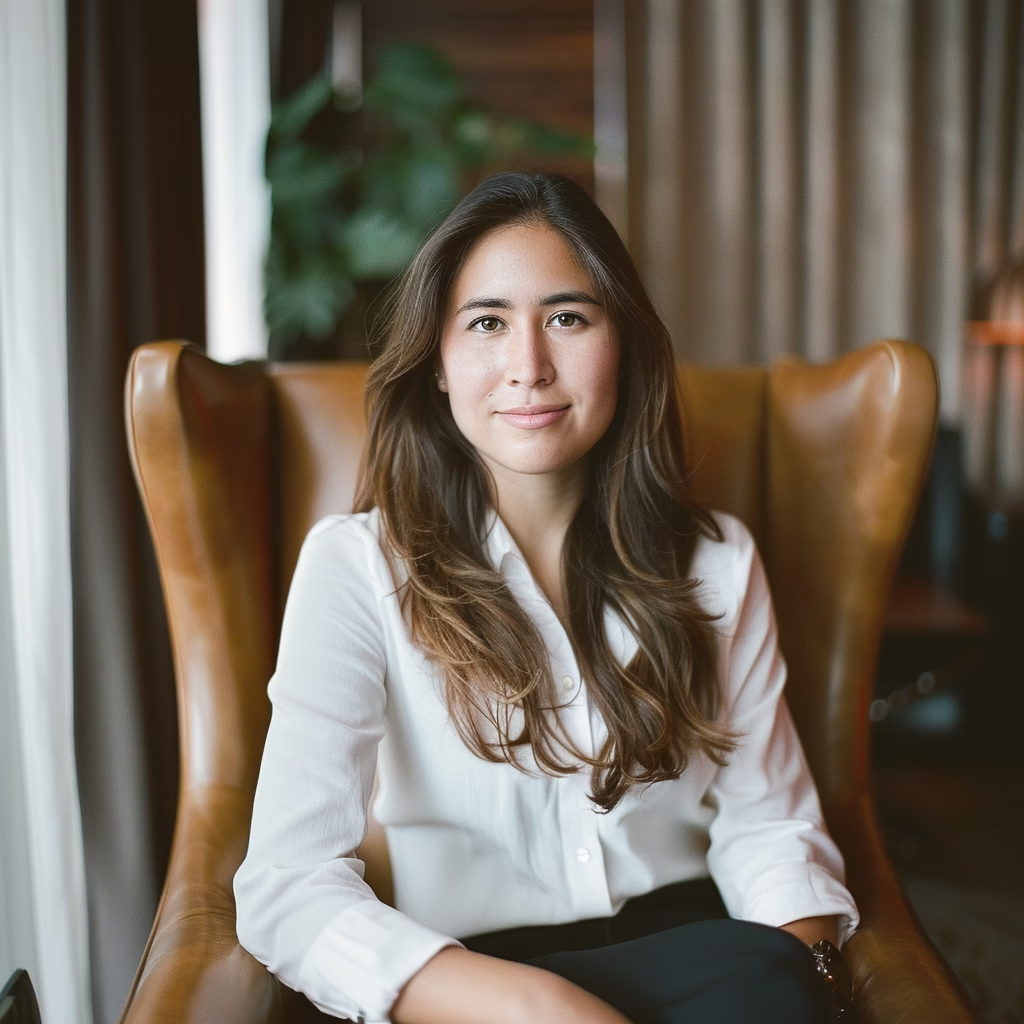

The question comes up more than any other one I hear before a session: should I change something about the way I look first? A haircut. A shave. A new suit. Ten pounds. The hairstyle you have been thinking about for a year. Professional executive headshots New Jersey leaders rely on show up on LinkedIn, leadership pages, and press bios, so the instinct to prepare makes sense.
After more than 30 years and thousands of sessions across this region, my answer has stayed the same. Small refinements help. Reinventions almost never do.
Here is what I actually watch happen in the studio, and how to decide what is worth changing before you sit down in front of the camera.
Why So Many Professionals Worry Before Their Headshot Session
Almost everyone arrives with a private checklist. Should I cut my hair? Should I shave? Should I buy a new suit? Should I wait until I lose weight? Should I finally try that different hairstyle?
Those questions are normal, and they are not vanity. A headshot is one of the few images of yourself that other people use to make decisions about you. It sits on your profile while you sleep. It shows up in a proposal deck you never see delivered, in a conference program, in a search result someone runs before returning your call.
The pressure is real. It just tends to point people in the wrong direction. Most of the professionals I photograph in my Northern New Jersey headshot studio do not need a new look. They need a current one.
The weight question deserves its own mention, because it is the one that delays sessions longest. People tell me they will book once they are down fifteen pounds, and then a promotion arrives, or a speaking invitation, or a firm website redesign, and the photo they submit is six years old. The camera is not the problem in that scenario. The waiting is.
The Goal Isn’t to Look Different, It’s to Look Like Your Best Self
There is a simple test I offer clients who are debating a change. Picture the person who will meet you three weeks after they see this photo. Will they recognize you right away?
If the answer is yes, you are ready. If the answer is maybe, the change you are considering is probably working against you.
Your Headshot Should Reflect Who People Will Meet
Recognition is the whole job. Reporting from the Association for Psychological Science describes Princeton experiments in which people formed trait judgments from a face, including trustworthiness, after roughly a tenth of a second, and longer looks did not meaningfully shift those judgments.
I am not going to tell you a photograph decides your career. It does set an expectation, though, and expectations are far easier to meet than to correct. When your portrait matches the person who walks into the room, nothing has to be quietly renegotiated in the first thirty seconds of a meeting.
That is the practical case against transformation. A photo of a version of you that does not exist yet creates a small gap someone else has to close.
Authenticity Builds Stronger Personal Branding
Consistency is what makes personal branding hold together. Your headshot, your video call presence, your speaking bio, and the person at the table should all agree with one another. When they do, you read as steady. When they do not, people cannot always say what feels off, but they register it.
This is also why the standard has warmed up. Modern executive portraits have moved away from the formal boardroom look because clients and colleagues are looking for someone they can actually talk to, not a rank signal.
Across more than three decades photographing professionals in this region, the styles have shifted repeatedly. What people look for in a face has not. They want to know who you are, and they decide fast.
Appearance Changes Worth Considering Before Your Session
Some preparation genuinely helps. The useful changes are the ones that make you look like yourself on a good day, not the ones that introduce something new.
Haircuts
If you are due for a cut, schedule it about a week before your session. Fresh cuts often sit stiffly for the first few days, and hair needs a little time to settle into the shape you actually wear. A week usually gives you the lived-in version rather than the just-handled one.
If you are not due for a cut, skip it. A trim you did not need is not going to change how the photos look, but it can leave you feeling slightly unfamiliar to yourself, and that shows up in the eyes.
Facial Hair
Keep the facial hair you already wear, and keep it neat. A beard you have worn for six years is part of how people recognize you. Removing it the week of a session tends to produce a portrait that surprises your own colleagues.
Trim a day or two ahead rather than the morning of. Freshly shaved or newly shaped skin can look red under lighting, and modern camera sensors are unforgiving about uneven lines.
Hairstyles
Wear the hairstyle your colleagues would recognize. A style you have never worn in public tends to read as effortful, and you can usually see the person managing it in the photograph.
If you are genuinely in the middle of a change, tell me before we start. We can work with it. What does not work is discovering it in the first frame.
Wardrobe
Wear clothing that matches your industry and your actual calendar. If you have not worn a tie since 2019, a tie will look borrowed. Solid colors, clean fit, and something you can forget about while we shoot.
Bring two options rather than agonizing over one. If you want the specifics on color, fabric, and neckline, my guide to what to wear for professional headshots covers it in more depth than this article needs to.
What You Should Avoid Before Professional Headshots

A short list of things that reliably cause regret:
- Drastic haircuts inside the final week
- A hairstyle you have never worn in a professional setting
- New facial hair that has not grown in evenly yet
- Tanning close to the session date, which shifts skin tone unpredictably
- Cosmetic procedures scheduled near the date, since redness and swelling need time
- Clothing that is uncomfortable or that you keep adjusting
- Waiting indefinitely for the perfect time
That last one costs people the most. An outdated photo does quiet damage every week it stays up, and the session people postpone for a year is rarely postponed for a reason that resolves. The executive headshots people keep using for years are almost never the ones that waited for a better version of themselves. They are the ones taken when the person decided that today was accurate enough.
The right time is usually now, with the face you have now.
A Great Photographer Helps You Look Your Best
Preparation matters. Direction matters more. Most of what makes a portrait work happens in the room, not in the mirror beforehand.
During one session, the client realized almost immediately that they already looked great. Nothing about their weight, hair, or appearance had changed. What changed was the way they saw themselves once the photography began working for them. At that point, they said, “This definitely is my angle.” The difference was visible immediately in the way they held their shoulders and faced the camera. Their posture opened up, and they carried more confidence through the rest of the session. That shift affected every photograph that followed.
This is the part clients underestimate before they arrive and mention afterward. The difference between a photo you tolerate and one you use everywhere is rarely the equipment. It is the guidance. That is the real brief behind professional executive headshots New Jersey: look like the person who walks into the room.
Here is what that looks like in practice. We review your wardrobe options before anything is photographed. I set light for your features rather than for a category, then adjust as we go. I coach expression continuously, because asking someone to look confident produces a performance while asking someone about their work produces their real face. We shoot tethered, so you see what I see and we correct in real time.
A quick technical note, since it comes up. A face can look distorted when the camera sits too close to it. Perspective is controlled by camera-to-subject distance, not by focal length. Working farther back and choosing a longer focal length to hold the framing you want generally produces more balanced facial proportions, which is why portraits are rarely photographed from up close.
Lighting works the same way. There is no formula that maps a face shape to a single correct lighting pattern. I am reading asymmetry, glasses, hair, skin texture, how you hold an expression, and the professional context the image has to serve, then adjusting from there. Face shape is one input among many.

If you want a practical pre-session checklist covering sleep, hydration, and timing, my 10 essential tips before a professional headshot session covers the logistics. This article is about the bigger decision, and that decision is almost always to come as you are.
Questions Professionals Ask Before Their Session
Should I get a haircut before a professional headshot?
If you are planning one anyway, schedule it about a week before your session. That gives the cut time to settle so it looks natural and familiar rather than sharp and new. If your hair is already where you want it, there is no need to add a haircut to the week.
Should I shave before executive headshots?
Only if being clean-shaven reflects your everyday professional appearance. If you normally wear a beard, keep it neatly groomed rather than removing it for the session. Your portrait should match the person clients and colleagues meet, and a sudden change works against that recognition.
Should I change my hairstyle before professional headshots?
Generally, no. Your headshot should represent how colleagues, clients, and recruiters already recognize you. A brand new style tends to look unfamiliar to you in the moment, and that discomfort shows in your expression. Wear the version of your hair you wear most often at work.
Should I wait until I lose weight before getting a headshot?
No. This is the change that delays sessions longest, and the delay usually costs more than the weight. Your headshot has to represent you now, on the profile people are looking at now. If your appearance changes significantly later, update the photo then.
How do I prepare for a professional headshot session without changing my appearance?
Rest well, stay hydrated, pick your wardrobe a few days ahead, and keep your usual grooming routine rather than introducing anything new. Then let your photographer handle posing, angles, and expression. Preparation sets the stage, but direction during the session does the heavy lifting.
Professional Executive Headshots New Jersey: Portraits That Reflect the Real You
Your headshot should not make you look like someone else. It should show the most confident, polished version of who you are today, ready to work on your behalf across LinkedIn, your company website, speaking profiles, and business development materials.
I photograph executives, attorneys, physicians, founders, and corporate teams from my studio in New Milford and on location throughout Northern New Jersey and New York City. Sessions include wardrobe guidance, lighting built around your features, and expression coaching from the first frame to the last.
Bring the face your colleagues already recognize. That is the one that works. That is what professional executive headshots New Jersey should deliver: a portrait that looks polished without looking unfamiliar. If that is what you want, get in touch and we will plan your session.
Reply...


