


Your Headshot day should feel relaxed, joyful, and completely yours.
I’m Alex Kaplan, a Headshot Photographer and videographer based in New Milford, NJ, serving Northern.
Browse by Category:
headshots
view more

REQUEST INFORMATION
Want to feel like THIS on your Headshot day?
Availability is limited. Check Your Date Here


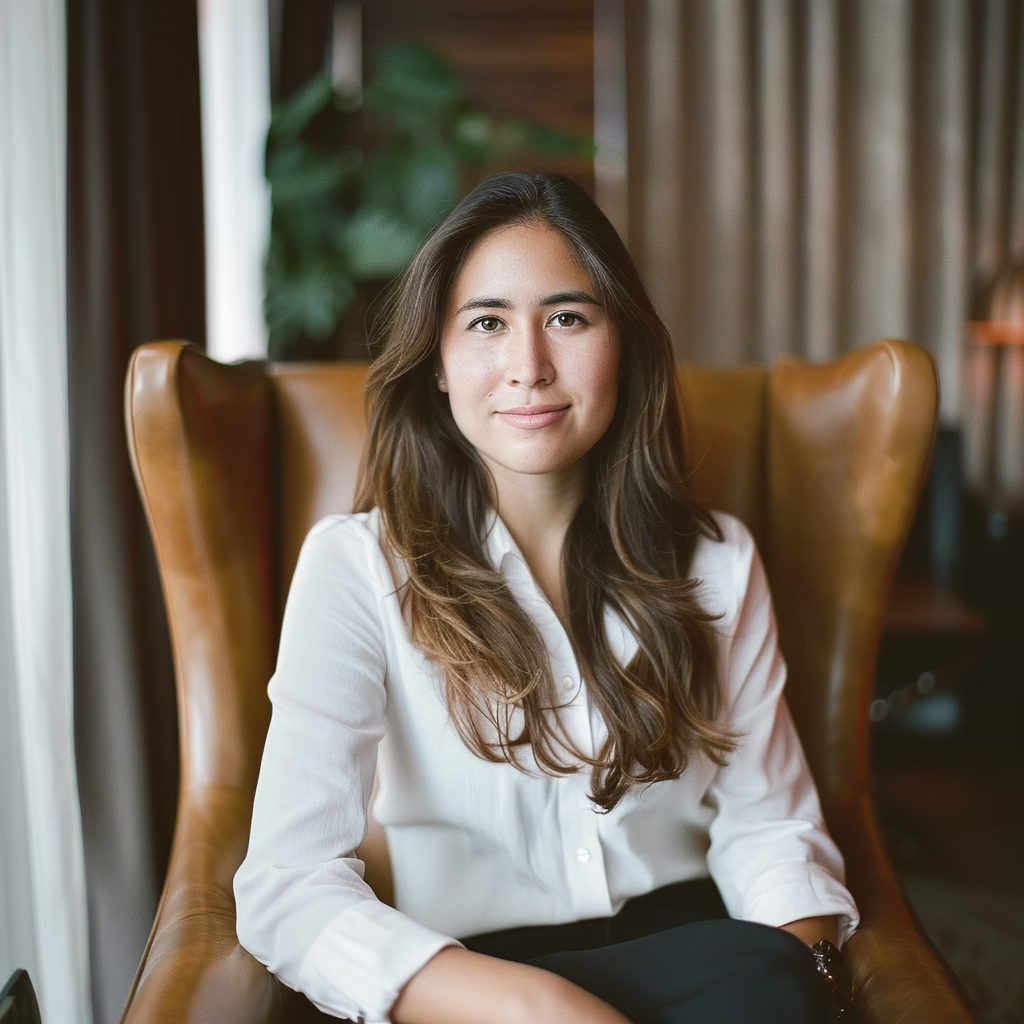
Many of the actors I photograph ask some version of the same question before we ever get to editing. How much should we retouch actor headshots before honest turns into airbrushed?
It is a fair thing to worry about. Your image gets scanned inside a crowded grid of submissions, and then, if it works, you walk into a room where someone compares the photograph to the person standing in front of them.
That second moment is where careless editing can quietly work against you. Across 30 years photographing actors in Northern New Jersey and New York City, the actors who feel calmest about submitting are almost always the ones whose images match the person who walks in.
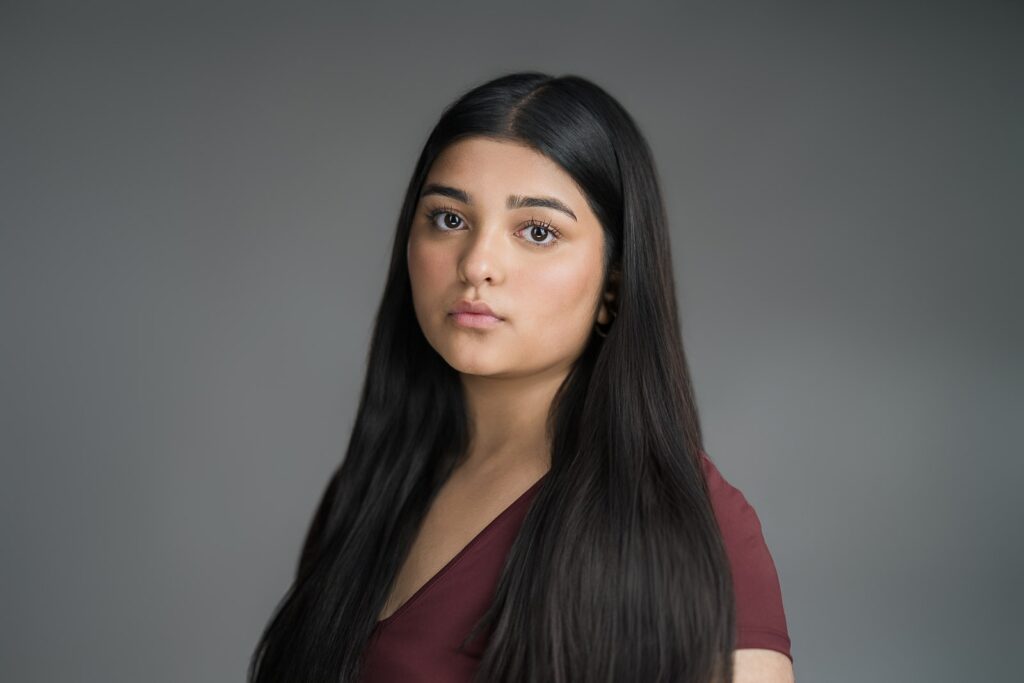
Why Natural Always Wins in an Actor’s Book
A corporate headshot has to survive a scroll. An actor headshot has to survive a room.
That single difference changes how the file should be edited. When I shoot actor headshots in NYC and New Jersey, the editing standard is not “flattering.” It is “verifiable.”
Casting is a matching problem. Someone has a role, a budget, and a mental image, and they are hunting for the person who fits it. Your headshot is the claim. The audition is the proof.
If the claim overstates, you rarely get told. You get a polite thank you, and no explanation you can learn from.
Natural actor headshots win because they make those two moments agree. That is the whole mechanism, and it is why I hold the same restraint across commercial and theatrical headshots.
What Does It Mean to Retouch Actor Headshots Professionally?
To retouch actor headshots professionally means correcting only what is temporary or technical, then stopping. Everything permanent stays in the frame, because it will still be true when you walk into the room. Retouching is not one thing. It is a short list, and the useful version stays on that list.
Professional headshot editing on an actor file handles temporary conditions and technical inconsistencies. A breakout that will be gone in nine days. A stray hair crossing an eye. Slight color drift between two lighting setups so your commercial and theatrical looks read as the same person.
Everything on that list shares one property: it was not going to be there on an average Tuesday anyway.
The moment editing touches something that will still be true when you walk into the room, it has stopped being retouching and started being fiction.
The Short List I Use to Retouch Actor Headshots
- Temporary blemishes, cold sores, and recent scratches
- Stray or flyaway hair crossing the face
- Under-eye shadow, lifted only enough to read rested
- Color and exposure balancing between looks
- Nothing else
I have written separately about the headshot retouching mistakes that make business portraits look fake, and the underlying principle carries over. The difference for actors is the penalty. A professional with an over-edited profile photo has one awkward first meeting. An inaccurate submission creates unnecessary friction for a casting team already working through a large number of performers.
What Should Never Be Edited Out of an Actor Headshot?
Nothing permanent. Tattoos, scars, gap teeth, freckles, and facial structure should all stay, because those are the details casting uses to remember and identify you. Here is the part many actors have backwards: the features you are most tempted to remove may be the ones making you findable.
Casting is a memory business. Inside a large stack of clean, symmetrical, evenly lit faces, the thing that makes someone reachable is often the detail that is not like the others.
A tattoo along the forearm. A gap between the front teeth. A scar through an eyebrow. Freckles. A nose with actual architecture. These are not problems to manage. They are closer to search terms.
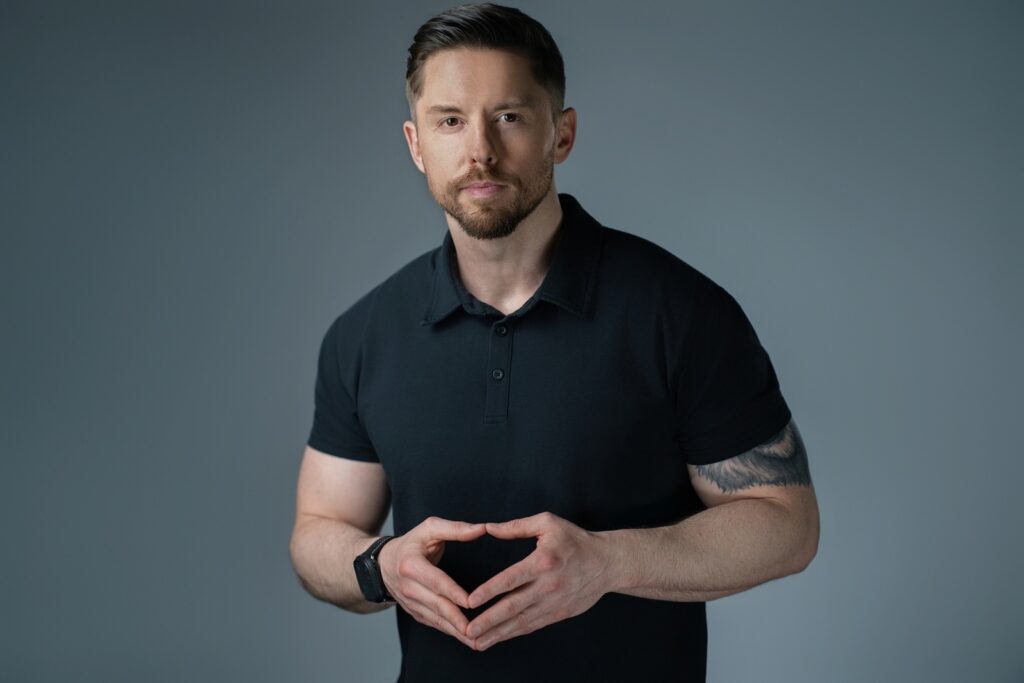
In my Barry Transformation case study, you can see how preserving natural features and real human energy creates a far more compelling visual narrative for casting than any heavy digital smoothing ever could.
Actors raise this with me constantly, usually with an apology attached. Should we take the tattoo out? Should we soften the scar? The answer has not changed in years. Distinguishing features narrow your submissions and sharpen them at the same time, which is what you want when the alternative is blending into a stack of interchangeable faces.
Age works the same way. Over-smoothing does not make you look younger in any useful sense. It makes you look like a version of yourself that does not exist, which pushes you toward a bracket you cannot book while quietly pulling you out of the one you already own.
Casting Directors Expect Accuracy
A headshot only works if the person who walks into the audition still looks like the person in the photograph.
That sounds obvious. In my experience it is still where submissions most often come apart.
Self-tape raised the stakes considerably. Your headshot and your tape now sit inside the same browser window, often minutes apart. A retouched face beside unretouched footage of that same face is not a subtle discrepancy. It is a side by side.
Your representation may carry part of that cost as well. Submissions are a credibility line, and it is reasonable to assume an office that keeps seeing images which do not hold up starts reading the next one differently.
That is why I prioritize accuracy before polish when photographing casting headshots. Accuracy here is not a moral position. It is a logistics one. Casting teams reviewing breakdowns on platforms like Backstage are trying to narrow their choices efficiently, and an honest image is simply a faster tool. That is the standard behind the professional actor headshots I create.
Common Editing Mistakes Actors Make
Editing Toward a Type You Cannot Play
Theatrical work looks serious, so the temptation is to push contrast, sharpen the jaw, and go moody in post. Then you read for the role and that intensity is nowhere in your body.
Edit toward what you actually do on camera, not toward the tone you admire in other people’s books.
Editing Hair or Beard to a State You Cannot Reproduce
Hair is the most edited and least stable element in any headshot. If the beard in your image is a length you held for exactly one afternoon, you have made a promise you cannot keep on twelve hours’ notice.
Keep the file matching a look you can genuinely walk in with.
Whitening Teeth Until the Commercial Smile Stops Reading Real
Commercial work lives on a smile, which is exactly why teeth get over-edited on actor files. Brightened past a certain point they pull attention to the mouth, and casting is reading your eyes.
This is the one editing error that damages corporate and actor work in the same way, which is why it appears in both this post and the general retouching guide linked above.
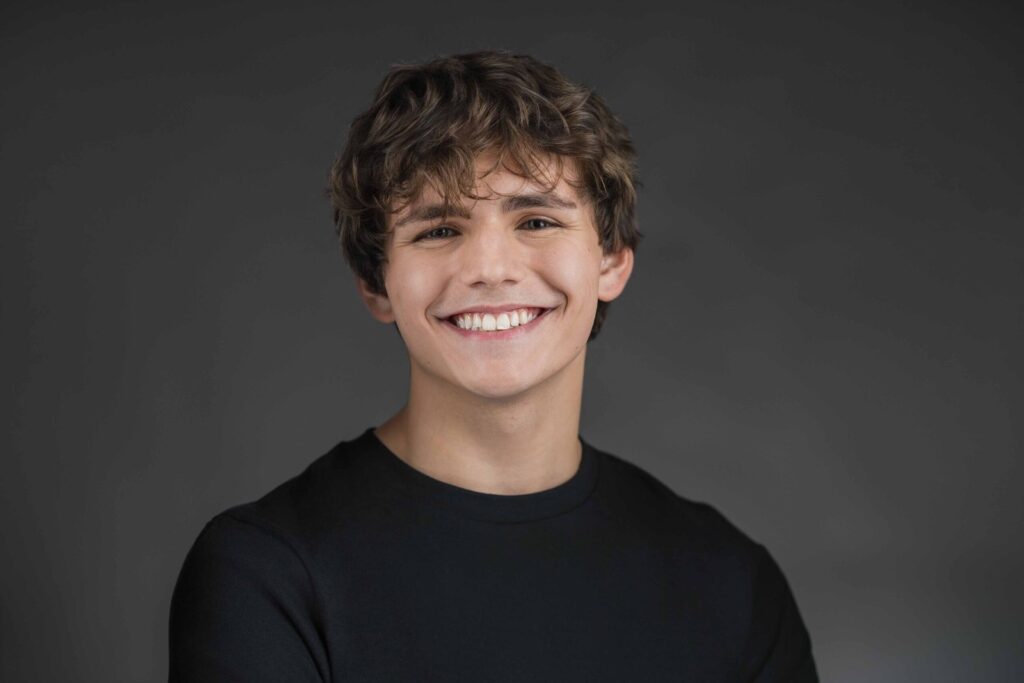
Honest Images Build Trust
Trust in this business accumulates quietly. Every decision you make about how to retouch actor headshots either adds to it or spends it.
An accurate headshot means a casting director’s expectation and their experience of you agree. When your image consistently matches the person who shows up, you remove one source of friction from the casting process.
There is a practical benefit as well. Auditions carry enough pressure already: the material, the room, the timing, the stakes. An honest headshot takes one variable off that list, which leaves more of your attention available for the work.
Actor Headshot Retouching Questions I Get Most
Should I ask my photographer to remove acne before a submission?
Yes, if it is temporary. Active breakouts, cold sores, and recent scratches are fair to clean up because they will not be there in three weeks. Persistent texture and acne scarring are part of how you actually look, and removing them creates a mismatch in the room.
How much retouching is included in an actor headshot session?
In my actor headshot sessions, standard editing on your selected images covers color correction, exposure balancing, temporary blemish removal, and stray hair cleanup. Anything structural sits outside that scope. If a photographer offers to reshape features as an upgrade, treat that as information about their priorities.
Do casting directors actually notice retouching?
Heavy retouching becomes easier to notice the moment a headshot sits beside a self-tape or the person in the room. Casting professionals may not identify the exact edit, only register a mismatch, and that distraction is not what you want your submission to create.
Ready for Headshots That Hold Up in the Room
My editing philosophy is simple: you should look like yourself on your best day, not like someone else.
If you are an actor in Northern New Jersey or New York City and your current images are already doing that job, keep them. If they are not, or if you have never been certain either way, that is worth a conversation.
Sessions run from my studio in New Milford, NJ, and across NYC. Bring your questions about editing with you. I would rather answer them before the shutter than after.
Get in touch and let’s talk about what your book actually needs.
Reply...


