


Your Headshot day should feel relaxed, joyful, and completely yours.
I’m Alex Kaplan, a Headshot Photographer and videographer based in New Milford, NJ, serving Northern.
Browse by Category:
headshots
view more

REQUEST INFORMATION
Want to feel like THIS on your Headshot day?
Availability is limited. Check Your Date Here

Quick answer
What Makes a Powerful Nonprofit Video?
A powerful nonprofit video focuses on real people, real stories, and real outcomes. It shows transformation, builds trust, and connects emotionally with the audience. When the story is honest, the audience feels it. When the audience feels it, they act.
I’ve been doing documentary-style photography and video for more than 30 years. I’ve covered corporate events, executive portraits, medical offices, and family milestones across Northern New Jersey and the New York metro area. But every so often a project comes along that reminds you why this work matters in a way that’s harder to explain and impossible to miss.
The project at Helen Keller Services in Brooklyn was one of those.
This was nonprofit video production in New York at its most honest. Not a polished commercial. Not a scripted message. A real organization, doing real work, with real people at the center of every frame. Here are five things that project taught me.
What It Actually Felt Like Filming at Helen Keller Services
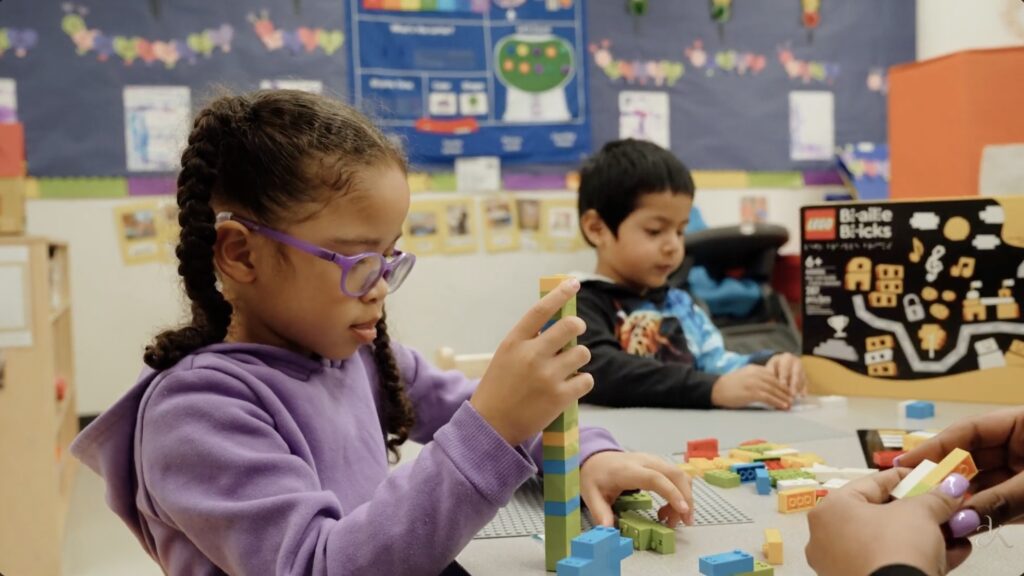
Helen Keller Services supports people who are DeafBlind, visually impaired, or have multiple disabilities. Their therapists, educators, and support staff work alongside clients every day, building skills and building trust in the same session.
When I walked in, I wasn’t handed a shot list. I was introduced to the work.
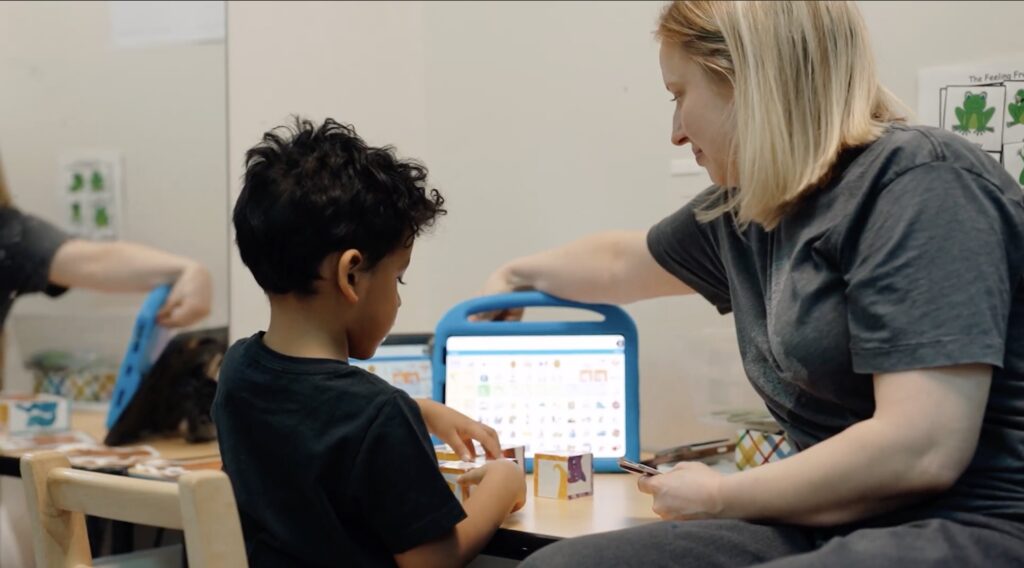
Carol, one of the therapists I spent time with, has a way of moving through a session that is completely unhurried. That calm transfers to her clients. You feel it in the room. And when you feel it in the room, the camera does too.
You can usually tell within the first few minutes whether people trust the room. When they do, you stop directing and start listening. That is the first thing nonprofit video production in New York teaches you quickly.
If you want to see how this documentary approach translates across corporate and organizational settings, take a look at the video and photography services page at AlexKaplanPhoto.com, where you’ll find examples from a range of industries and project types.
What I Was Brought In to Capture (Beyond Just Video)
The ask seemed simple: document the mission.
But that is never really what you are capturing. You are capturing progress. The moment a client uses an AAC device, an augmentative and alternative communication tool, to express something they could not say before. The look between a therapist and a parent that says: this is working. The quiet collaboration between professionals who have built something meaningful together.
That is what makes video production for organizations in NYC different from a product shoot or a brand reel. The story is not about the product. It is about the people who show up every day and the difference that makes.
Understanding that shift is everything. You can read more about how I approach this kind of storytelling on my About page, where the 30-year documentary background behind this work is explained in more detail.
The Moment That Stayed With Me
There is always one moment in a project that stays.
In this one, it was watching a child who had been largely nonverbal begin constructing full sentences using their device during a session. The therapist did not react with fanfare. She just kept going, steady and encouraging, as if she fully expected it. Because she did.
One of the parents nearby used a specific word to describe what the organization gives her child. She said safe. As in: her child felt safe enough here to try.
That is not a message you write in a script. That is a moment you earn by being present, patient, and quiet enough to let it happen on its own terms.
The strongest footage usually happens between the moments people think matter. That is as true in healthcare video production in NYC as it is in any other kind of storytelling. You prepare, you set up, and then you stop trying to control what the camera sees.
Why Real Stories Matter More Than Perfect Videos
Here is something 30+ years in this work has made clear: authenticity outperforms polish almost every time.
Organizations sometimes come in thinking they need a highly produced video with dramatic music and actors delivering scripted lines. And sometimes, in specific contexts, that has a place.
But for nonprofit video storytelling, the most powerful thing you can do is get out of the way. Use a real therapist. A real client. A real parent. A real moment. Let the story be what it already is.
The technical fundamentals still matter. Poor audio, shaky footage, and bad lighting will pull viewers out before they connect. But once you have the basics handled, what keeps people watching is simple.
People can tell pretty quickly when something is staged. They stay longer, and care more, when the moment feels real.
How Organizations Can Use Video to Show Real Impact
This is where nonprofit video production in New York becomes a practical strategy rather than just a creative exercise.
People understand something faster when they can actually see it happening. That is how people decide whether an organization is worth supporting, whether a cause is real, and whether the people behind it are genuine.
Here is how mission-driven organizations are putting it to work:
Mission videos like the one created for Helen Keller Services build donor and public trust by showing the work rather than describing it.
Impact reports in video form replace static PDFs that go unread. A two-minute video showing real outcomes is more compelling than a forty-page document.
Staff and program features humanize the team. People give to people, not institutions. Showing the faces and voices behind the work changes how potential supporters feel about it.
Event and program documentation creates reusable content for grant applications, annual reports, and board presentations across the full year.
The camera reacts differently when people stop performing. That shift, from subject to participant, is where the most useful organizational footage comes from. From educational video production in New York to mission documentation for social service organizations, that principle holds across every type of project.
Video Production for Organizations in NYC (Without the Fluff)
If your organization is in New York, Brooklyn, or Northern New Jersey and you are thinking about what a video project looks like in practice, here is an honest overview.
You do not need a massive production crew. You do not need weeks of pre-production or a team of twelve on location. What you need is someone who knows how to listen before they start shooting.
I’ve spent decades working as a nonprofit videographer in NYC and Northern New Jersey. The approach is the same every time: come in, understand what the work actually is, find the story that is already happening, and document it in a way your audience can feel.
No manufactured moments. No forced interviews that sound like press releases. No overproduction that makes a real story feel hollow.
Most of the organizations I work with serve people during vulnerable moments. That changes how you film. What they share is a mission that deserves to be seen. My job is to help more people see it.
What People Ask About Nonprofit Video Production
How do you create a nonprofit video that tells a real story? Start by identifying the real people at the center of the work. Not spokespeople, but the clients, staff, or community members whose lives reflect the mission. Follow them. Let the camera document what is already happening rather than staging moments for it.
What makes a good nonprofit video? A good nonprofit video is specific, not general. It focuses on one person, one moment, or one outcome rather than trying to capture everything the organization does. Specificity is what makes it emotional. Emotion is what makes it memorable.
Why is video important for nonprofits? Video is the fastest way to build trust with donors, board members, grant committees, and the public. Text describes. Video shows. Showing is almost always more persuasive.
How do organizations use video for awareness? The most effective approach is consistent, story-driven content that follows real people through real experiences. Organizations that publish regular video content tend to see stronger donor retention and better outcomes than those relying solely on written communications.
How do you showcase impact through video? Focus on transformation, not just activity. Find the moment where a client reaches a milestone, a skill develops, or a relationship is built on camera. That is what impact looks like on screen.
Ready to Tell Your Organization’s Story
If you lead a nonprofit, healthcare program, educational organization, or mission-driven group in New York, Brooklyn, or Northern New Jersey and you have been thinking about what video could do for your reach and fundraising, I would be glad to talk.
Even if you are still figuring out what a project could look like, I am happy to point you in the right direction. There is no pressure to have it all mapped out before we talk.
Reply...


