


Your Headshot day should feel relaxed, joyful, and completely yours.
I’m Alex Kaplan, a Headshot Photographer and videographer based in New Milford, NJ, serving Northern.
Browse by Category:
headshots
view more

REQUEST INFORMATION
Want to feel like THIS on your Headshot day?
Availability is limited. Check Your Date Here


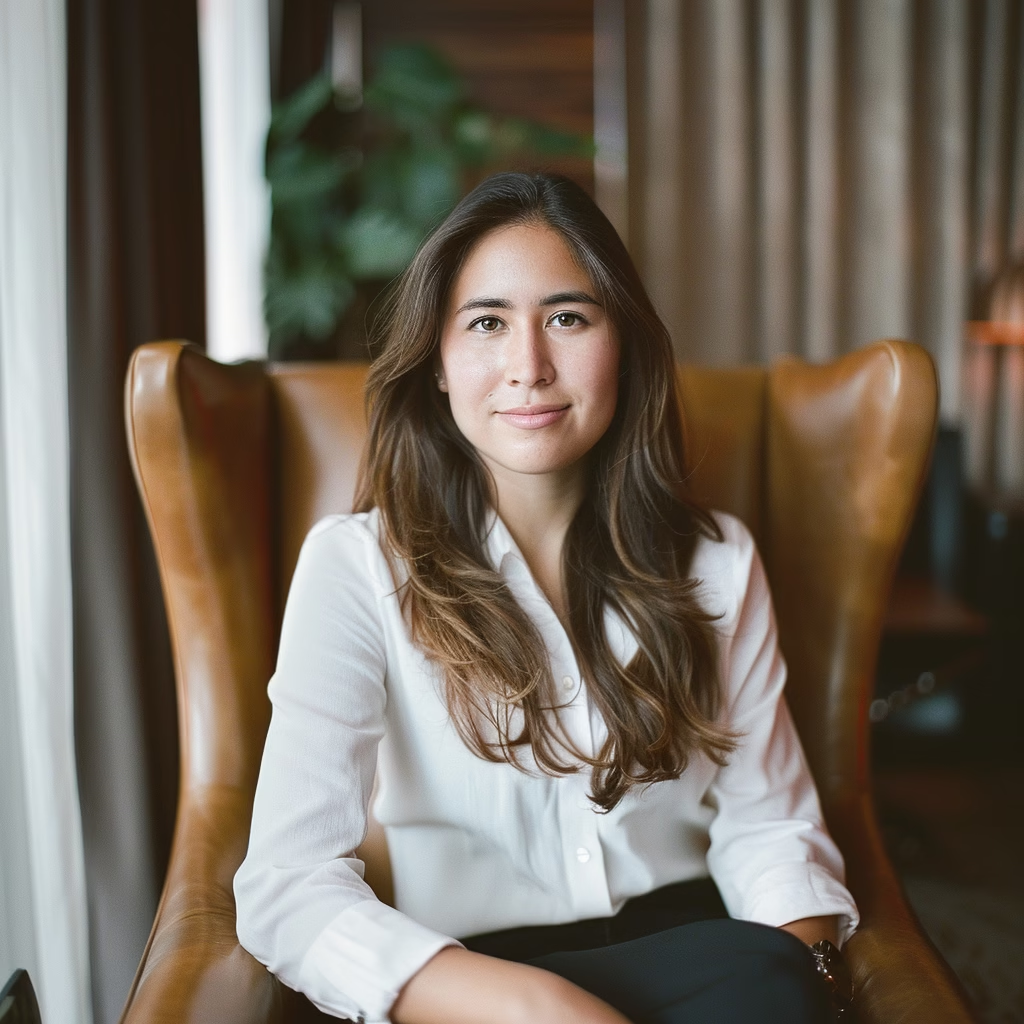
Most people planning a professional headshot spend a week on the shirt and four seconds on what is behind them. Then the proofs arrive and they notice the wall was doing half the work.
A blurred headshot background is the question I hear most, usually phrased as “plain, or should you see the room?” The honest answer depends entirely on where the picture will live.
The short version: a softly blurred background works best when you want a sense of environment without letting the surroundings compete with your face. It adds depth and suggests context without announcing it.
After 30 years and more than 15,000 sessions, I still make this call one client at a time. You can see the range on my professional headshots page.
What Is a Blurred Headshot Background?
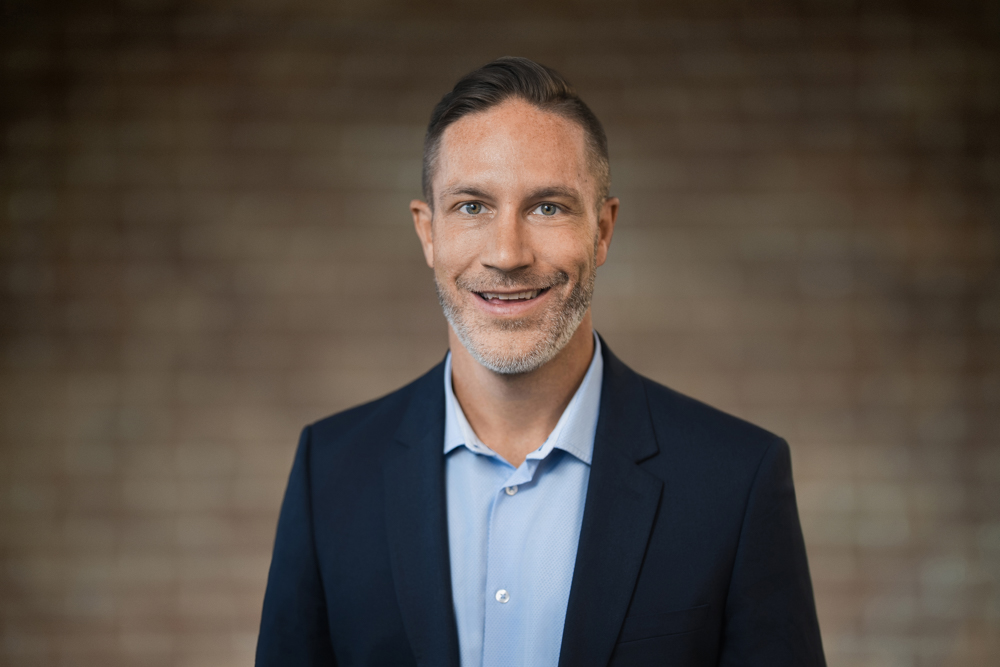
A blurred headshot background is one where you stay sharply in focus while everything behind you falls off into softness. Photographers call it shallow depth of field.
The part most people get wrong: it is not a filter applied afterward. It is created in the moment through lens choice, a wide aperture, and distance between you and the wall.
The portrait above was photographed on a 50mm lens at f/1.2. That combination is why a textured masonry wall reads as warm, soft tone instead of individual bricks.
Move a subject three feet further from that wall and the blur deepens. Move them against it and the texture snaps back. The background was built with placement, not editing.
If you are still choosing between environment types rather than blur specifically, my guide to choosing a corporate headshot background covers the full range.
Why Use a Blurred Background for a Professional Headshot?
It Keeps Attention on Your Face
The eye goes to whatever is sharpest. When the background softens, viewers see you before the furniture, the signage, or the corner of a doorframe.
It Adds Depth Without Looking Busy
A plain backdrop is clean, but flat. A softly blurred environment gives the image dimension, a sense that you are standing somewhere rather than floating.
It Can Make a Headshot Feel More Natural
Environmental headshots read as less formal than a studio backdrop while still looking polished. For people who describe themselves as bad on camera, that informality often shows up in the expression.
When a Blurred Headshot Background Hints at Your Environment
An office, a lobby, or an architectural wall can stay faintly recognizable without becoming the subject. A suggestion of your professional world rather than a tour of it.
How Much Blur Is Actually Right?
Almost nobody asks this, and it matters more than which wall you pick.
Too little separation and the background stays legible, so the eye keeps reading it. Too much and the image looks artificial, closer to phone portrait mode than a photograph.
The tell is the edges. Optical blur keeps the transition around hair and shoulders soft and continuous. Software blur leaves edges slightly crisp against a uniformly smeared background, and stray hair disappears.
My working range is enough blur that the background reads as tone and shape, not so much that it stops reading as a real place.
Blurred Background vs Solid Background: Which Is Better?
Neither wins on principle. They solve different problems, and the right professional headshot background depends on where the image will appear.
A blurred background adds environmental context, creates depth, and suits personal branding and business profiles. The location shapes the final look, which is part of its appeal.
A solid studio background is controlled, simple, classic, and excellent for teams and directories. Above all it is repeatable, which matters when you are photographing the eleventh person on a leadership page.
When Does a Blurred Office Background Work Best?
A blurred office background suits executives, attorneys, consultants, entrepreneurs, and anyone building a personal brand.
It works for LinkedIn profiles, company About pages, leadership bios, and speaker listings, where warmth helps and a stark backdrop can feel institutional.
For senior leadership, the environment does quiet work a plain wall cannot, which I get into on my modern executive headshots page.
What Makes a Good Background for a Professional Headshot?
Lighting comes first. The background should support your face rather than compete with it. Bright and even white backgrounds work beautifully when exposure and separation are controlled.
Color and tone matter next. The background should complement your wardrobe and complexion rather than match it, since matching tones make you sink into the wall.
Distance is the mechanism. Separation is what creates the blur, which is why a good environmental headshot needs room to work.
Clutter still counts, even softened. A blurred exit sign is still a bright rectangle beside your ear, and the eye finds it.
Brand fit closes the loop. An attorney, a founder, and an actor need very different environments, which is why I ask about the destination first.

Can You Use a Blurred Background Headshot on LinkedIn?
Yes, and there is a practical reason. LinkedIn displays your photo small and circular, so separation between head and background improves how you read at thumbnail size.
LinkedIn does not publicly recommend one background style over another, so I would choose based on clarity, consistency, and where the image will be used.
What matters is that your face stays clear, recognizable, and dominant inside that small circle. If your profile is the main destination, my guide to LinkedIn headshots for Northern New Jersey professionals goes deeper on framing and crop.
How I Choose the Right Background for Each Headshot
Before I pick a wall, I ask where the images are going, what you do, how formal you want to look, what you are wearing, and whether these must match existing team photos.
That last question decides more sessions than people expect. If eight colleagues are already on gray seamless, your beautiful blurred lobby looks like a mistake on the team page.
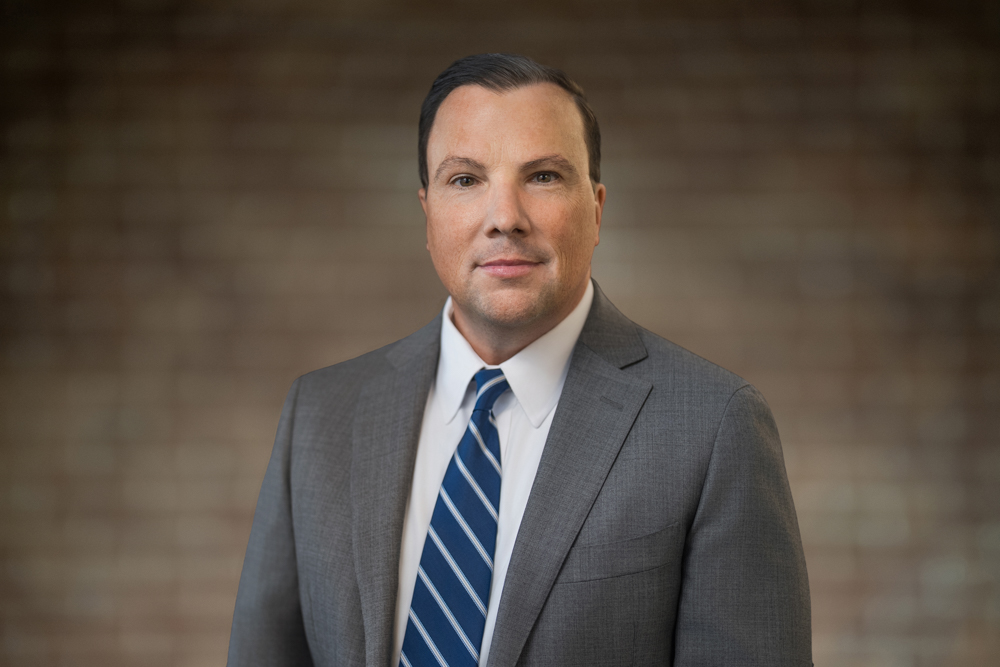
For the featured portrait, the softly blurred wall adds warmth and depth while keeping the subject cleanly separated. Same lens, same afternoon, four different people, and the background quietly adjusted to each.
You can read more about how I work on my about page.

Frequently Asked Questions
Should a professional headshot have a blurred background?
It can. A blurred background keeps attention on the subject while still providing visual depth and a sense of environment. Whether it is the best option depends on how the headshot will be used and the look you want to create.
Is a blurred or plain background better for LinkedIn?
Both work well. A plain background creates a clean, traditional appearance that is easy to match across a team, while a softly blurred background creates more depth and personality. Because LinkedIn shows your photo in a small circle, the deciding factor is keeping your face clearly visible and dominant in the frame.
What background is best for a professional headshot?
There is no single best background for everyone. Neutral studio backdrops, office environments, outdoor settings, and softly blurred backgrounds can all work well. The right one depends on your profession, your brand, your wardrobe, and where the photograph will actually appear, whether that is a company directory or a personal site.
Can an office be used as a professional headshot background?
Yes. An office provides useful environmental context that a plain backdrop cannot. Using shallow depth of field softens distracting details like signage, doorframes, and furniture while retaining the character of the location. The key is enough distance between you and the room for the background to fall away cleanly.
Are blurred backgrounds professional?
Yes. Photographed intentionally, a blurred background looks polished and professional while feeling less formal than a traditional solid studio backdrop. The distinction that matters is whether the blur was created optically at the time of the session or applied afterward by software, because the two do not look the same.
Find the Right Look for Your Professional Headshot
Your headshot background should support you, not compete with you. Studio backdrop or softly blurred environment, the right choice depends on where the image will live.
I photograph professionals throughout Northern New Jersey and the NYC metro area, from the New Milford studio and on location.
Schedule a professional headshot session with Alex Kaplan Photography and we will build the portrait around where it needs to work.
Reply...


