


Your Headshot day should feel relaxed, joyful, and completely yours.
I’m Alex Kaplan, a Headshot Photographer and videographer based in New Milford, NJ, serving Northern.
Browse by Category:
headshots
view more

REQUEST INFORMATION
Want to feel like THIS on your Headshot day?
Availability is limited. Check Your Date Here



Most actors I photograph did not start with a speaking role. They started on a set somewhere around Newark or the outer boroughs at six in the morning, crossing the same twelve feet of sidewalk for four hours.
The question that follows them out of that experience is usually some version of background actor vs principal actor. What actually separates the two, and does that difference change the photos you submit?
It does. Not on the timeline most people expect, and not in the way most people assume.
Quick Answer: A background actor appears on camera without directed dialogue, filling out the world of a scene. A principal performer carries a featured performance responsibility, most commonly a speaking role. Background work rarely needs specialized photos. Principal submissions do, because the photo now has to argue for a specific kind of casting.
What Is the Difference Between Background Acting vs Principal Acting?
The split is about function, not talent. One job fills the frame. The other job carries something in it.
That distinction shapes how you are cast, how you are paid, how you are credited, and eventually what your photos have to do for you.
What a background actor does
A background actor is hired to make a world look inhabited. You are a commuter, a juror, a nurse walking past a gurney, a guest at a reception that will be shot from eleven angles.
Casting for this work leans heavily on logistics. Availability, reliability, height, age range, wardrobe you can bring yourself, and whether you fit the look of the room the production is building.
You are usually booked from a snapshot and a set of sizes. Nobody is studying your eyes.
What makes a performer a principal
Speaking roles are the familiar example, but the contract definition is broader than most actors realize. SAG-AFTRA lists several routes by which a background performer can be upgraded to principal.
Being directed to speak a line is one. Performing an identifiable stunt is another. Under commercial rules, a performer can also qualify by being in the foreground, clearly identifiable, and demonstrating or reacting to the product or the narration, with all three conditions met at once.
So “principal” is better understood as featured performance responsibility rather than simply having lines. The practical effect is the same either way: the production is now betting a piece of the scene on a specific person, not filling a room.
Do Background Actors Need Professional Headshots?
Here is the part of the background actor vs principal actor question that surprises people. For background work, a professional headshot is not just unnecessary. At some casting services it is disqualifying.
Central Casting is explicit about this: when they say headshot, they do not mean a professional photo. Retouched and altered images cannot be used to consider you for background work.
Their guidance asks for something closer to the opposite of what I do for a living. Good light, a plain white or gray background, framed straight on, unedited and unaltered, ideally taken by a friend or family member.
That is not a low standard. It is a different job. Background casting is matching your current appearance, sizes, and wardrobe to a scene, so anything that smooths or stylizes you away from how you actually look is working against the booking.
So the real failure at this level is not an unprofessional photo. It is an inaccurate one: a cropped wedding shot from four years ago, a haircut you no longer have, a retouch that quietly removed the face they would be casting.
If you are still getting oriented in this market, my guide to becoming an actor in New Jersey covers where photos sit in the wider sequence of training, resume, and casting profiles.
Background Actor vs Principal Actor: What Changes in the Job Your Photo Has to Do
Once you start submitting for speaking roles, your photo stops being an identification document and starts being an argument.
It has to answer a question nobody will ask you out loud: could this person believably be the character on page nineteen?
Why the background actor vs principal actor shift changes your photo plan
For background work, the photo says this is what I look like. For principal work, the photo says this is who I could be.
That is a different technical problem. Expression, eye direction, lighting contrast, and crop all start carrying meaning instead of just documenting you.
I have been photographing people across Northern New Jersey and New York City for more than 30 years, and this is a misunderstanding I hear regularly on prep calls. Actors think they need more photos.
What they usually need are more deliberate ones. You can see how I approach that work on my actor headshots NYC and New Jersey page.
What Principal Actor Headshots Should Communicate
Four things, in roughly this order of importance.
Believable type. Not a costume, not a fantasy casting. The range of characters a viewer would accept you as without effort.
Personality. Something specific has to be happening behind the eyes. A technically polished headshot can still feel generic if the expression gives casting little sense of who you are.
Emotional tone. Warmth, restraint, tension, ease. These are photographic decisions made with light and direction, not with a filter afterward.
Current accuracy. If you walk into the room and the reader has to recalibrate, you have spent your first five seconds on the wrong thing.
Personality is the one I see missed most often in images actors bring me. The lighting is fine, the shirt is fine, and there is simply nobody home in the frame.
A Visual Example: One Session, Four Reads
Barry arrived at my New Milford studio using a LinkedIn photograph as his actor headshot. During the leather-jacket look, he kept falling into a stiff, eager-to-please corporate smile. I asked him to drop his shoulders, exhale completely, and stop trying to sell himself to the lens.
The tension left his jaw and his eyes settled. That was the frame where the images stopped reading like a polished business portrait and started reading like an actor headshot.
The four frames below illustrate different believable casting reads from that one session.
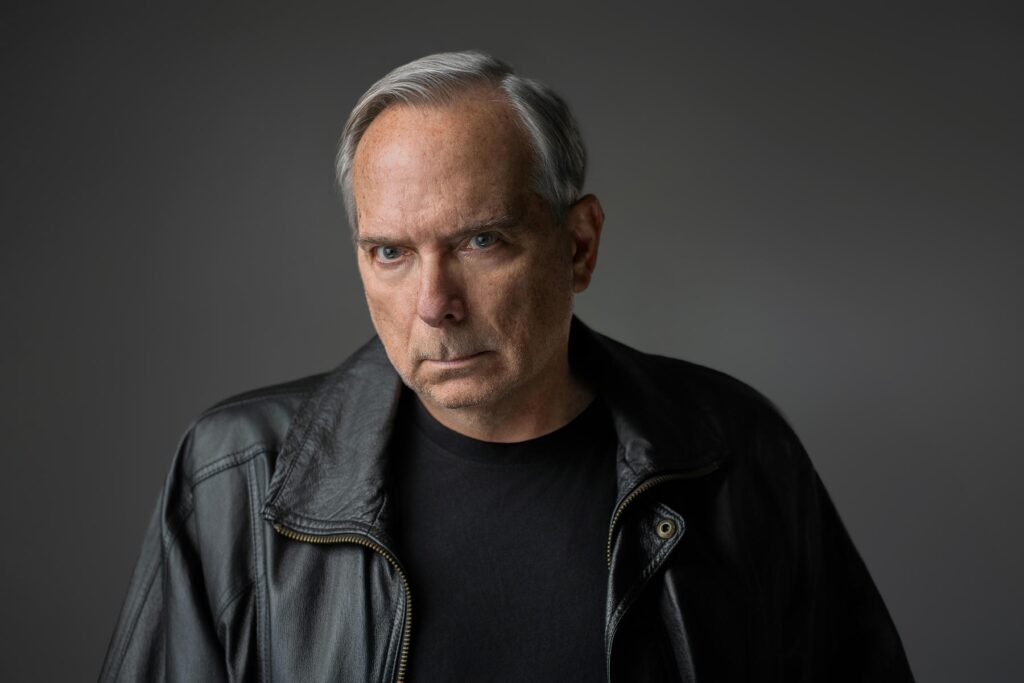



Same person, four different reads: dramatic, everyday, grounded, and professional. None of it required him to become anyone else.
How to plan a set like that, how many looks you actually need, and which dials move the read are covered in depth in my guide to casting range headshots. This article is about the career-stage question of when that planning starts mattering. That one is about how to do it.
When to Update Your Headshots
Crossing the background actor vs principal role line is one trigger. It is not the only one. Update when the photo stops being true, or when your ambitions outgrow it:
- Your look changed noticeably: weight, hair length or color, facial hair, glasses, aging past your last shoot
- You are moving from background work to principal submissions for the first time
- You are targeting a type your current images do not support
- Your photos are eighteen to twenty-four months old and you are actively submitting
- An agent, manager, or casting contact has told you directly that your images are not working
Actors coming in from Jersey City and Newark ask me whether they can stretch one more season out of an old photo. If you are submitting for speaking roles with a picture that no longer looks like you, the answer is no, and the cost stays invisible because rejection is silent.
When representation enters the picture the standard rises again, since your photos become part of someone else’s pitch. If that is where you are headed, how to find a talent agent in NYC and New Jersey covers what agencies expect in a submission.
Frequently Asked Questions
What is the main difference between a background actor and a principal actor?
A background actor appears on camera without directed dialogue and fills out the world of a scene. A principal performer carries a featured performance responsibility and is paid at a higher rate. Speaking roles are the most common example, though union contracts recognize other qualifying circumstances too.
Can you go from background acting to principal roles?
Yes, and many working actors do. Background work builds set literacy, professional habits, and industry contacts. Moving up generally requires training, self-tapes, a casting profile, and photos strong enough for principal submissions, since background bookings rarely lead directly to speaking roles on their own.
Do background actor headshots need to be professional?
Not necessarily specialized, but they must be current and accurate. Background casting is largely logistical, so a clear, well-lit, recent photo matching your listed sizes is usually sufficient. Outdated or heavily edited images cause more lost bookings at this level than unprofessional ones do.
How many looks do actor headshots for speaking roles need?
Most actors are served by two or three looks, each aimed at a distinct kind of role. More than that tends to blur together rather than widen your options. If you cannot name the specific role a look targets, that look is not earning its place.
How often should actors update their headshots?
Every eighteen to twenty-four months while actively submitting, or immediately after any noticeable change in appearance. Also update when you shift from background work toward principal roles, because the photo now needs to communicate type and personality rather than simply confirm what you look like.
Ready to Photograph the Actor You Are Becoming?
If you are an actor in Newark, Jersey City, or anywhere across Northern New Jersey and NYC who has been booking background work and is ready to submit for speaking roles, that transition deserves photos built for it.
Tell me the roles you are actually going after and we will plan the looks around them. Get in touch here or call 917-992-9097, and we can talk through what your submissions need before you book anything.
Reply...


