


Your Headshot day should feel relaxed, joyful, and completely yours.
I’m Alex Kaplan, a Headshot Photographer and videographer based in New Milford, NJ, serving Northern.
Browse by Category:
headshots
view more

REQUEST INFORMATION
Want to feel like THIS on your Headshot day?
Availability is limited. Check Your Date Here
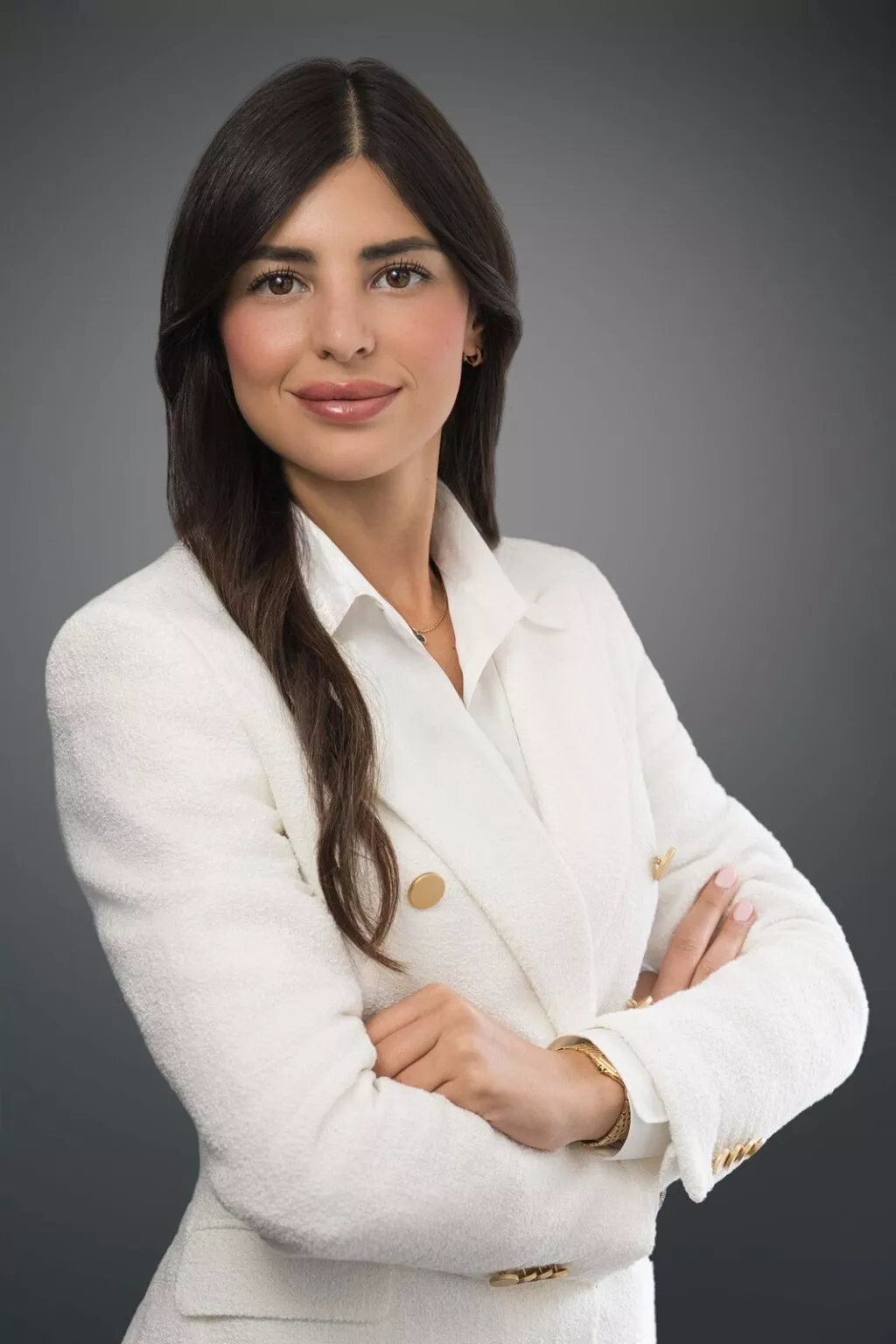

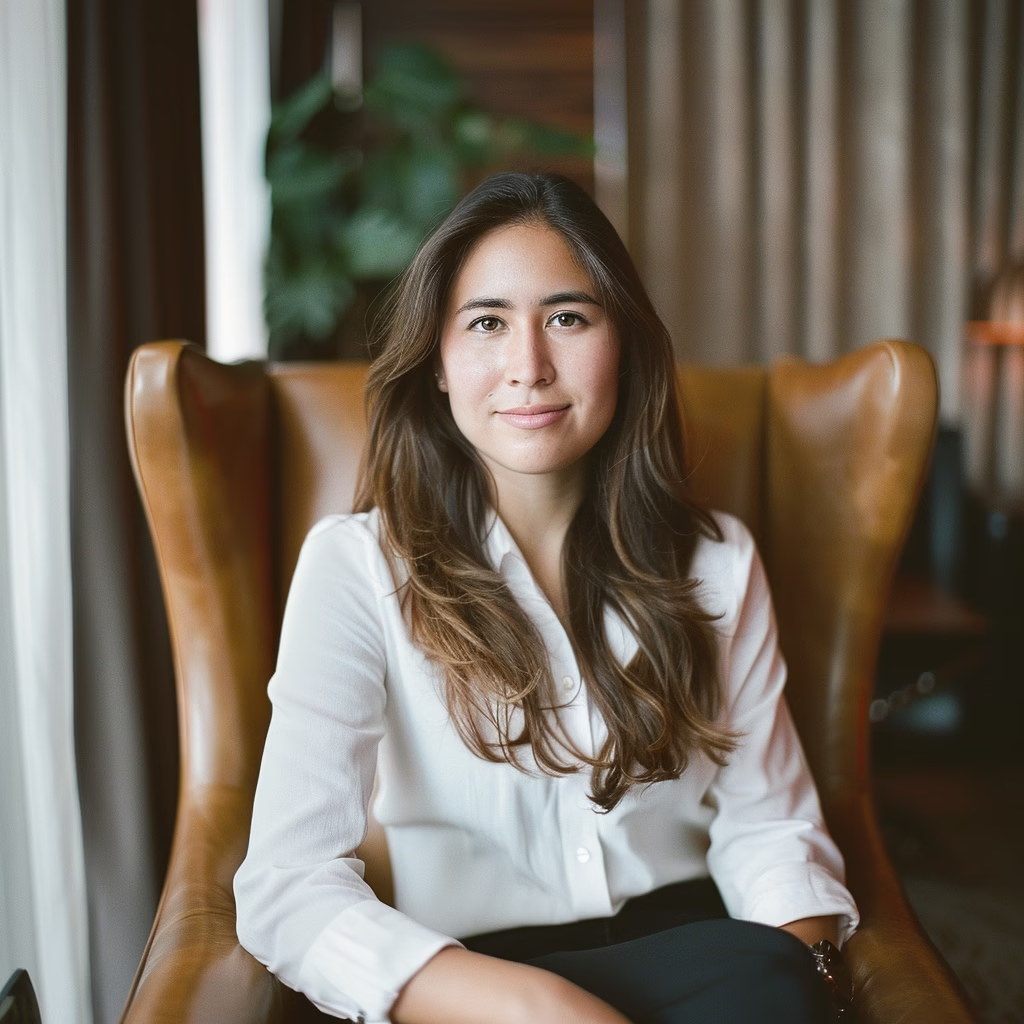
A few years ago I photographed a physician at a rented studio space in Northern New Jersey. The session went well. Clean lighting, sharp images, everything exactly as it should be. He looked professional. He was professional. A few months later he called back. He had been looking at his headshot on his practice website and something was bothering him about it, though he could not quite say what.
We scheduled a second session. This time we went to his office. Set up near his equipment. Spent about 40 minutes working through different spots in the practice.
The difference in the final images was not subtle. It was not even close.
The studio photos were not bad. The office photos were just real. And patients, as it turns out, can feel the difference before they can explain it.
If you are a physician, dentist, or healthcare provider in Northern New Jersey or New York City thinking about updating your professional image, that distinction is what this is about. It is the most important thing I have learned about medical professional headshots NJ providers ask me to create, and it has held true across more than 30 years and hundreds of sessions.
What Are Medical Professional Headshots?
Medical professional headshots are portraits designed specifically for doctors, dentists, and healthcare providers, often taken in real clinical environments to build patient trust and reinforce credibility before the first appointment.
Why Studio Headshots Fall Short for Medical Professionals
Here is what I notice when I look at the websites of most physicians and dentists in Northern New Jersey: the headshots are interchangeable.
Not because the doctors are similar. Because they all used a studio. Same neutral background, same flat light, same quarter-turn toward the camera. A patient opening three tabs to compare providers sees the same photograph three times with different faces on it. Nothing in any of those images tells them what it will feel like to walk into that office. Nothing gives them a reason to choose one over the other.
That is not a photography problem. It is a trust problem. And it costs practices more than most providers realize, because the patient who cannot distinguish between providers on appearance alone defaults to proximity or price. Neither of those is where you want to be competing.
Your headshot is sitting on your practice website, your Google Business Profile, and every other place a patient lands before they decide to call. It has about two seconds to do something. A studio portrait spends those two seconds confirming that you own a white coat.
That is the gap. And it is exactly where medical professional headshots in NYC & New Jersey done on location begin to close it.
What Research Actually Shows About Patient Trust
This is not about following a trend in photography. It is about how patients are actually making decisions when they land on your website.
A study published in the Mayo Clinic Proceedings found that patients who could correctly identify their physicians from photographs reported significantly higher satisfaction with their care. The photograph alone changed the quality of the relationship. Recognition builds connection before anyone walks into the room.
A 2024 systematic review published in PubMed went further, finding that patients typically form trust based on first impressions, and that a physician’s visual presentation functions as a direct communication tool that shapes assumptions about competence and approachability before any interaction occurs. The researchers noted that these perceptions are highly context dependent. Where the photo is taken matters as much as how it is taken.
This is the part most providers miss. Context is not just a visual detail. It is information. And context shifts completely depending on who is looking at the photo and why.
That is exactly why the standard changes for providers who are earlier in their careers. Medical School application headshots are designed to read well to an admissions committee, not to patients. That audience is credential-focused and expects a clean, formal, neutral portrait. A practicing physician or dentist building a patient-facing brand is solving a different problem for a completely different reader. The photo that works for one will not do the right job for the other.
Why the Setting Does Half the Work
Here is what I have noticed over hundreds of medical and dental sessions: patients read photographs the way they read a room. They are not analyzing composition or thinking about lighting. They are asking a single question without realizing it: does this person feel safe to be around?
A studio portrait answers that question narrowly. You look professional. That is the full response it gives.
A photo taken inside a real clinical environment answers it more completely. The clean counters, the organized equipment, the way a doctor stands in their own space with their arms relaxed and their expression fully at ease. None of that is staged. And patients feel the difference even when they cannot explain it.
The physician standing in front of their imaging equipment, in their own coat with their own name on it, in the office where they actually see patients, is communicating several things at the same time. The space is real. The equipment is familiar. This person belongs here. That combination of signals is something no amount of studio lighting can manufacture.
It is also the thing that separates your headshot from every other provider in the search results. Most medical headshots look identical. A photo taken in your actual practice does not.
Why This Approach Works Especially Well for Doctors and Dentists
Medical and dental practices sit in a particular place when it comes to trust. Patients are often anxious before they arrive. They are making decisions about their health, which is personal in a way that most service decisions simply are not.
Dentists benefit from this especially. Dental anxiety is genuinely common, with research suggesting that a significant portion of adults delay or avoid care specifically because they do not know what to expect. A headshot taken inside the practice does not eliminate that anxiety. But it does something measurable: it makes the space familiar before anyone walks in. The equipment looks like what they saw in the photo. The person in the coat matches the face on the website. That recognition is a small thing that does a quiet, important job.
I have had providers tell me that new patients mention the photo during the first appointment. Not in a significant way. Just something like: “I recognized you from your website.” That one comment tells you the photo is working. The patient arrived already knowing something about this person. That changes how the appointment begins, which changes how it goes.
A Real Example: A Dentist’s Headshot Inside His Practice
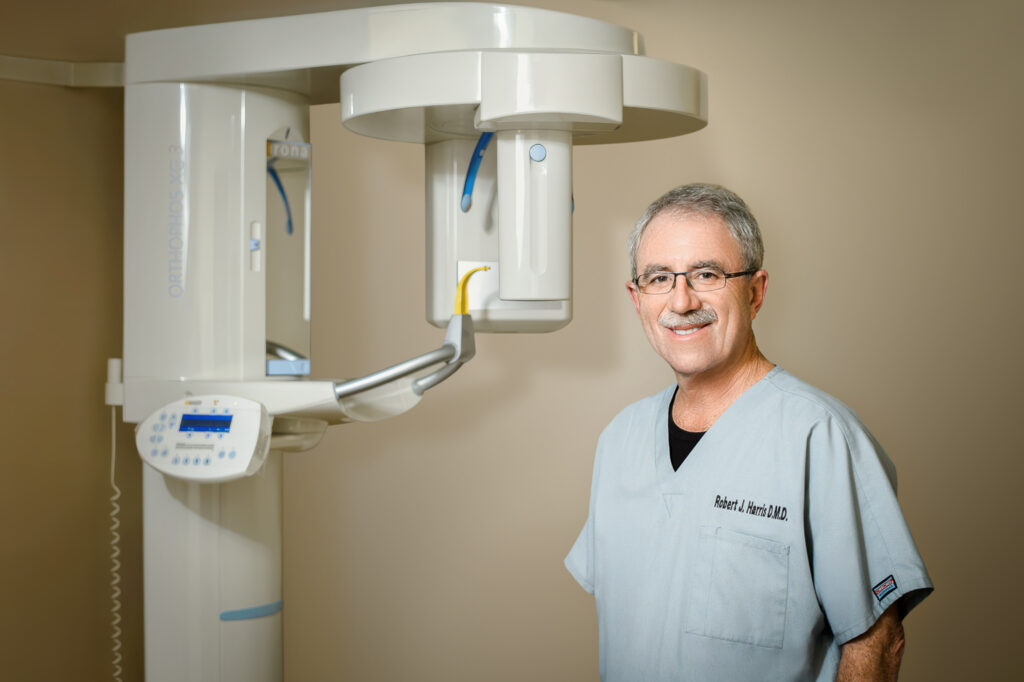
That machine standing to Dr. Harris’s left is a panoramic dental imaging unit. If you have ever visited a dentist for a full set of X-rays, you know exactly what it does. You stand in place, rest your chin on the support, and the arm rotates slowly around your head. Most patients find it mildly disorienting the first time. It is one of the most universally recognizable pieces of dental equipment there is.
Dr. Robert J. Harris, D.M.D. is standing next to that machine in his own light blue scrubs, his name embroidered clearly on the chest. He is not leaning on it, not gesturing toward it, not performing for the camera. He is just standing there, completely relaxed, looking directly at you with the kind of ease that only comes from spending thousands of sessions in the same room.
What does a new patient actually see when they land on this photo?
They see equipment they recognize. They see a space that is clean, organized, and not the least bit intimidating. They see a man who has clearly been in that room a very long time and is completely at home in it. And they read his name right on his chest, which closes the last inch of distance between a stranger on a website and the specific person who will be taking care of them.
That is not a small detail. A headshot that makes a patient feel like they already know something about you is doing a different job than one that simply confirms you are licensed.
The session ran about 45 minutes. Dr. Harris was fully relaxed by the second setup. That ease is visible in every frame, and it is exactly the kind of thing that comes through only when you photograph someone in a space where they genuinely belong.
How to Prepare for Medical Professional Headshots in NJ
The first thing I tell every provider before we start: we are not looking for perfect. We are looking for real.
Your practice does not need to look like a catalog. It needs to look like where you actually work. If your exam room has a clean counter, some organized equipment, and decent ambient light from a window, that is exactly what we need. If the light is not there, we bring it. We are not depending on the building to cooperate.
For wardrobe, the simplest rule is to wear what your patients expect to see you in. A white coat works beautifully if it is pressed and fits well. Scrubs with your name embroidered on them are excellent, as you can see in the photo of Dr. Harris. That embroidered name is a small detail that photographs with a lot of weight. It is specific. It is personal. Avoid busy patterns. Solid colors are always cleaner.
What should healthcare professionals wear for headshots? Your pressed white coat or solid color scrubs are both strong choices. If your name is on the coat or on the chest pocket, keep it visible. That detail makes the photo immediately feel personal rather than generic, which is the whole point.
Plan for 30 to 45 minutes. Most providers are fully at ease by the second or third setup. We move through different spots in your office, work with whatever light is available, and let the right options emerge naturally. The goal is a final image that holds up across your practice website, your Google Business Profile, your Healthgrades or Zocdoc listing, and every other place a new patient might find you before they decide to call.
When Studio Headshots Still Make Sense
There are situations where a studio session is the right call.
If you are part of a large hospital system or group practice that requires uniform branding across 20 or more providers, a controlled studio setup makes consistency far easier to manage. If your office has no workable light or usable background, we may need to build the environment with equipment regardless. And if you simply prefer a clean, minimal portrait with no environmental context, that is a fully legitimate choice that photographs beautifully.
What I would suggest before you decide: think about where your headshot will actually live and who will be looking at it. If patients are the primary audience, context is your strongest tool.
Build Trust Before Patients Ever Meet You
If you are a doctor, dentist, or healthcare provider in Northern New Jersey or New York City, your headshot should do more than confirm that you are licensed. It should make a patient feel like they already know something about you before they call.
That is a different standard than most providers hold their photos to. But it is the right one.
I have been photographing professionals across NJ and NYC for more than 30 years, with over 625 five-star Google reviews from physicians, dentists, attorneys, and executives who needed imagery that actually worked for their practices. Whether you need a single portrait or a full team session, I would be glad to talk through what would serve you best.
Call or text: 917-992-9097 or 201-834-4999
Learn more about medical professional headshots in NYC & New Jersey
Reply...


