


Your Headshot day should feel relaxed, joyful, and completely yours.
I’m Alex Kaplan, a Headshot Photographer and videographer based in New Milford, NJ, serving Northern.
Browse by Category:
headshots
view more

REQUEST INFORMATION
Want to feel like THIS on your Headshot day?
Availability is limited. Check Your Date Here


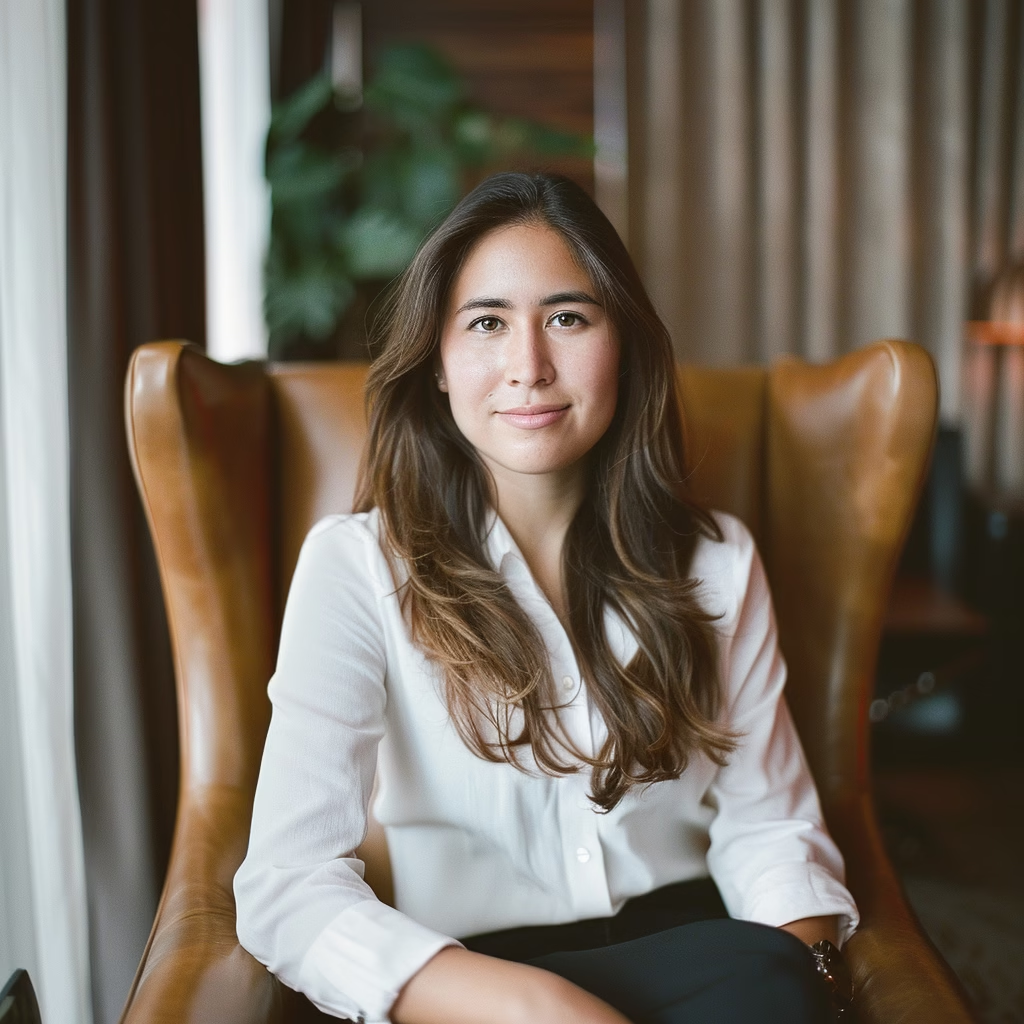

Most people who walk into my studio are quietly convinced they’re just not photogenic. They saw one bad ID photo, one unflattering shot tagged at a party, and decided the camera doesn’t like them. After more than 30 years behind the camera, photographing executives, physicians, and nervous first-timers across Northern New Jersey and NYC, I can tell you that belief is almost always wrong. Learning how to look photogenic in headshots has very little to do with your face and almost everything to do with how you feel in the second the shutter clicks.
If you’ve been avoiding new professional headshots because you “hate having your picture taken,” you’re in the majority, not the exception. Here’s the part that surprises people: being photogenic is far more teachable than anyone admits. Some of the most natural headshots I’ve ever taken were of people who showed up genuinely terrified. If that’s you, my whole approach to camera-shy confidence is built around this exact problem.
Why Do Some People Look Photogenic?
Some people look photogenic because they’re relaxed, present, and comfortable being seen, not because their features are objectively “better.” A calm expression, soft eyes, and unforced posture read as warmth through a lens. Most so-called photogenic people simply aren’t fighting the camera. That ease is something almost anyone can learn.
The folks we label “naturally photogenic” usually share one trait: they’ve stopped monitoring themselves. They aren’t checking how their jaw looks or whether they’re smiling correctly. That lack of self-surveillance is what the lens picks up as confidence.
What “Photogenic” Really Means, and What It Doesn’t
We treat photogenic like it’s a fixed genetic gift, the way some people have green eyes. It isn’t. A great headshot is really a record of an emotional state. The camera is honest to a fault, and it reads micro-tension better than any human eye. A clenched jaw, a held breath, eyes that are working too hard, all of it shows up.
I’ve watched this play out in countless sessions. Someone spends the first fifteen minutes worried about their smile, fixing it, checking it, holding it in place, and the frame they end up choosing is always the one where they forgot the camera was there at all. The research backs up what the room already tells me: Princeton psychologists found that people form an impression of a face in about a tenth of a second, and a longer look barely changes it. A headshot freezes one of those split seconds. Whatever you happen to be feeling becomes the whole story someone tells themselves about you.
That’s why the difference between a flattering frame and an awkward one is often a fraction of a second apart. Same person, same lighting, same outfit. What changed was internal. When clients tell me they want headshots that look natural rather than stiff or “corporate,” what they’re really asking for is a photo taken in a moment they actually felt like themselves.
Can Photographers Make You Photogenic?
Yes, a skilled photographer can absolutely help you look photogenic. The right direction, lighting, lens, and pacing do most of the quiet work. My job is to read your tension in real time, adjust before you ever notice, and coach expressions that feel like you instead of a performance. You don’t have to “turn it on” for the camera. I create the conditions where your natural self shows up.

A lot of that is technical. Lighting can soften or sharpen a face. The right focal length keeps proportions honest. A slightly higher angle, a turn of the shoulders, a chin brought forward and down, these are small mechanical adjustments that flatter almost everyone.
But the bigger half is pacing and presence. It happens in almost every session: someone sits down and freezes, shoulders up by their ears, smiling on command and completely locked. So we stop shooting. We talk for a few minutes, about their work, their commute, anything but the photo. Somewhere in there they laugh, a real one, their shoulders drop an inch, and that is the frame worth catching. Nothing about their face has changed. Their nervous system has.
How Do I Look Better in Headshots?
You look better in headshots when you give your body a few small advantages and then stop trying so hard. Most of what I teach clients about how to look photogenic in headshots comes down to that: preparation lowers the pressure, and lower pressure is what reads as confidence on camera. A handful of habits make a real difference:
- Get a decent night’s sleep and hydrate the day before; tired eyes are the one thing that’s genuinely hard to fix later.
- Wear something you already feel like yourself in. Solid, muted colors and a clean fit beat anything trendy or busy.
- Bring your chin slightly forward and down. It feels strange and looks great.
- Exhale right before the frame. A held breath tightens everything; a slow breath out softens your whole face.
- Think of a specific person you like instead of trying to “smile.” Real warmth comes from a real thought.
None of this requires you to become someone else. It just clears the runway so the natural version of you can land.

What Makes Someone Naturally Photogenic?
Naturally photogenic people are usually the ones who’ve made peace with being looked at. They aren’t performing confidence; they’ve simply stopped bracing against the camera. Comfort, presence, and a bit of self-acceptance do more for a photo than symmetrical features ever could. The encouraging truth is that this is a state, not a birthright, and states can be guided.
That’s why two people with very different faces can both end up with wonderful, photogenic headshots, and why the same person can look like a stranger in one frame and completely themselves in the next. The variable was never the bone structure. It was the feeling underneath it.
The Part Nobody Talks About: Feeling Safe Being Seen
Here’s what 30 years behind the camera taught me. The single biggest factor in a great headshot is whether someone feels safe being seen. Camera confidence isn’t loud or theatrical. It’s the quiet ease of a person who isn’t worried about being judged in the moment.
When you feel safe, your shoulders drop, your eyes soften, and your expression stops being something you’re holding up and becomes something you’re simply doing. That’s the entire game. A good photographer’s real skill isn’t the lighting or the gear, though those matter. It’s building enough trust in a short window that your guard comes down on its own. Get that right and “photogenic” takes care of itself.
So if you’ve spent years believing you photograph badly, I’d gently push back. You’ve probably just never been photographed in a setting that made it easy to relax.
You’re Likely More Photogenic Than You Think
If you’re a professional in the Newark area or just across the river in NYC who’s been putting off new headshots because you don’t think you photograph well, I’d honestly like the chance to change your mind. This work is for the skeptics, the camera-shy, and the people who’ve never once liked a photo of themselves. After three decades and more than 645 five-star Google reviews, those are still my favorite sessions to win over.
You don’t need to figure out how to look photogenic in headshots on your own, and you certainly don’t need to become more photogenic before you book. That’s my job. You just need a calm, experienced photographer who knows how to find the real you and wait for the right moment. When you’re ready, reach out through our contact page and let’s talk about getting you a headshot that finally looks like you.
Reply...


