


Your Headshot day should feel relaxed, joyful, and completely yours.
I’m Alex Kaplan, a Headshot Photographer and videographer based in New Milford, NJ, serving Northern.
Browse by Category:
headshots
view more

REQUEST INFORMATION
Want to feel like THIS on your Headshot day?
Availability is limited. Check Your Date Here



Every Conference Has a Story Worth Capturing
A conference runs for three or four days. The photographs from it run for years.
That gap is the entire argument for professional conference photography. Most organizers feel it months later, when marketing needs images for the next event and nobody has anything usable.
When I covered The Subscription Show 2025 on the Jersey City waterfront, the goal was never to prove attendance. It was to build a visual library that stays useful long after the last session ends.
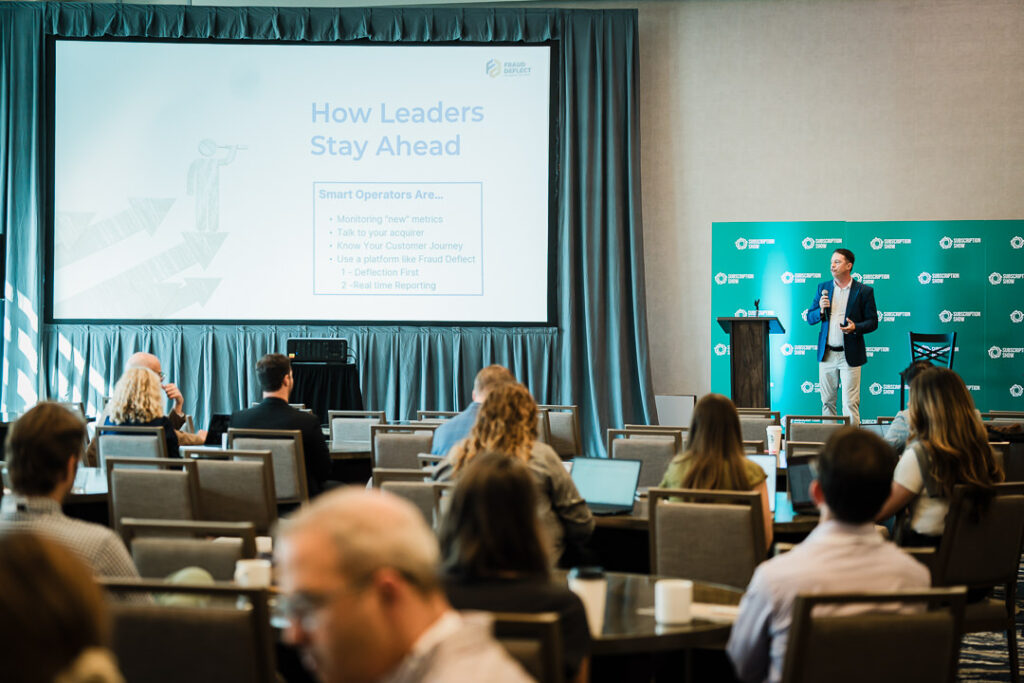
I am Alex Kaplan, an experienced NYC corporate photographer working across Northern New Jersey and New York City for more than 30 years. Subscription Insider runs the show across several days of keynotes, breakout tracks, operator workshops, and an exhibit hall, and one pattern holds at events like it: the ones that keep growing tend to be the ones that documented themselves well.
The real job of a corporate event photographer is recognizing which moments carry meaning and standing in the right place before they happen. That is why I treat corporate event photography and videography as documentation first.
Why Hire a Professional Conference Photographer?
A professional conference photographer delivers brand-consistent images under difficult stage lighting, works without interrupting sessions, and knows which frames a marketing team will reach for later. Phone photos prove something happened. Professional coverage produces assets that carry sponsorship decks, press outreach, and next year’s registration page.
Great Conference Photography Starts Long Before the Keynote
By the time the first keynote opens, most of the decisions that matter are already made.
Before an event I ask the organizer for seven things: the final agenda, a room map, the speaker and VIP list, sponsor priorities, branding guidelines, the simultaneous-session schedule, and the first deadline marketing has to hit. Each one changes what I do on the day.
The simultaneous-session schedule matters most, and it is usually the last to arrive. Photographer count should follow the number of rooms running at once, not the number of attendees. One photographer covers one active room properly, so the moment two sessions overlap you either add a second shooter or decide in advance which room loses coverage.
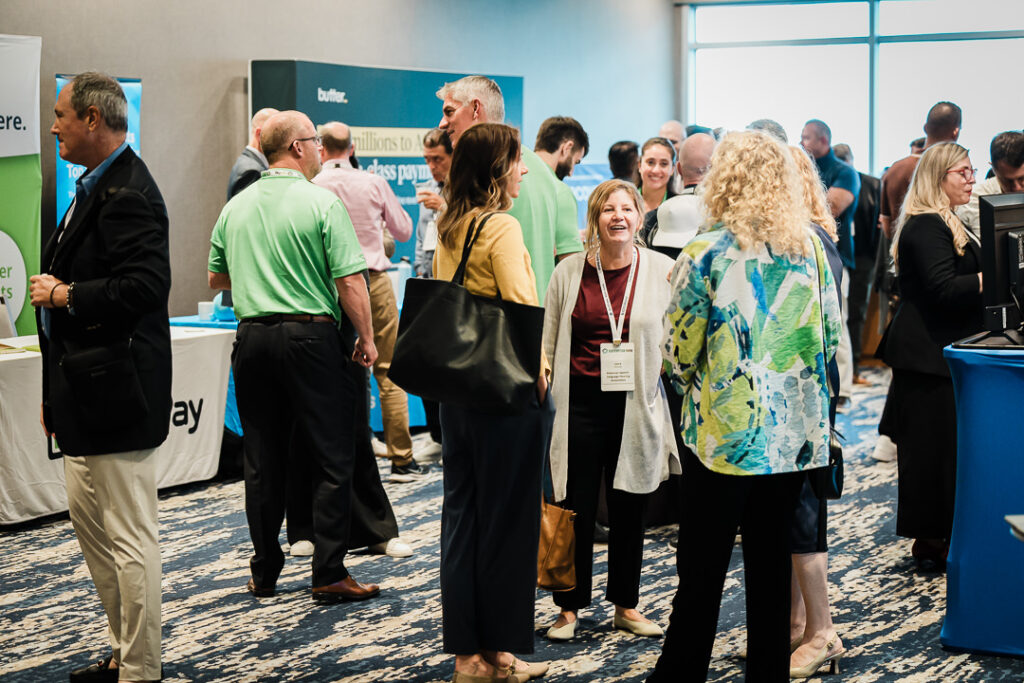
Lighting is the part organizers consistently underestimate. Stage washes run heavily colored, ballrooms swing between tungsten and window daylight, and a waterfront room looks different at 9 a.m. than at 5 p.m.
Some organizers pair event coverage with an on-site professional corporate headshots service for speakers and executives. Decide that early: it needs its own corner and its own block on the schedule.
Capturing Speakers Without Distracting the Audience
The goal at a conference is for nobody to notice I was there.

Stage coverage is a discipline of restraint. I work with silent shutters, fast primes, and available light, moving during applause and transitions rather than during the sentence a speaker is building toward.
Every major session owes you three frames rather than one: the speaker making the point, the audience receiving it, and the branding that identifies where the moment happened. Miss the third and the photograph could have come from any conference in any city. Business conference photography lives or dies on that frame.
Position matters more than equipment. A house-left aisle usually gives you a speaker’s engaged side, a clean background, and the branded screen in frame without a hotspot.
Most stage lighting is built for one person standing still at a lectern. Speakers who move do not cooperate with that. They drift into the dead pockets between fixtures, where the light falls off two stops in half a step.
Chasing a speaker across the front of a room is how you fill a card with unusable frames, and how a room starts noticing you. The better approach is the opposite of instinct: find the pocket where the key light actually lands, pre-focus there, and wait. Presenters return to the same spots without knowing they do it.
What comes out of that patience is the frame worth keeping. A speaker properly lit, caught mid-thought, with the branded screen still holding behind them.
I shoot for the gesture, not the pose. A presenter making a point with their hands, leaning toward the room, laughing at their own aside: those frames sell a speaking program. A person standing flat behind a lectern does not.
The audience half of that pairing is easier to miss and just as useful. A nodding row, a raised hand, a table taking notes at the same moment: that is the proof the content landed.
The same approach at a different scale: this New Jersey corporate event case study from an all-day leadership summit in Montclair.
Networking Moments Often Become the Most Valuable Images
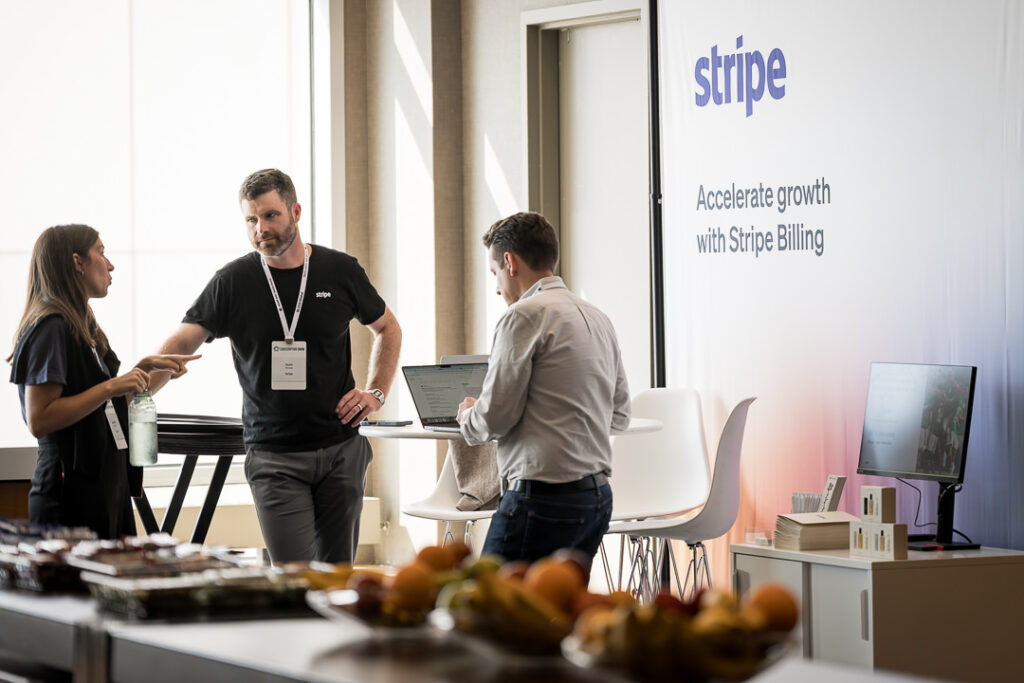
In my experience, the photographs that get reused a year later are rarely the keynote shots.
It is two people laughing near the coffee station, a roundtable leaning over a shared problem, a handshake in a hallway. Those images argue the event was worth attending, the only claim that sells the next one.
Candid work takes patience and a long lens. The moment people know they are being photographed, the conversation becomes a performance, so I stay back and wait for the real beat. Registration desks, exhibit hall demos, and quieter one-on-one meetings belong in the delivered set too.
Why Conference Videography Adds Even More Value
Photography proves the event happened. Video makes people feel they missed something.
Running conference videography alongside stills means capturing b-roll, ambient sound, speaker segments, and reaction footage on days I am already on site. That is cheaper than staging it later, and impossible to recreate after.
The sizzle reel produced alongside the Subscription Show 2025 coverage is the clearest example: a short, fast-cut film carrying the energy of a multi-day event into one shareable asset.
That single file becomes a registration page hero, a LinkedIn post, a sponsor thank-you, or next year’s campaign opener.
The corporate videography services page walks through how Alex Kaplan Photo schedules photo and video across the same event days.
What Is a Conference Highlight Video?
A conference highlight video, often called a sizzle reel, is a short edited film of roughly 60 to 90 seconds combining keynote footage, audience energy, networking b-roll, and event branding into one asset. It is built for social media, sponsor recaps, and promoting next year’s event.
What Every Business Should Receive After Conference Coverage
Corporate conference photography goes wrong at the end more often than the beginning. A deliverables conversation beforehand prevents a disappointing folder afterward.
A complete conference event photography package should include:
- Keynote and general session images of every speaker
- Panel, breakout, and workshop coverage
- Candid networking and hallway conversations
- Branded stage, signage, and step-and-repeat details
- Sponsor and exhibit hall activations
- A highlight video or sizzle reel
How the work arrives matters as much as what is in it. A gallery organized by session and use case beats one undifferentiated folder: speaker subsets your comms team can forward to each presenter, sponsor subsets your account managers can send that week, and social-ready selects nobody has to crop.
The set should work in three directions at once: horizontal frames for the website and press, vertical frames for social, and sponsor-ready photographs with branding still readable at small sizes.
Marketing usage rights and turnaround belong in the same conversation, agreed in writing before the event, with photo and video arriving through one coordinated team. A fast first gallery lets a team post while the event is still live.
What Is Included in Conference Photography?
Conference photography services typically include the agreed hours of on-site coverage, supplemental lighting where a room needs it, keynote and session images, candid networking photographs, branding and sponsor detail shots, professional editing, and an online gallery with clear marketing usage rights.
Planning a Conference in New York or New Jersey?
If you are an event organizer, association director, or corporate marketing lead planning a conference in the New York metro area, the best time to talk about conference photography coverage is while the agenda is still being built.
Send me your event date, venue, agenda, the number of rooms running at the same time, and whether you need photography, video, or both. I will come back with recommended coverage hours, the team size the schedule actually requires, and a deliverable structure built around how you plan to use the images.
Most organizers want an NYC conference photographer who works on both sides of the Hudson. Alex Kaplan Photo covers businesses, associations, and event planners across Northern New Jersey and New York City, handling photography and videography together so you coordinate one team, not two.
Call or text 917-992-9097 or 201-834-4999, or reach out through the contact page.
Reply...


