


Your Headshot day should feel relaxed, joyful, and completely yours.
I’m Alex Kaplan, a Headshot Photographer and videographer based in New Milford, NJ, serving Northern.
Browse by Category:
headshots
view more

REQUEST INFORMATION
Want to feel like THIS on your Headshot day?
Availability is limited. Check Your Date Here



Most parents reach out a few days out with a version of the same question: what should we be doing to get ready?
It is a fair question. The honest answer surprises people, because the best way to prepare for child actor headshots is to do less than you think.
Not nothing. Less. Preparing kids for headshots is mostly logistics: sleep, timing, and clothes they already like. The part that backfires is rehearsal.
After more than 30 years photographing kids and working actors across Northern New Jersey and the NYC metro area, I can usually tell in the first few frames which children walked in coached. For the casting side, I covered what casting directors look for in child actor headshots separately. This is your half of the job.
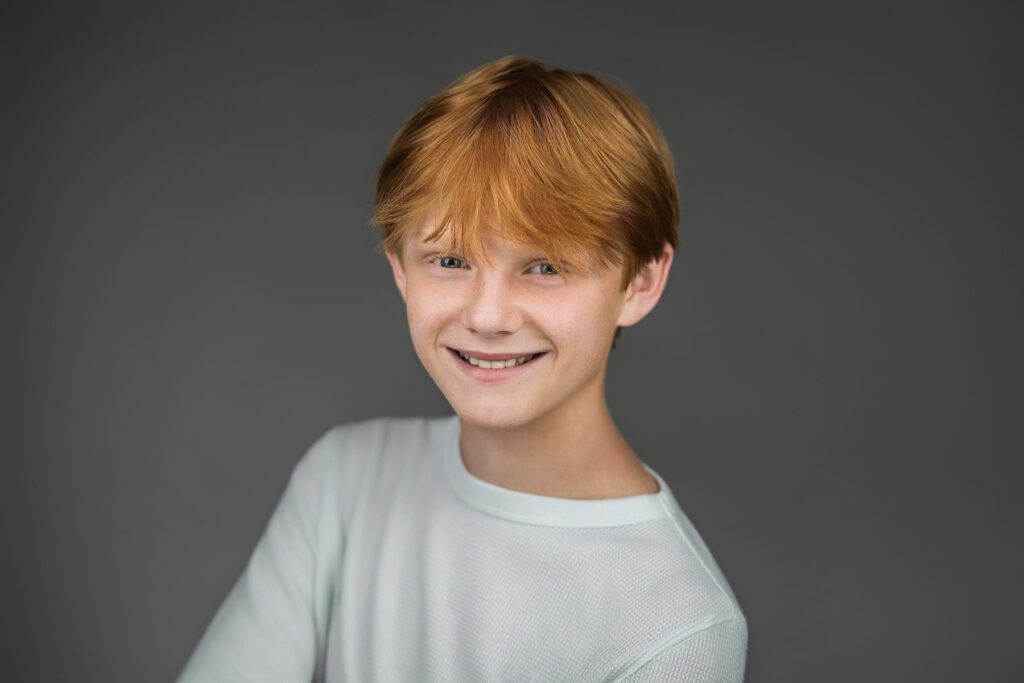
The Goal Isn’t to Teach Your Child How to Pose
Most child acting headshot tips online lead with chin angles and shoulder lines. I understand the instinct: posing feels like the one variable a parent can control.
Here is the problem. A child thinking about their chin is not thinking about anything else, and that lands in the eyes immediately.
Nobody is evaluating your child’s posing ability. They want to see a real kid they can picture in a role, which means the face has to be doing something honest. That is the standard behind every session on my actor headshots page.
Posing is my job, and a small part of it. The bigger part is getting your child to forget the camera is there.
The Real Way to Prepare for Child Actor Headshots
Useful child actor headshot preparation looks less like coaching and more like protection. You are protecting your child’s normal state instead of improving on it.
A rested, unhurried kid who has not been told this is a big deal will out-photograph a coached one nearly every time. That is the entire strategy, and most of it happens before you leave the house.
Why You Should Not Practice Smiles or Expressions
Practiced smiles are the most common thing I have to undo. A child who rehearsed in the mirror arrives carrying a stored expression, and stored expressions read as stored.
You see it in the mouth first. The corners go up on command, the eyes stay flat, and the face looks slightly held. Breaking that habit costs real session time, so skip the rehearsal entirely and we reach the good frames faster.
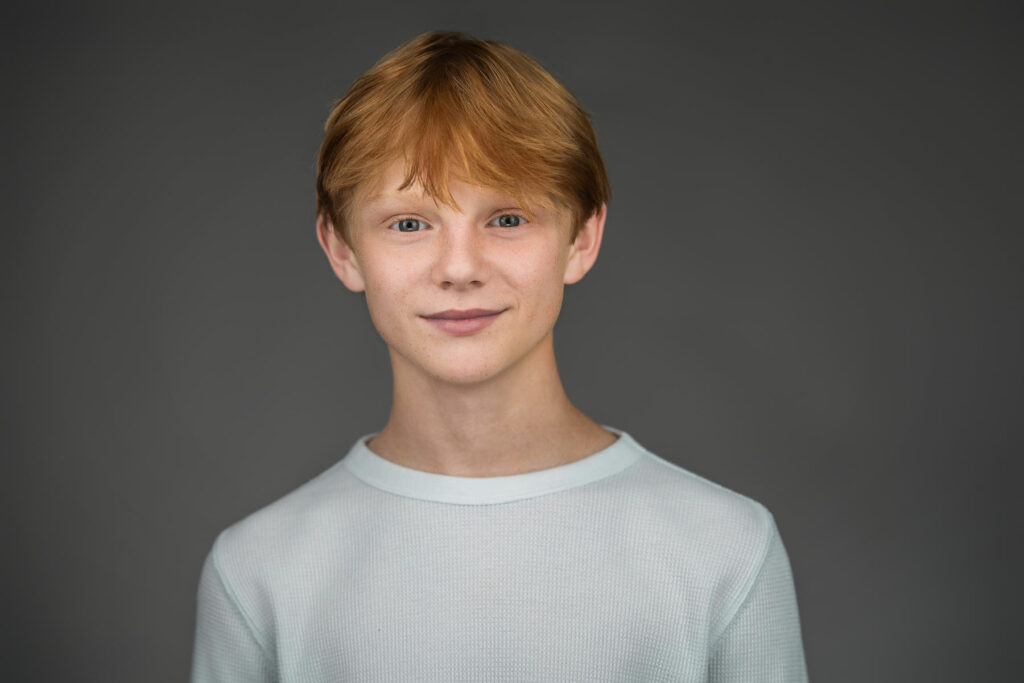
Keep the Days Before the Session Normal
The week before is not the moment for a dramatic haircut or a first attempt at contact lenses.
Give a fresh cut a little time to grow in rather than booking straight after the chair. A very new cut tends to photograph sharp-edged and slightly unfamiliar, and what you want is a photo that looks like your child on a regular Tuesday.
The same logic covers anything that changes how they feel in their own skin. New glasses, a recent braces adjustment, an unfamiliar hairstyle: it surfaces as self-consciousness.
Explain the Session Without Creating Pressure
How you describe the session at home matters more than most parents expect. Kids take their emotional cues from whoever told them about it.
Keep it short and factual. Something close to: we are going to a studio, a photographer will take some pictures, then we will get lunch.
Notice what is absent. No mention of roles riding on it, no reminder of what it cost, no request to do their best. Children do not need to understand the stakes to photograph well, and they photograph well specifically when they do not.
Let Your Child Help Choose Their Clothes
Bring options and give your child real input. This is one of the few places where handing over control improves the pictures.
A kid wearing something they picked sits differently in the chair. A kid wearing something they were put into spends the session adjusting it.
None of this abandons the guidelines. Solid colors, good fit, and no oversized logos still apply, and I cover the specifics in my guide to what kids should wear for headshot sessions. Inside those boundaries, hand them two or three approved tops and make the final call theirs.
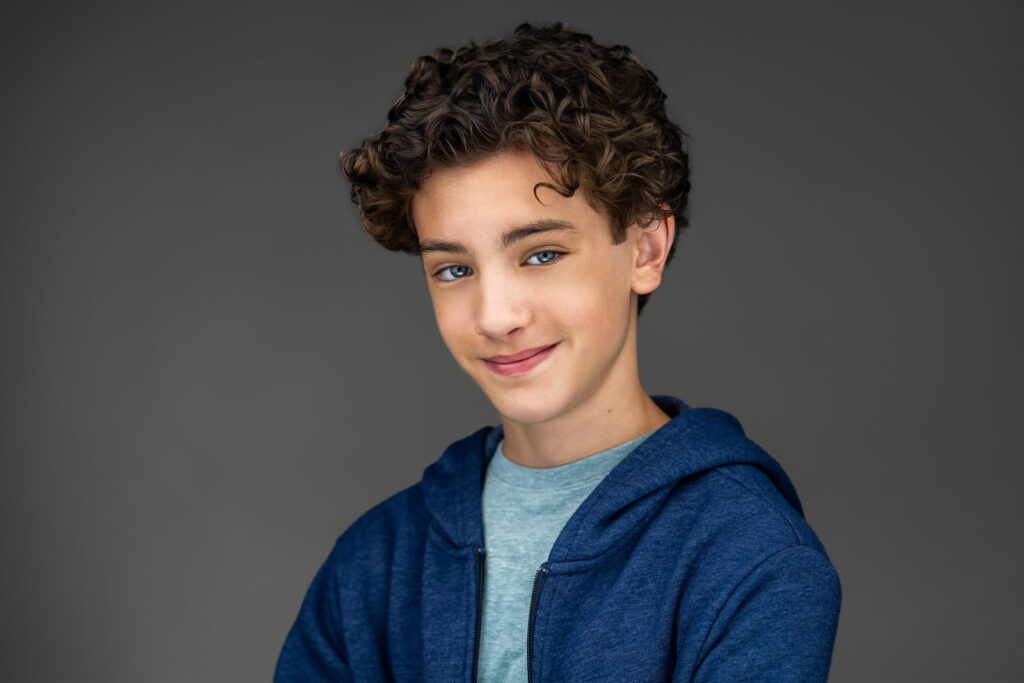
Sleep, Food and Timing Matter More Than You Think
The kids headshot session tips that actually move the needle come down to four variables. They shape the final images more than any coaching could:
- Sleep: a normal bedtime the night before, not an early one that feels like a punishment.
- Food: make sure your child has eaten before the session, and bring a familiar snack in case they need one.
- Timing: book inside your child’s best window of the day, not around your work calendar.
- Buffer: arrive a little early so nobody walks in already rushed.
Tired kids photograph tired. It shows in the eyes and underneath them, and there is no honest retouching fix.
What to Do If Your Child Is Shy or Nervous
Shy kids photograph beautifully. I say that plainly because parents of quiet children apologize in advance, and there is nothing to apologize for.
What a shy child needs is time, not encouragement. Encouragement adds pressure, and pressure is usually the thing making them quiet to begin with.
Tell me beforehand if your child warms up slowly. I will build the opening stretch around conversation instead of photographs, and we start shooting when they are ready rather than when the clock says so.
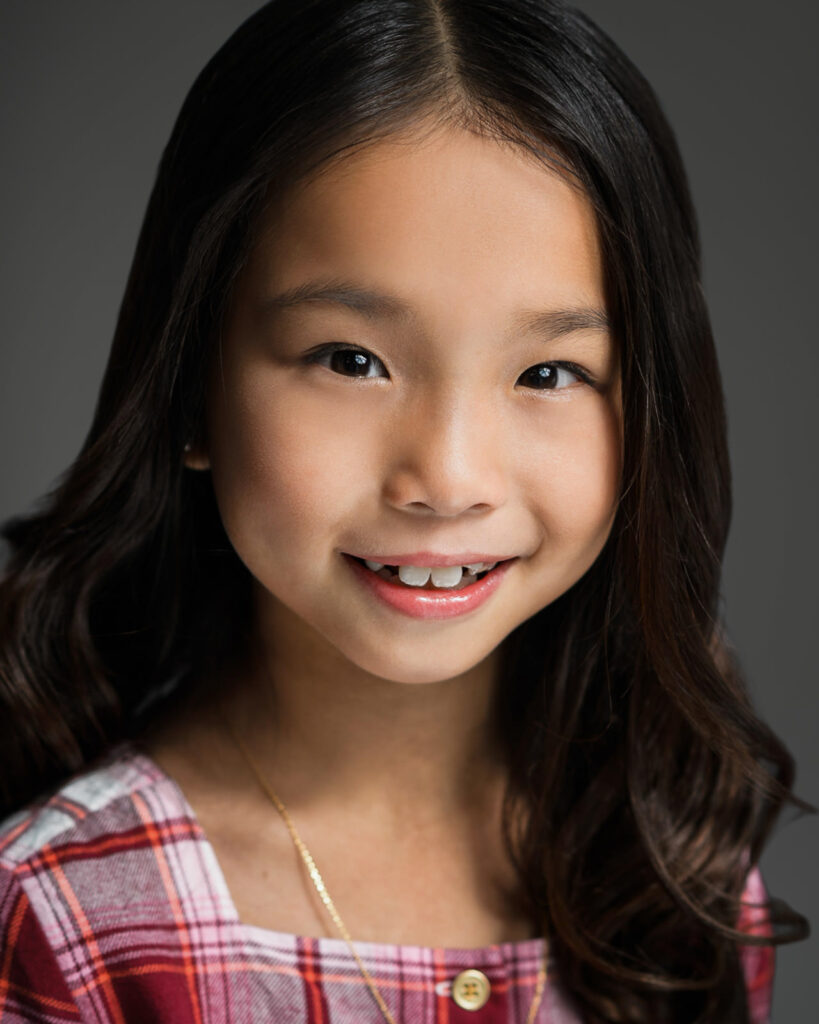
What Parents Should Do During the Session
Be present, be visible, be quiet. That is the whole job, and it is harder than it sounds.
The pattern I see constantly is a parent directing from the side: sit up, smile bigger, fix your hair. It comes from love, and it works against the child every time, because kids play to the adult they want to please.
Find a chair slightly outside your child’s sightline and let me work. If I need you I will ask, and occasionally I do, because a parent can produce a laugh nobody else can.
Trust the Photographer to Bring Out the Expression
Expression is a craft problem, not a preparation problem. It is the specific thing you are hiring for, and it is mostly conversation.
I ask about school, sports, whatever they are obsessed with this month, and I keep shooting through the answers instead of waiting for a posed moment.
The frames that work land in the gaps: just after a laugh, just before a thought finishes. No child can be trained to deliver those on cue.
I go deeper on that side of it in my walkthrough of natural actor headshots for kids in NJ. Sessions at my New Milford studio are paced around it. I would rather have a relaxed kid and an unhurried session than a prepared kid watching the clock.
How to Prepare for Child Actor Headshots: Parent Questions
How do I prepare my child for actor headshots?
Focus on logistics rather than performance. Make sure your child is rested and fed, book a time that suits their energy, and let them help pick a comfortable outfit. Explain the session in one or two neutral sentences. Skip rehearsing smiles, poses, or expressions entirely and let the photographer handle that part.
Should kids practice smiling for headshots?
No. Rehearsed smiles read as rehearsed, usually in the eyes, and undoing that habit costs session time. A practiced expression looks held rather than felt. Children produce better frames when they arrive without a stored smile and the photographer earns a real one during the session itself.
What should a child do before headshots?
Have a normal night of sleep and a real meal beforehand. Avoid making a dramatic change to your child’s hair immediately before the session, and skip anything that makes them feel unfamiliar in their own skin. Arriving slightly early and unhurried does more for the photographs than rehearsing at home.
How do photographers get natural expressions from kids?
Through conversation and pacing rather than instructions. I talk with kids about things they actually care about and keep shooting through their answers, so real expressions land between the posed moments. The first several minutes are warmup, and treating that time as productive is what makes the later frames work.
Ready to Book Child Actor Headshots in New Jersey?
Kids do not need to arrive knowing how to pose. That part is mine.
After decades of photographing children and actors across Bergen County and the NYC area, the pattern holds. The best expressions show up once a child stops trying to take a good picture and simply gets comfortable being looked at.
If your child is preparing for auditions or building a first submission package, I am glad to talk it through first. Call or text 917-992-9097 or 201-834-4999, or get in touch here.
Reply...


