


Your Headshot day should feel relaxed, joyful, and completely yours.
I’m Alex Kaplan, a Headshot Photographer and videographer based in New Milford, NJ, serving Northern.
Browse by Category:
headshots
view more

REQUEST INFORMATION
Want to feel like THIS on your Headshot day?
Availability is limited. Check Your Date Here



If you are figuring out how to make a slate shot that actually helps your Actors Access profile, start with the headshot it will sit beside. The goal is consistency. The mechanics of how to make a slate shot are simple, but the presentation choices matter. The person in the seven second clip should feel like the same person casting just saw in the photograph.
I have photographed actors across Northern New Jersey and New York City for more than 30 years, and this is where people often overcomplicate the process. A Slate Shot does not need to look like a commercial. It needs to look current, sound clear, and feel believable.
If you need the platform basics first, my guide to what a slate shot is explains how Slate Shots work on Actors Access. This guide stays focused on recording one well.
Quick Answer: To make a good Slate Shot, match the headshot first, then record in landscape with the camera at eye height, soft light on your face, clear audio, and a simple background. Say your name naturally, keep your expression consistent with the photo, and avoid turning seven seconds into a performance.
Start With the Headshot You Are Matching
Before you record, choose the photograph the clip will attach to. That decision should guide your wardrobe, expression, and overall tone.
A warm commercial headshot calls for a different energy than a grounded dramatic image. If the photo feels open and approachable but the video feels intense or theatrical, casting receives two different impressions instead of one clear presentation.
You can see how those choices work together on my actor headshots in NYC and New Jersey page.
I have seen the same principle during actor headshot sessions even when no video is involved. In a Ridgewood session with actor Maximo Masefield, changing the wardrobe shifted the photographs from approachable and comedic to more dramatic and cinematic. The person did not change. The presentation did.
That is the mindset to bring to your Slate Shot. You are not creating a second identity. You are helping the photograph feel more complete.
How to Make a Slate Shot Setup at Home
If you are learning how to make a slate shot at home, you do not need a studio. You need a stable camera, flattering light, a quiet space, and a background that does not compete with your face.
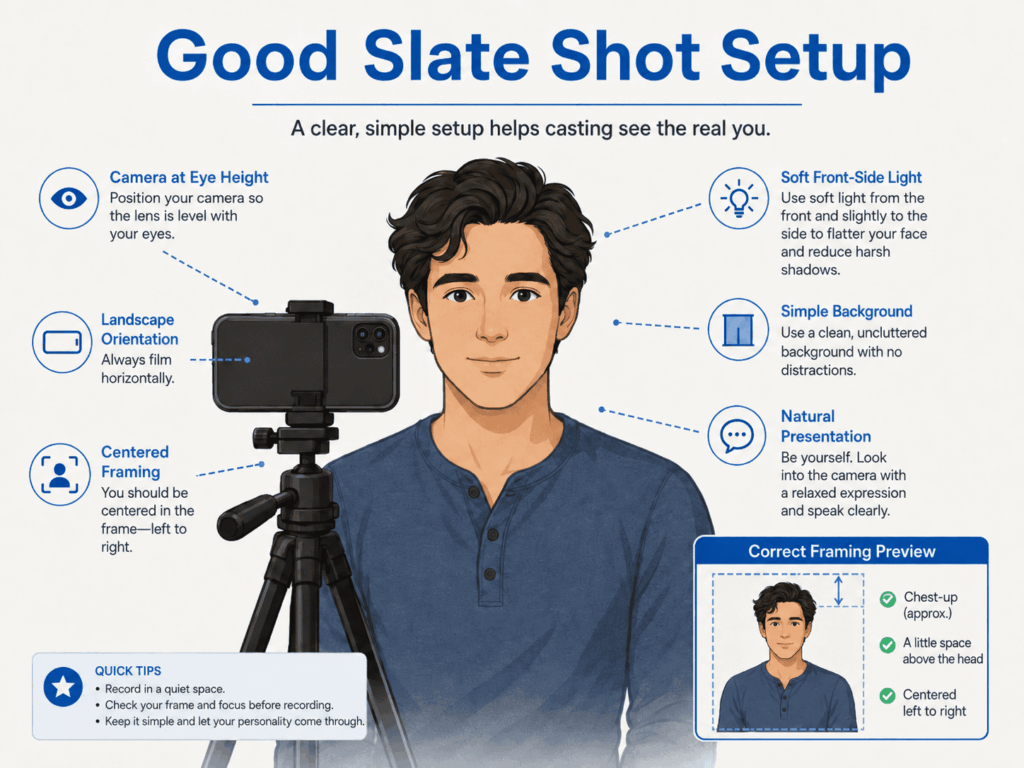
Put the Camera at Eye Height
Record in landscape with yourself centered in the frame. Keep the lens at eye height or slightly above.
Frame yourself from roughly the chest or shoulders up, with a little space above your head. Rest the phone or camera on something stable rather than holding it. A tripod is useful, but a steady surface works too.
The camera should disappear from your attention once you start speaking. If you are thinking about keeping the phone level, you are no longer thinking about the person on the other side of it.
Use Soft, Simple Light
Face a large window or another broad, soft light source. The goal is not dramatic lighting. It is a face that reads clearly, with both eyes visible and no distracting shadows.
Avoid putting the brightest window behind you. That can leave your face too dark. Ceiling light alone can also create heavy shadows around the eyes.
Look at the image on your phone before recording. If your face is evenly lit and your eyes are easy to see, you are already close.
Keep the Background Quiet
A plain wall is usually safest. Give yourself some distance from it if the room allows.
Watch for doorframes, shelves, posters, mirrors, or anything else that pulls attention away from your face. The background should register for a second and then disappear.
Check the Audio Before the Real Take
Record one test and listen back. Traffic, air conditioners, refrigerators, and room echo can be more obvious in a recording than they seem while you are standing there.
Clear audio matters because casting should understand your name immediately. You do not need a studio microphone. You do need a quiet enough room and a phone close enough to capture your voice cleanly.
Wear What Makes Sense With the Photo
The simplest choice is the same shirt or top from the headshot. If you no longer have it, stay close in neckline, formality, and overall feel.
Avoid logos and very fine patterns. The larger principle is continuity. The clip and photograph should feel like one presentation even if they were not recorded on the same day.
My actor headshot wardrobe guide goes deeper on choosing clothing for different casting directions.
What to Say in a Slate Shot
For most actors, your name is enough.
Say it clearly and at a conversational pace, as though you were introducing yourself to one person. Seven seconds does not need to be filled.
Skip credits, representation details, a monologue, or a character voice unless a specific casting instruction tells you otherwise. If people regularly mispronounce your name, this also gives casting a simple reference for how you say it.
The goal is not to prove how much you can do. It is to make the person in the headshot feel real.
Expression, Eye Contact, and Delivery
Look into the lens, not at your own face on the screen. Your expression should belong to the headshot.
A bright commercial image can carry more openness. A grounded dramatic image can be quieter. Neither needs you to act the photograph.
One practical trick is to frame yourself, then stop watching your preview. Actors often become more natural when they are no longer monitoring every tiny change in their face.
How to Make a Slate Shot Feel Natural
The fastest way to make a slate shot feel natural is to stop treating it like an audition. Your job is not to prove your range in seven seconds. It is to let casting see the person behind the photograph.
Record several takes instead of trying to make the first one perfect. Exhale, settle your shoulders, and say your name to the lens as if one real person were standing behind it.
Do not force a smile at frame one. Let the expression settle naturally. A simple, present expression usually reads more confidently than one that looks switched on for the camera.
Common Slate Shot Mistakes
Most weak Slate Shots are not ruined by expensive equipment or complicated technical problems. They are weakened by small inconsistencies that add up.
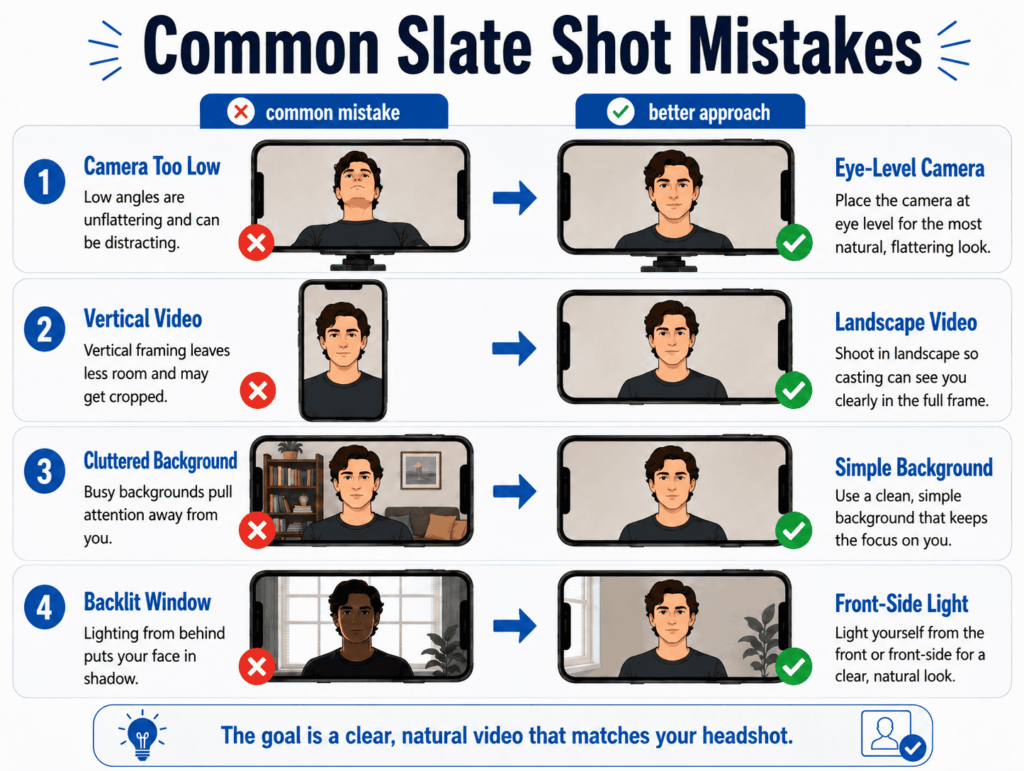
Filming vertically ignores the recommended landscape format. Shooting from below changes the face. A bright window behind you makes your features harder to read. A cluttered room steals attention. Weak audio makes casting work to hear you.
The biggest mistake is making the video feel like a different person from the photograph.
Another is overperforming. In a close frame, extra vocal energy or oversized facial movement can read as effort rather than confidence. The strongest take is usually the one that feels least decorated.
Watch It Back Like Casting Will
Before you upload, watch the clip on a phone screen at normal volume. Ask three questions:
Does this look like the headshot?
Can I understand the name immediately?
Does the person on screen feel believable?
If those answers are yes, stop recording. More takes do not automatically create a better result.
Breakdown Services notes that Slate Shots cannot be transferred from one photo to another, and the complimentary first upload cannot be replaced.
Slate Shot FAQs
Where should the camera be for a Slate Shot?
Put the lens at eye height or slightly above, record in landscape, and center yourself in the frame. Use a stable phone or camera rather than handheld recording. Frame yourself similarly to the headshot the clip supports, with your face clear and a little space above your head.
What should you wear for a Slate Shot?
Wear the same clothing as the attached headshot when possible. If you cannot, choose something similar in formality and overall feel. Avoid logos and fine patterns. The video and photograph should read as one consistent casting presentation rather than two unrelated sessions.
What should you say in a Slate Shot?
Usually, just say your name clearly at a natural conversational pace. Seven seconds is short, so avoid turning the clip into a resume, monologue, or character performance. A simple introduction gives casting a quick sense of how you look and sound in motion.
How do you keep a Slate Shot from looking stiff?
Stop watching yourself while you record, breathe out before you begin, and speak to the lens as though one real person were standing behind it. Record a few takes instead of chasing perfection on the first attempt. The best version usually feels conversational rather than presented.
Recording Better Actor Materials in Northern New Jersey and NYC
A good Slate Shot cannot rescue an outdated headshot. The two pieces work best when they show the same current person, aimed at the same casting direction.
If your photographs no longer match your appearance or the roles you are pursuing, start there. I photograph actors from New Milford, NJ, across Northern New Jersey and New York City, with sessions built around natural expression and believable casting range. You can learn more about my approach on my about page.
If you are ready to update the headshots your Slate Shot will support, get in touch and tell me what kinds of roles you are submitting for.
Reply...


