


Your Headshot day should feel relaxed, joyful, and completely yours.
I’m Alex Kaplan, a Headshot Photographer and videographer based in New Milford, NJ, serving Northern.
Browse by Category:
headshots
view more

REQUEST INFORMATION
Want to feel like THIS on your Headshot day?
Availability is limited. Check Your Date Here

Most people walk into a session convinced everyone else already knows the secret. They don’t. Across three decades of headshot sessions in Northern New Jersey and New York City, I can tell you the best professional headshot poses are not poses at all. They are small adjustments to angle, posture, and expression that make you look like yourself on a good day.
A pose you hold is a pose that shows. A pose you settle into reads as confidence.
How Should You Pose for a Professional Headshot?
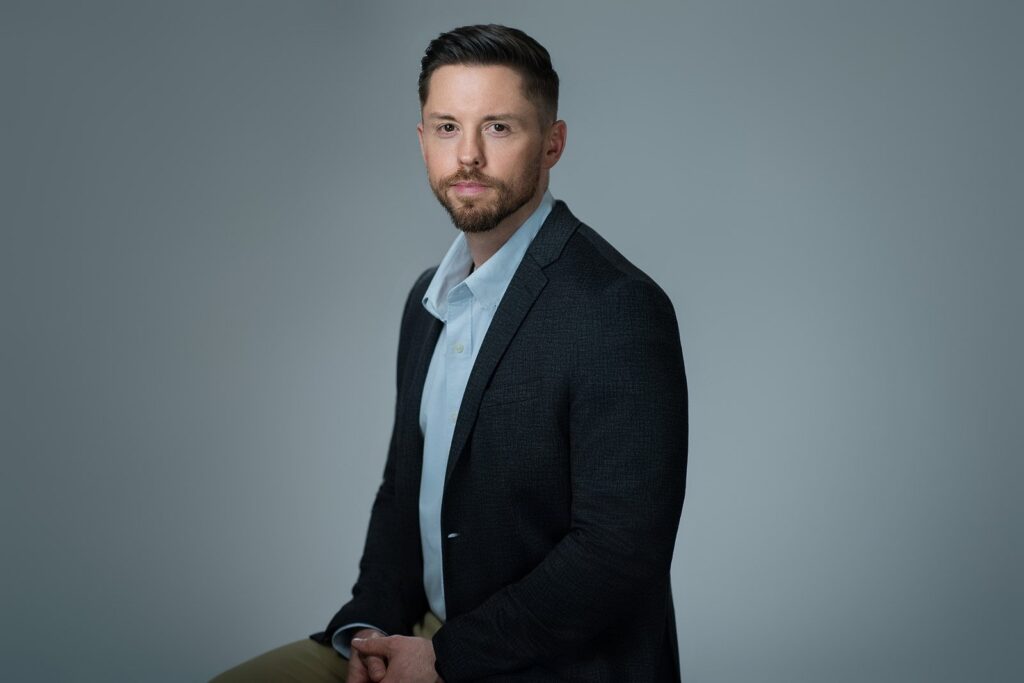
Angle your body roughly 30 to 45 degrees away from the camera, then turn your face back toward the lens. Drop your shoulders down and back, lengthen your neck, and bring your chin slightly forward and then down. Put your weight on your back foot. That combination does most of the work.
Why Your Headshot Pose Matters
Your pose shapes the first read of the portrait. Before someone studies your wardrobe or background, they are already responding to whether your posture looks open, settled, or braced.
That is the part most people never plan for. They think about the shirt and the background, then leave posture to chance.
A common frustration is that the photo looks technically fine, but something still feels off. Usually it is tension. If that sounds familiar, the mechanics behind why people look stiff in headshots are worth understanding first, and you can see the range that calm direction produces across my professional headshot services.
Professional Headshot Pose Guide: Quick Reference
Business headshot poses and corporate headshot poses use the same short list.
| Pose | Impression It Creates | Best For |
|---|---|---|
| Straight-on, shoulders square | Direct, authoritative, unambiguous | Attorneys, executives, physicians |
| Slight body angle, face to camera | Confident and approachable at once | The reliable default for almost everyone |
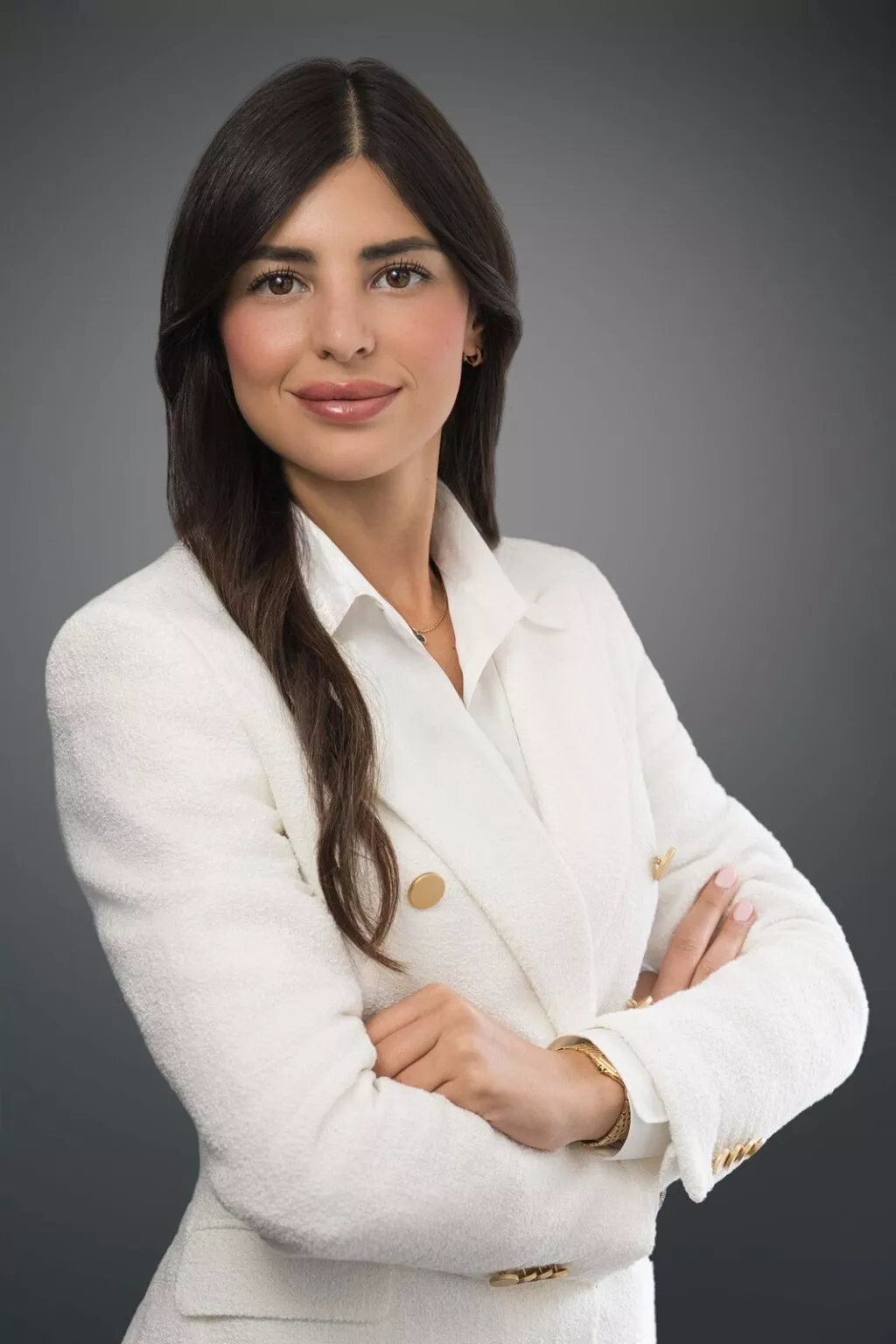
| Arms crossed | Assured, established, a little guarded | Founders, consultants, senior leaders |
| Hands relaxed or lightly clasped | Calm, natural, unforced | Anyone unsure what to do with their hands |
| Hands in pockets, thumbs out | Relaxed, accessible, current | Creative, tech, real estate |
| Seated, slight lean toward camera | Engaged, conversational, warm | Coaches, advisors, therapists |
| Tight head-and-shoulders crop | Personal, immediate, high-trust | LinkedIn, actor submissions, small displays |
Straight-On vs. Angled Headshot Poses
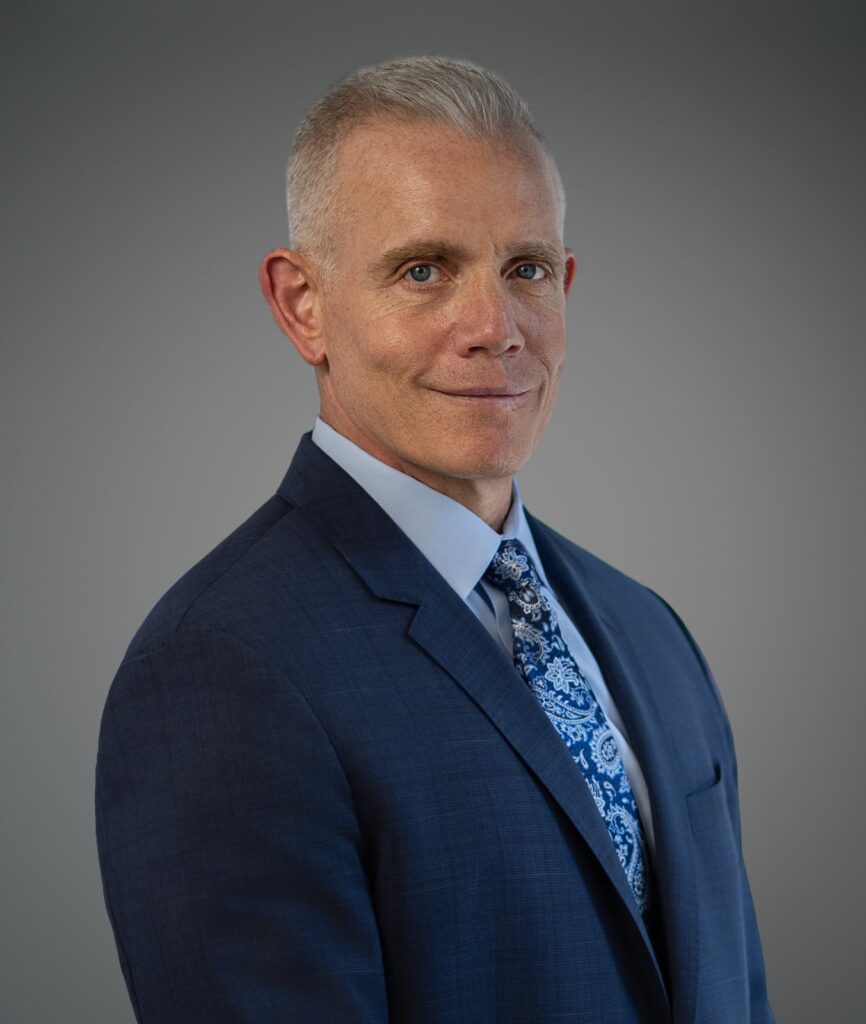
Straight-on means shoulders squared to the camera. It is symmetrical and direct, which is why litigators and executives often photograph well this way.
The tradeoff is width. Squared shoulders fill the frame, which can read as heavier depending on your build and jacket.
An angled pose narrows the shoulder line and creates depth without losing directness. Of all the professional headshot poses I use, this is the most useful adjustment, and it works on nearly everyone.
Standing vs. Seated Professional Headshot Poses
Standing produces a longer line and more authority. It is also easier to correct live, since I can adjust stance, weight, and shoulder height in seconds.
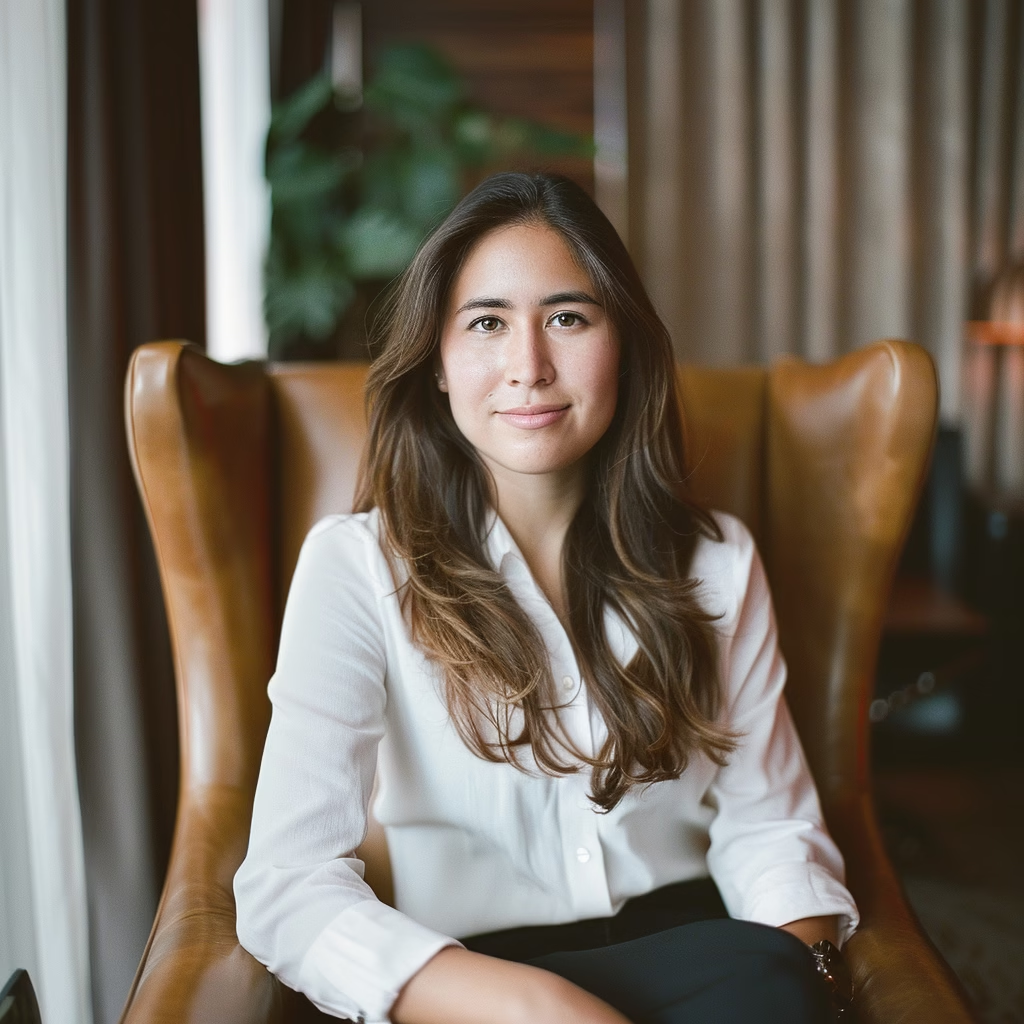
Seated changes the emotional temperature. It softens people, particularly the ones who tense up the moment they are asked to stand and be looked at.
It needs more direction, though. Left alone, most people slump backward or perch on the edge. The version that works is upright but not rigid.
What Should You Do With Your Hands in a Professional Headshot?
In a standard head-and-shoulders crop, nothing, because they sit outside the frame. In wider crops, give them a job: loosely clasped in front, resting on a knee, or in pockets with the thumbs out. Keep the edges of the hands toward the camera, not the backs, since palms and knuckles facing the lens photograph larger than they look in person.
Hands create a surprising amount of anxiety before wider crops, which is why that answer surprises people. Most of the worry is about a problem the crop already solves, and floating hands with nothing to do are the only real failure mode.
Should You Cross Your Arms in a Professional Headshot?
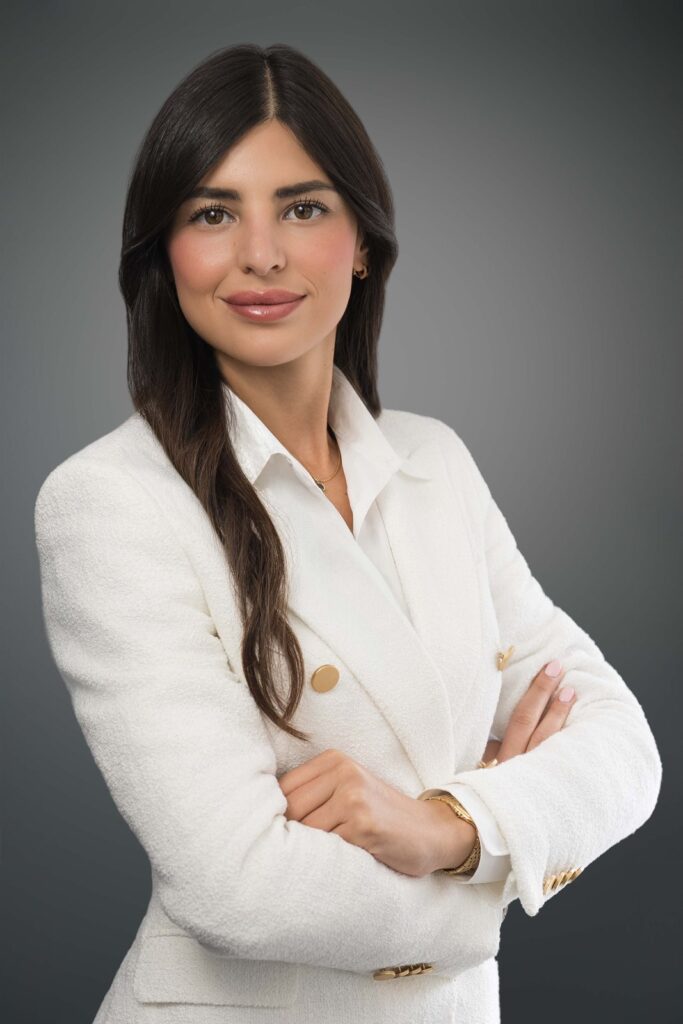
Sometimes, and it depends entirely on execution. Done badly, crossed arms read as defensive and compress the upper body. Done well, they read as grounded and established. The difference is tension: arms resting across the body loosely, shoulders down, with visible space under the arms rather than clamped to the ribs, and an expression that stays open.
I use it selectively, for business owners and senior professionals who want the image to say experience rather than eagerness. Whether it suits you depends on the balance you want between warmth and authority. I break that balance down further in these five ways to look approachable and authoritative in corporate headshots.
How Should You Position Your Head, Chin, and Shoulders?
Start with the shoulders: roll them up, back, and down once, then let them settle, since most people carry them higher than they realize. Then push the chin slightly forward and lower it a touch. It feels ridiculous and photographs as a defined jawline. Raising the chin instead is one of the self-directed mistakes I correct frequently.
That chin adjustment does enough work on its own that I wrote a separate walkthrough: why keeping your chin forward and down works.
A small head tilt adds warmth. Level and straight adds authority. Neither is correct in the abstract.
Professional Headshot Poses for Men and Women: Are They Different?
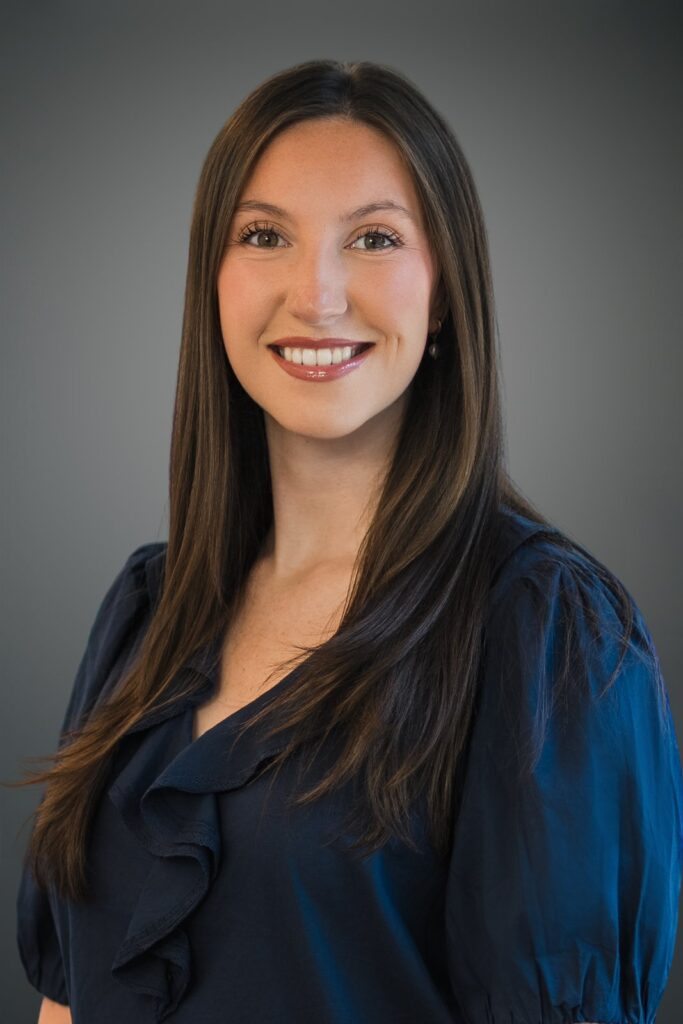
Less than the search volume suggests. The physics are identical, and what drives the decision is build, wardrobe, crop, profession, and intended impression. Gender predicts none of those well. Two people in the same jacket often need opposite adjustments, which is why I direct from what I see in the frame rather than from a formula.
Professional Headshot Poses for Men
Structured jackets with strong shoulder lines widen the frame. The fix is rotating the body and shifting weight to the back foot so the shoulder line reads narrower.
Professional Headshot Poses for Women
Softer necklines and longer hair change how much of the shoulder line is visible, which affects how much turn the pose can take before it looks unbalanced. The adjustment is often a reduced turn and a squarer shoulder line.
Wardrobe influences all of this as much as posture, which is why I ask people to send options ahead of time. Specifics live in the guide on what to wear for professional headshots.
How the Right Pose Changes Based on Your Profession
The most useful professional headshot poses follow the intended use. An attorney preparing a firm bio and a pediatrician updating a practice page need different images: the attorney needs composure, the pediatrician needs warmth parents can read quickly.
Advisors and sales professionals sit in the middle: approachable enough to invite a call, credible enough to justify one. Actors are separate, where the pose stays neutral for casting.
A headshot for a Hackensack law firm’s leadership page and a Manhattan startup’s team grid should not match.
You Don’t Need to Know How to Pose Before Your Session
A common concern I hear before sessions is simply not knowing how to pose. It comes up with executives and physicians just as it does with anyone else.
You are not supposed to know. Professional headshot posing is my job. If you arrive knowing how to pose, one of us is doing the wrong work.
What happens in the studio is a sequence of small corrections delivered out loud, one at a time. Turn your shoulders slightly. Weight to the back foot. Chin toward me, now down a half inch. Breathe out. Each instruction is small enough to follow without thinking, and the effect compounds.
That is the whole method, and thirty years is why it works fast.
Frequently Asked Questions About Professional Headshot Poses
What is the best pose for a professional headshot?
There is no single best one. The most reliable starting point is a body angled 30 to 45 degrees from the camera, face turned back to the lens, shoulders down, chin slightly forward and down. Beyond that it depends on your profession, your build, and where the image will be used.
Should you smile in a professional headshot?
Usually yes, but the type matters more than the choice. A closed-mouth smile with engaged eyes reads as composed and credible. A full smile reads as warm and accessible. Most sessions should produce both, so you can match expression to platform.
What should you do with your hands in a professional headshot?
In a standard head-and-shoulders crop, nothing, since they fall outside the frame. In wider crops, give them a purpose: clasped loosely in front, resting on a knee, or in pockets with the thumbs out. Keep the edges of the hands toward the camera, not the backs.
Should you face straight at the camera for a headshot?
Only sometimes. Squared shoulders read as direct and authoritative, which suits attorneys and executives. For most people, a slight body angle with the face returned to the lens is more flattering and creates depth without losing eye contact.
Ready for a Headshot That Looks Like You
If you have been putting this off because you are not photogenic, or because you do not know how to pose for a professional headshot, that is the easiest part to solve. My studio is in New Milford, and I direct every session start to finish.
Come as you are and let me handle the angles. Get in touch and we will get it scheduled.
Reply...


