


Your Headshot day should feel relaxed, joyful, and completely yours.
I’m Alex Kaplan, a Headshot Photographer and videographer based in New Milford, NJ, serving Northern.
Browse by Category:
headshots
view more

REQUEST INFORMATION
Want to feel like THIS on your Headshot day?
Availability is limited. Check Your Date Here

A conference is not a meeting anymore. It is a campaign with a room around it.
Companies now put real budget behind partner summits, product launches, and executive gatherings, and they expect that spend to keep working long after the last guest leaves. That shift changes what corporate event photography New York companies need from a photographer. Not someone who shows up and documents a schedule, but a production that understands what those images are for, who is waiting on them, and how quickly they have to move.
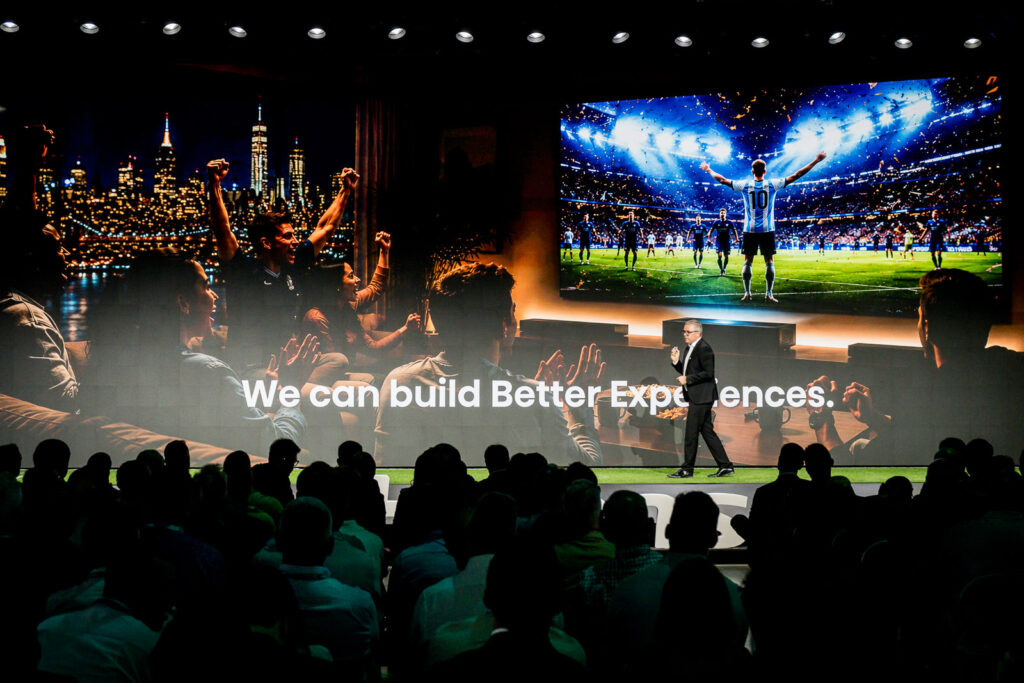
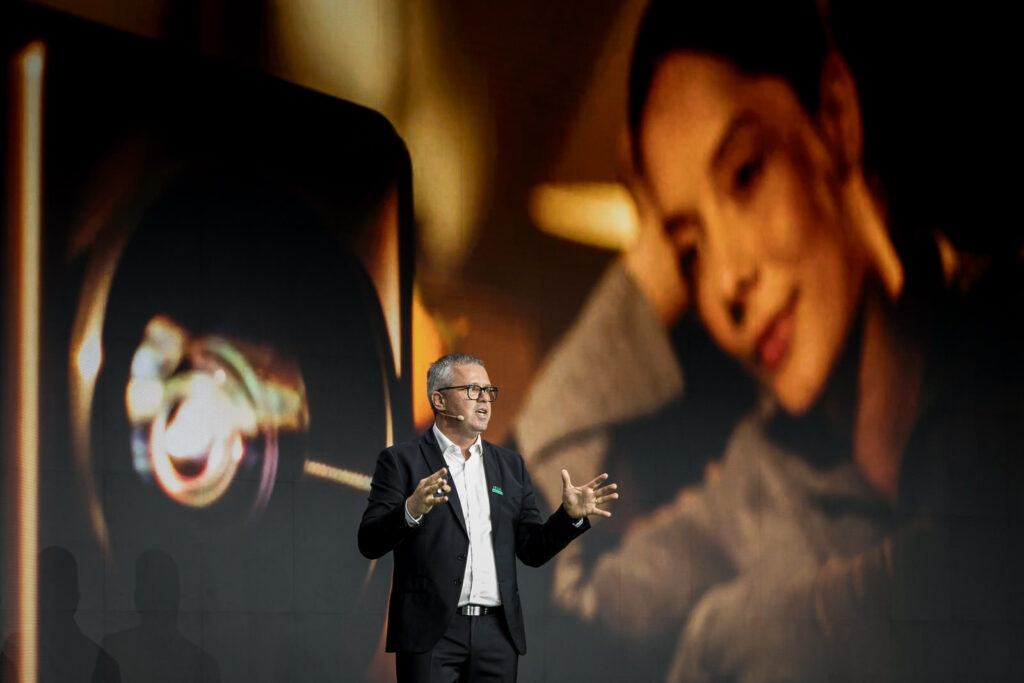
I have been photographing business events across New York and Northern New Jersey for more than thirty years. Recently my team covered the Hisense and FIFA Global Partner Conference at The Glasshouse in Manhattan: international executives and FIFA representatives, brand activations and product displays, stage presentations, a dinner, entertainment, group photographs, and airport arrival coverage. Two photographers, a videographer, and a production assistant.
I am going to use that job as the reference point for how I approach work at this scale, because the working method is more useful than the highlight reel.
Why Corporate Event Photography Is About More Than Taking Pictures
The key distinction is that companies are not only buying photographs. They are building a library of business assets.
A single well-covered conference feeds the press release, the recap email, the posts from several different executives, the recruiting page, next year’s event promotion, and the regional marketing team that will ask for images months from now. One night of coverage becomes a library departments pull from for a long time.
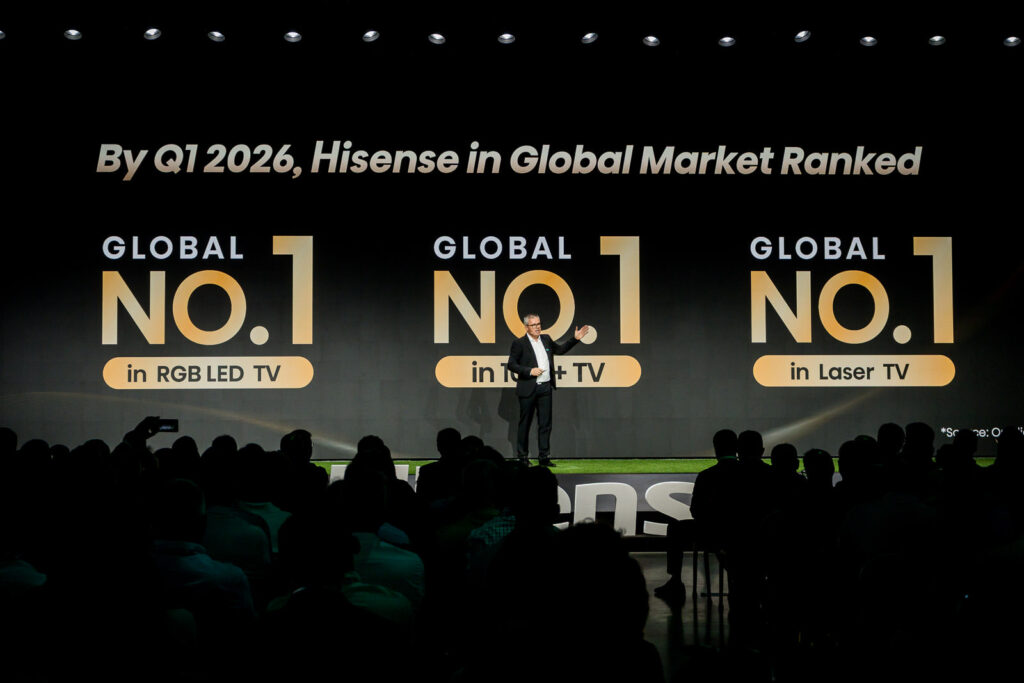
That changes how I shoot. If I am only thinking about tonight, I shoot the stage and the speakers and call it done. If I am thinking about the year ahead, I am also shooting the room wide enough to crop for a banner, capturing branding cleanly enough for a press kit, and making sure the executive who will need a portrait for a bio page has a few usable frames even though nobody asked for one.
It also changes what counts as a good picture. Corporate work has to look polished enough for brand marketing and feel real enough that people believe it. Overly staged event photography reads as a stock library, and audiences discount it quickly. The images that earn their keep are usually the ones where something genuine happened and the craft stays out of the way.
If you are weighing up hiring a corporate event photographer in NYC, that service page covers coverage options, crew, and booking.
Planning Starts Long Before the First Guest Arrives
Most of what separates a smooth event from a chaotic one happens before anyone is holding a drink. With conference photography in New York, where load-in windows and room turnarounds tend to be tight, that preparation carries extra weight.
For a large conference I want the run of show, the speaker list, the VIP list, and the branding plan in advance. I want to know when the doors open, when the room goes dark, when any awards or recognition moments happen, and whether there is a hard stop. Then I want to walk the venue, ideally while it is still empty.
The walkthrough answers questions a floor plan cannot. Where the light actually falls at seven in the evening. Where a photographer can stand during a keynote without becoming part of the presentation. Whether the branding is lit well enough to photograph. Whether there is room to back up far enough to make the group photograph look right.
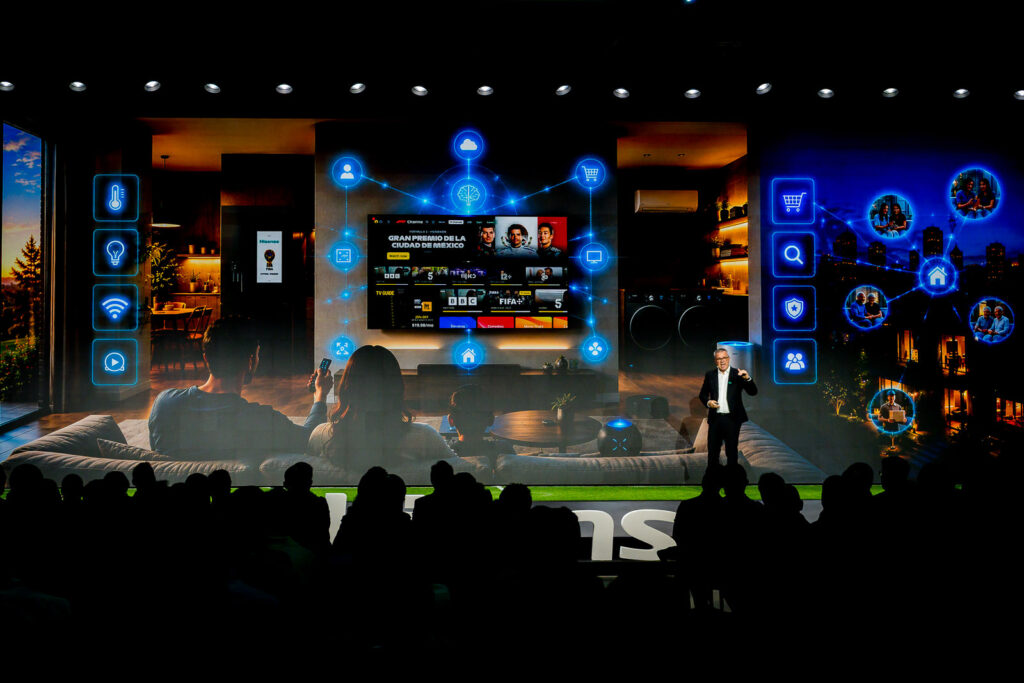
I also want time in the finished room before it fills. Those frames are only available in a narrow window, and they are the ones the marketing team asks for later. Once the room is full, the clean shot of the branding does not exist anymore.
For the Hisense and FIFA conference the walkthrough happened two days before load-in, and the empty room gave us the LED tunnel entrance, the main stage with its co-branding, and the product demo stations before anyone had put a fingerprint on a screen.
That visit also changed the plan. The large LED screens banded badly at the shutter speeds we would otherwise have used, so we set a baseline across the whole crew slow enough to capture a full refresh cycle of the panels. That is a problem worth finding two days early rather than halfway through a keynote.
Arriving early buys you something less tangible too. You meet the on-site contact face to face. You learn who to ask when something changes, and something usually does. Preparation does not eliminate surprises at an event of this size. It shrinks them to a size you can absorb without stopping.
That habit is most of what thirty years actually teaches you, and you can read more about how I work if you want the longer version.
How Many Photographers and Creatives Does a Large Conference Need?
Crew size is driven by simultaneity, not headcount. If the program and the room are both worth covering at the same moment, one photographer will miss one. Video, offsite or arrival coverage, VIP requirements, a compressed schedule, and any expectation that files move during the event can each increase staffing needs. Count the overlaps, then staff to them.
The Hisense and FIFA conference ran with two event photographers, a videographer, and a production assistant. I took the main stage presentations, VIP interactions, and the wide architectural views of the venue. The second photographer had audience reactions, the breakout sessions, and the step and repeat. The videographer worked product demonstration B-roll, a stage record, and short attendee soundbites. The production assistant handled data ingestion, ran cards, and held off-camera light for the VIP portraits.
The value of that split showed up in one specific way. While I was committed to a thirty-minute main presentation with no way to step out of it, the second photographer caught the arrival of a well-known sports figure at the back entrance. One of those was on the schedule and one was not. A single photographer would have lost the second one completely.
Corporate event videography alongside the stills is another consideration again, since a videographer works to different requirements and cannot simply double as a second photographer.
The distinction worth understanding is between coverage you can recreate and coverage you cannot. Stage presentations and recognition moments happen once, on a schedule, and a missed frame is gone. Room coverage is more forgiving, because conversations keep happening, and less forgiving, because the good ones are unannounced.

The production assistant is the role clients ask about least often, and on the events where it matters, the one that makes the rest possible. Card handling, backups, file organization, equipment logistics, transfers. If a client needs images before the night is over, someone has to be doing that work while the shooters keep shooting. When the photographer stops to manage files, coverage stops with them.
When you are evaluating a photographer for a large event, this is a fair and revealing question: who else is coming, and what is each person responsible for. I covered a smaller version of the same problem in this Northern New Jersey corporate summit breakdown.
Telling the Complete Story of an Event
Good event coverage is not a folder of speakers at podiums.
An event has an arc. Guests arrive a little formal, the room loosens somewhere in the middle, and the photographs from the last hour look nothing like the photographs from the first. Coverage that only captures the program misses the entire middle of that story.
The Hisense and FIFA conference covered several distinct phases, and each asks for something different. Airport arrivals. The welcome and the brand activations. The product display area, where guests put their hands on the technology. The conference program itself. The dinner. Live entertainment. Group photographs.
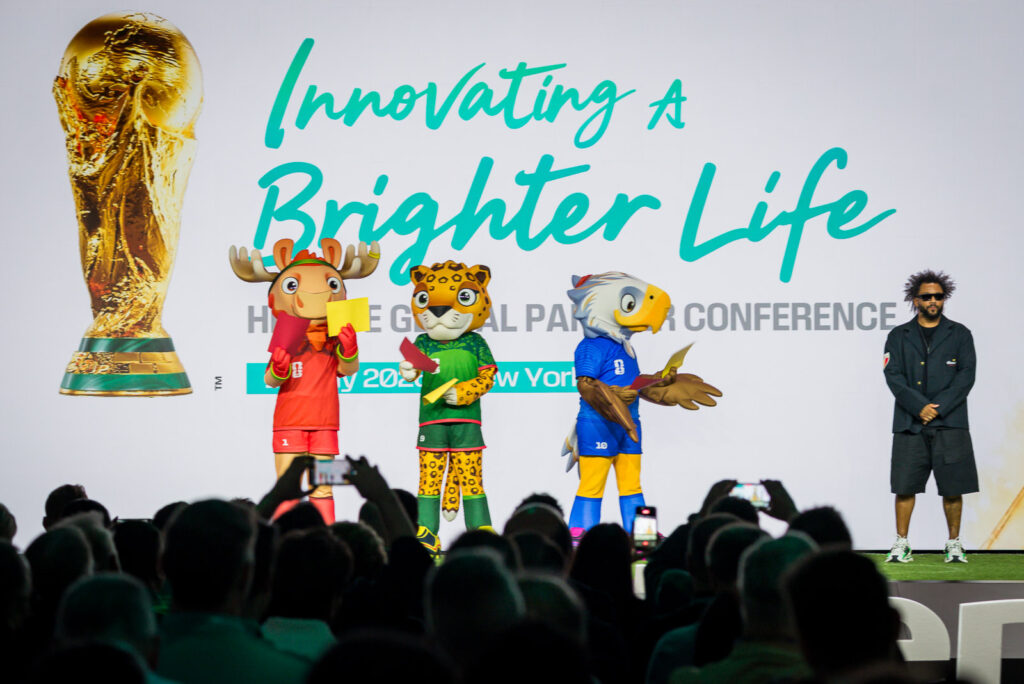
Those are not variations on one skill. Formal group and backdrop work is close to studio shooting, done quickly, with people waiting. Stage coverage usually means shooting from a fixed position well back from the platform, so a longer lens is needed to frame tightly from that distance, in light that changes without warning. Networking coverage is anticipation. Product demonstration coverage is closer to commercial work, where the object has to look good and the person has to look natural at once.
Airport coverage is its own problem, and mostly not a photographic one. Security restrictions, terminal access, traffic, and the plain fact that nobody controls when a flight lands. A crew has to stay mobile and work in a compressed window without getting in the way of airport operations.
The moment I keep coming back to happened at the edge of the staging area during the client’s main presentation, where I was standing out of sight. The room had been deliberately darkened for the reveal, which left the front seating area in very low light. A key partner leaned across to the client, made an unscripted gesture of approval, and shook his hand. None of that was on the run of show. I shifted away from my staging-area position, worked with the light I actually had rather than the light I wanted, and photographed silently so I would not pull attention toward the back of the room. That frame became the primary image in the client’s external communications. What they needed was evidence of a real relationship, not another arranged portrait.
That range is the actual job. Not one skill applied for six hours, but several applied in the right order under a clock, which is why crew composition is a coverage decision rather than a budget one.
How Quickly Should Corporate Event Photos Be Delivered?
It depends entirely on who is waiting. If a communications or social team intends to publish while the event is still running, selected images have to reach them during it, and that changes how the crew is staffed. If nobody is publishing that night, the timeline is whatever you agree to. Put both dates in writing before booking.
Delivery is often treated as a post-production detail, but it should be planned before the event begins. The teams at a large event are frequently not waiting until next week. There may be a release drafted and waiting on an image. A photograph delivered days later is a nice photograph. The same photograph delivered while the event is still on is a business asset.
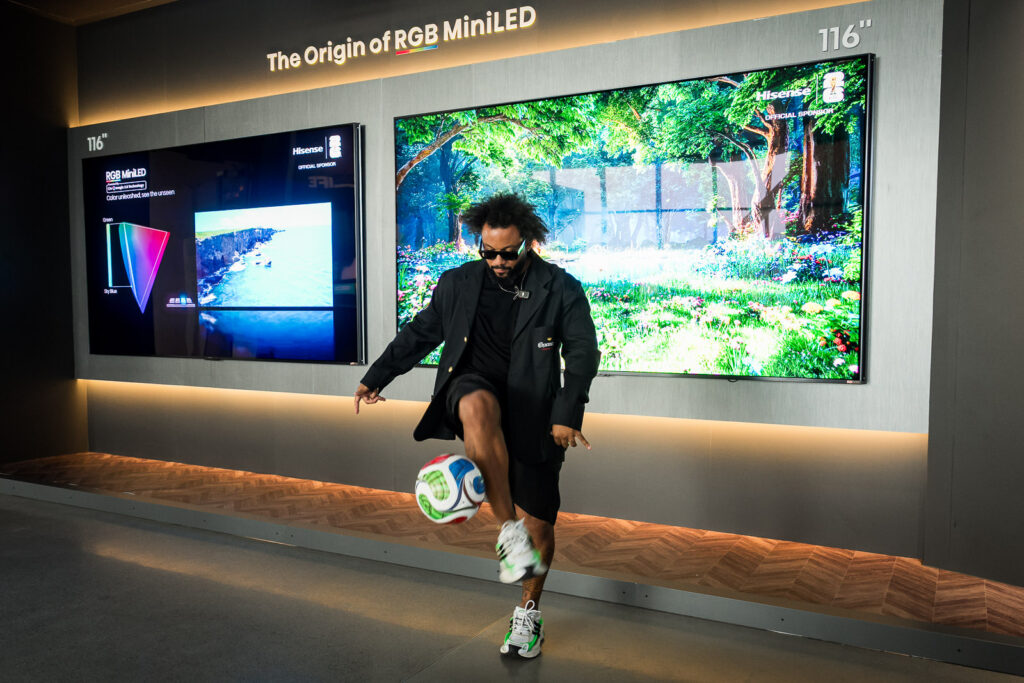
Making that possible is a workflow question rather than a talent question. Files have to come off cards and get organized on site, backups have to exist before anything moves, and selection has to run against what the client’s team said they needed. Trying to manage that while also photographing the event creates gaps in coverage, which is why larger productions assign it to someone else.
On this job the first usable images reached the client fifteen minutes after the presentation ended. Both photographs and vertical video clips moved during the event itself. The client’s PR lead took them through a live folder link, pushed the vertical clips straight to the social feed, and routed the hero frames to the wire service for press distribution. The complete edited gallery followed within forty-eight hours.
That is the difference the workflow buys. Not a faster editor, but a press release that went out with an image attached while the room was still full.
If you are hiring for a major event, ask about delivery specifically: what arrives during the event, what arrives the next day, what arrives at the end. A vague answer leaves your communications team without a dependable plan.
Inside the Hisense and FIFA Global Partner Conference
Pulling it together, here is what corporate event photography New York work looks like across one job.
The assignment was the Hisense and FIFA Global Partner Conference at The Glasshouse in Manhattan, with international executives and FIFA representatives in the room. Coverage ran across airport arrivals, brand activations, product displays, the stage program, a dinner, entertainment, and group photographs.
What was delivered: the edited event gallery, executive and VIP images, stage and presentation coverage, product and branding images, group photographs, social media selects, vertical clips, and a two-minute 4K recap film.
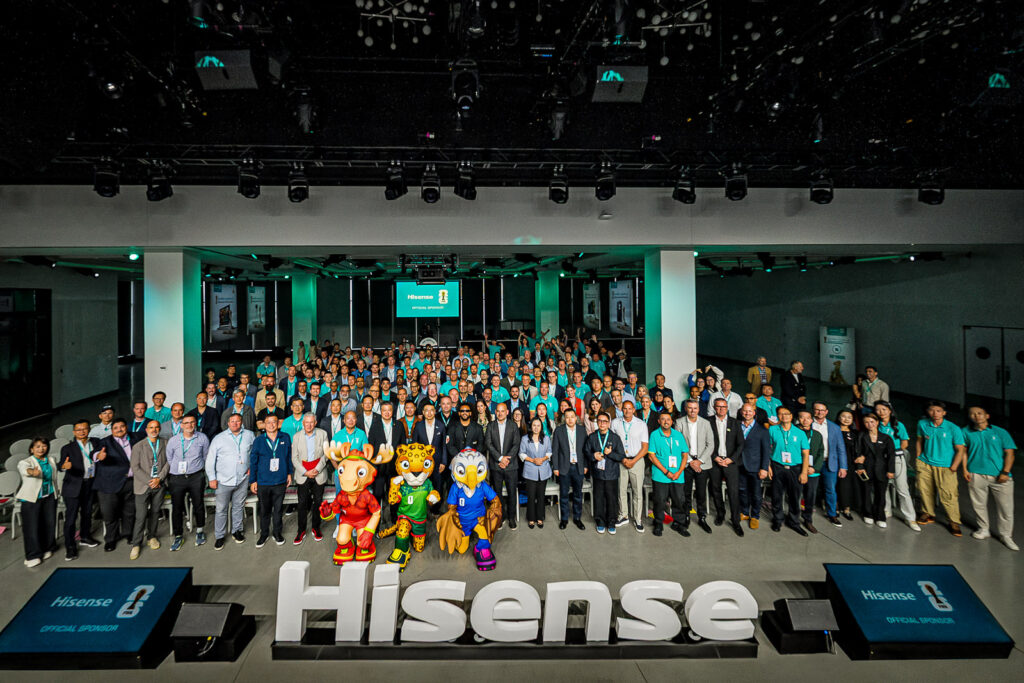
That list is short to read and long to execute. Every item sits in a different place, in different light, on a different clock, and several of them overlap. For a conference photographer in Manhattan, that overlap is the whole planning problem: deciding in advance who is standing where when two things happen at once, and what has to be true beforehand for that to be possible.
The reason this job is worth describing is not that it was glamorous. It is that the difficult parts of an event tend to be logistical rather than photographic, and most can be settled in advance.
Choosing the Right Corporate Event Photographer
A portfolio shows visual quality, but it does not reveal the systems behind the coverage. The hiring conversation should go beyond the strongest images in a gallery.
The stronger predictor is how clearly a photographer can explain the process before the contract is signed. Planning, staffing, communication, and delivery systems reveal more about event readiness than a portfolio alone. The corporate event photography New York companies end up happy with usually comes from someone who had those answers ready.
Before hiring a corporate event photographer in NYC, ask the questions that reveal process rather than taste. Ask whether they have handled executive and VIP coverage specifically, because photographing leadership carries a different kind of pressure than photographing a party. Ask what they can turn around during the event itself and what the full gallery timeline looks like. Ask whether they work with a team on large events and how the roles divide. Ask how they take direction on shot priorities from your side, how they handle candid and formal coverage in the same hour, and how they deal with multiple locations, tight windows, and changing schedules.
You are not testing their taste. You are testing whether they have done this often enough to have systems. On an event that happens once, systems are what protect you.
I would also pay attention to how someone talks about your event before they are hired. If the conversation is mostly about gear, that is a signal. If it is about your run of show and who needs images first, that is a different one.
Corporate Event Photography New York: Common Questions
What does a corporate event photographer do?
A corporate event photographer documents a business event in a way that produces usable marketing and communications assets. That includes stage and speaker coverage, executive and VIP photography, networking and candid moments, branding, product displays, and group photographs, delivered in a form the client’s teams can put to work.
What should a corporate event photography brief include?
The run of show, the speaker and VIP list, the branding and sponsor plan, any offsite or arrival coverage, and a short list of moments that must not be missed. Add who receives the images, what they intend to publish, and when they need it. That last part usually determines crew size.
What should companies look for when hiring a corporate event photographer?
Look past the portfolio to the process. Ask about executive and VIP experience, how they staff overlapping coverage, how candid and formal work get handled in the same hour, how they take direction from a marketing team, and what their delivery timelines are. Systems matter more than taste on an event that happens once.
Why is event photography important for marketing?
Event photography converts a one-time gathering into a reusable content library. Those images support press coverage, social media, recruiting, internal communications, partner materials, and promotion for the following year’s event, which spreads the cost of the event across many months of marketing rather than a single night.
Planning a Corporate Event in New York?
If you are organizing an executive summit, an international conference, a product launch, or a partner event, the photography decision is worth making early rather than last. Booking with time in hand is what makes a venue walkthrough possible, gives the photographer time to read the run of show and build a coverage plan around it, and lets crew and delivery timelines be settled before anyone is under pressure.
I provide corporate photography services throughout New York City, Northern New Jersey, and the surrounding metro area, including full event coverage and video, working with companies, agencies, event planners, and international brands. If your event needs coverage your marketing, PR, and internal teams can actually use, get in touch through the contact page and we can talk through the specifics.
Reply...


