


Your Headshot day should feel relaxed, joyful, and completely yours.
I’m Alex Kaplan, a Headshot Photographer and videographer based in New Milford, NJ, serving Northern.
Browse by Category:
headshots
view more

REQUEST INFORMATION
Want to feel like THIS on your Headshot day?
Availability is limited. Check Your Date Here


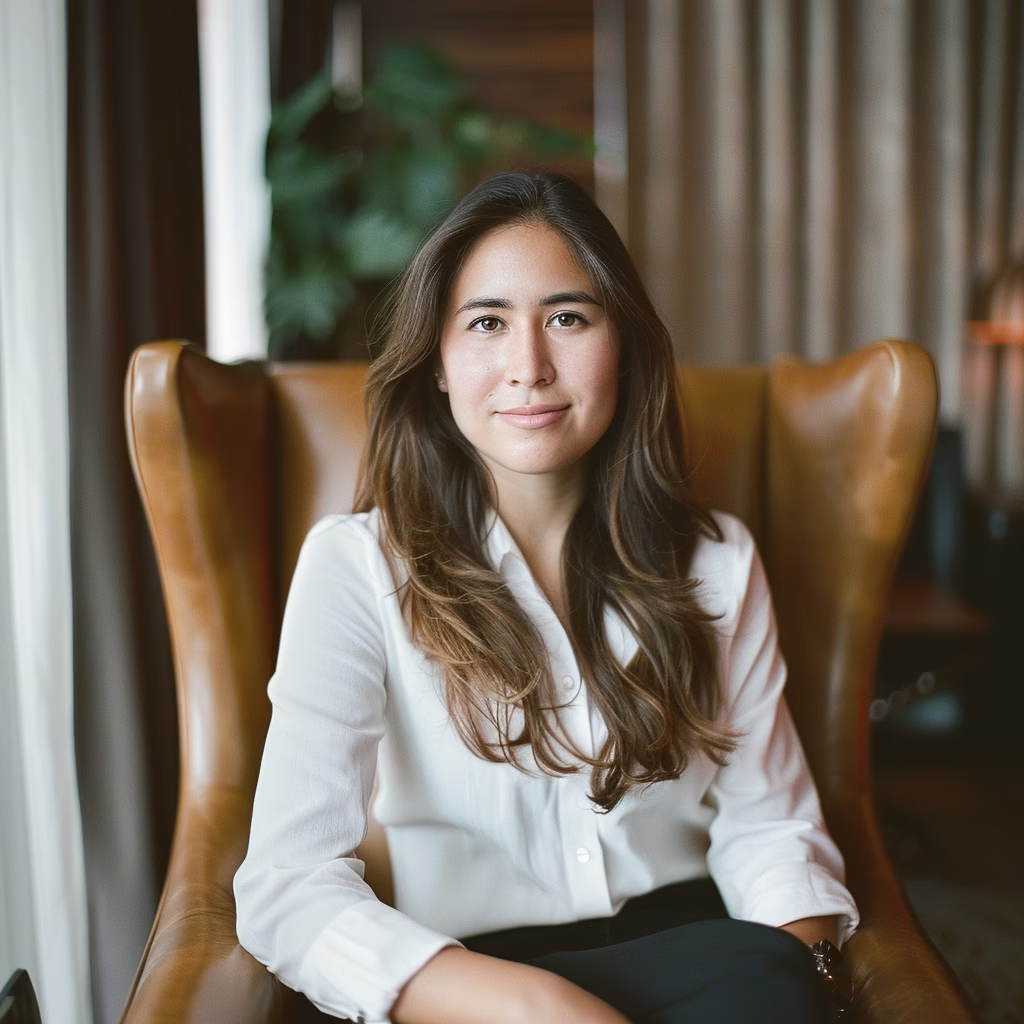
Most people don’t actually hate being photographed.
What they hate is looking uncomfortable in the final image.
I hear it constantly during corporate sessions across New Jersey and NYC:
“I always look stiff in photos.”
“I never know what to do with my face.”
“My smile looks fake.”
Most confident-looking headshots have very little to do with being photogenic. They come from feeling guided, relaxed, and slightly less aware of the camera than you were ninety seconds ago.
After 30 years photographing executives, attorneys, financial advisors, and corporate teams, I’ve learned one thing that keeps proving itself: you don’t need to act confident. You need the right direction to bring it out naturally.
Why Most Headshots Look Stiff (And Why It Hurts Your First Impression)
Stiff headshots happen because people are trying too hard to “look professional.” The moment someone starts holding a smile, locking their posture, or monitoring their own face in real time, tension shows up — usually in the jaw first, then around the eyes a frame or two later. I can almost always tell within the first minute of a session.
The cost shows up everywhere your face represents you: LinkedIn, firm bios, pitch decks, speaker pages, referral intros. Viewers feel the discomfort before they can name it, and research on the importance of first impressions in professional settings consistently shows that trust and credibility are decided in well under a second.
That’s why I focus the entire session on creating relaxed, natural-looking corporate headshots in NJ that still feel polished — not posed.
What Confidence Actually Looks Like in a Headshot
Real confidence on camera is quieter than people expect. It’s not a big smile or an executive power pose. It’s a relaxed jaw, eyes that engage instead of stare, shoulders that settle without slumping, and a calm presence that reads as steady rather than performed.
Some of the strongest headshots I’ve ever taken barely involve smiling at all. The goal isn’t perfection — it’s authenticity with polish. That’s the balance that makes someone stop scrolling on LinkedIn and actually trust the face they’re looking at.
My Approach: How I Help Clients Look Natural on Camera
Most people walk into a session expecting me to tell them exactly how to pose. My job is usually the opposite — removing the tension people create the moment they become aware of themselves.
That looks like keeping the session conversational, giving small adjustments instead of robotic posing, watching for tension in the jaw and shoulders, and letting expressions reset between frames instead of asking people to hold them. Nobody walks in knowing how to pose for a corporate headshot, and they shouldn’t have to. That’s my responsibility.
The best frames almost always come in the small in-between moments — right after someone stops trying so hard. The same principles apply when I’m shooting LinkedIn headshots that stand out without looking overly corporate or forced.
7 Ways to Look Confident in a Headshot (Without the Stiff Smile)
- Stop trying to “hold” a smile. A held smile dies in about two seconds and starts reading as artificial. Let it come and go between frames — I’ll catch the real one.
- Relax your jaw and facial muscles. Tension shows up at the mouth first, every time. Part your teeth slightly behind closed lips and the whole face softens.
- Focus on a thought, not the camera. Think about someone you like, a story you’re about to tell, a place you’d rather be. The eyes follow the thought — they always do.
- Let your expression reset between shots. Exhale, look away, look back. The smile that reaches the eyes for half a second right after a reset is almost always the keeper.
- Trust direction instead of self-correcting. Clients who adjust themselves between every frame create more stiffness, not less. Small guided adjustments outperform self-monitoring every time.
- Keep your posture open and natural. Good posture matters, but rigid posture reads as uncomfortable immediately. I’m guiding people into subtle positioning that feels like standing, not posing.
- Breathe and allow subtle movement. Frozen people look frozen. A slow breath, a small head shift, a slight lean — that’s where the natural frames live.
Real Example: A Confident Headshot That Works
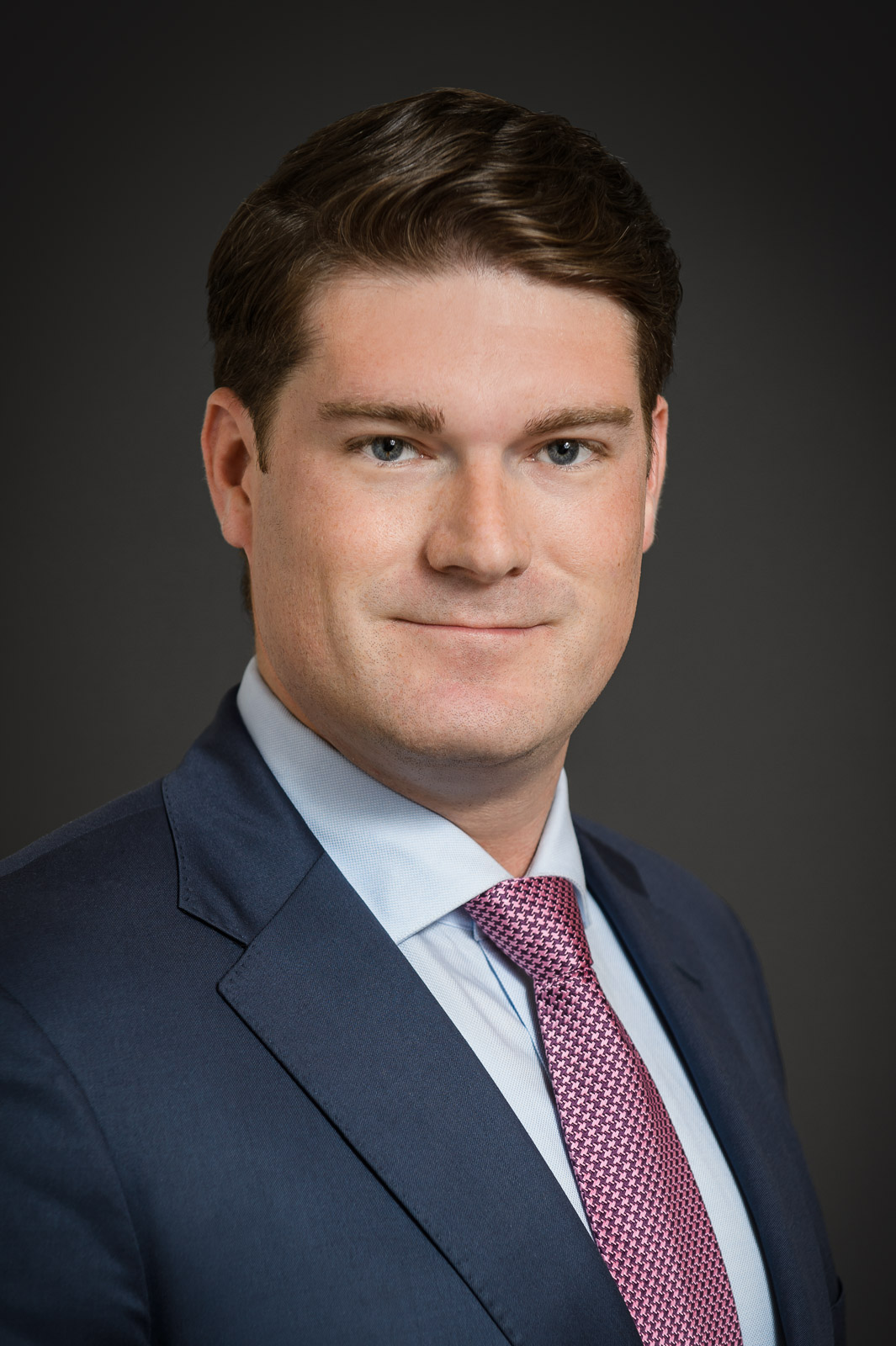
Here’s what most people won’t consciously notice in this frame — but their brain registers all of it in under a second.
The smile is closed-mouth, and that’s deliberate. A toothy smile in an executive headshot almost always reads as either salesy or uncertain. The subtle lift at the corners of the mouth is usually where executive headshots work best. It signals competence and warmth at the same time, which is exactly what corporate buyers, recruiters, and prospects are scanning for.
Look at the eyes. There are catchlights — small bright reflections — landing in roughly the same spot in both, which is what tells the brain the eyes are alive and engaged. Without catchlights, even a perfect expression goes flat. This is one of the most common reasons phone headshots fail and people can’t articulate why.
The head is turned about ten degrees off the shoulders. Not much. But a face shot perfectly square to the camera reads as a mugshot; a face turned too far reads as evasive. Ten degrees is the sweet spot where the jawline gets dimension and the person looks like they’re in a conversation with the viewer instead of being photographed by them.
The tie is doing more work than it looks. Pink houndstooth against a navy suit and light blue shirt gives the photo a single warm color note in an otherwise cool palette. Without it, this frame would read as corporate but forgettable. With it, the eye has somewhere to land before traveling back up to the face.
The lighting has a soft falloff on the shadow side of the face. Not flat, not dramatic. That gentle gradient is what gives the face structure without making it look retouched or theatrical. It’s the difference between “professional photographer” and “decent phone camera in good window light.”
The background isn’t black — it’s a dark gradient. Pure black flattens the subject into the frame. A subtle gradient creates separation between his shoulder and the edge of the photo, which is what makes him feel three-dimensional instead of pasted on.
None of this is accident. And none of it required heavy direction. It’s the result of a session built around removing pressure, not adding it.
How to Prepare Before Your Headshot Session (Without Overthinking It)
Get a real night of sleep — tired eyes show up even in good lighting, and no amount of retouching fully fixes them. Wear something well-fitted in a color you already feel good in. Don’t rehearse expressions in the mirror; you’ll lock in whatever you practice, and it never looks like you on the day.
I’d rather photograph someone in a simple shirt that fits well than an expensive suit they keep adjusting the collar on every ten seconds. Confidence on camera comes from comfort, not perfection.
The Difference Between Looking Professional and Looking Approachable
Corporate headshots used to be built almost entirely around authority — serious expressions, rigid posing, formal energy. Modern branding works differently. People still want competence and credibility, but they also want warmth, especially on LinkedIn, firm websites, and executive bios.
A strong headshot should make someone think this person looks experienced and this person feels approachable enough to work with in the same glance. That balance is what separates executives whose headshots quietly build their pipeline from executives whose headshots quietly cost them opportunities.
Work With a NJ Headshot Photographer Who Brings Out Your Confidence
If your current headshot feels stiff or doesn’t reflect how you show up professionally, it may be time for something better.
My approach is simple: calm direction, natural expression, an environment where people stop feeling watched. I photograph executives, professional service firms, and corporate teams throughout Northern New Jersey and the NYC metro — single sessions, leadership groups, and full team days.
After 30+ years behind the camera, I can tell you the confidence is almost always already there. The right session just removes everything getting in the way of it.
📸 Portfolio: alexkaplanphoto.com
📷 Instagram: @alexkaplanheadshots
Reply...


