


Your Headshot day should feel relaxed, joyful, and completely yours.
I’m Alex Kaplan, a Headshot Photographer and videographer based in New Milford, NJ, serving Northern.
Browse by Category:
headshots
view more

REQUEST INFORMATION
Want to feel like THIS on your Headshot day?
Availability is limited. Check Your Date Here


Video testimonials convert because they’re real. People see a genuine face, hear a real voice, and trust that more than any copy you could write about yourself.
I’ve filmed hundreds of video testimonials over my 30+ years as a photographer serving Northern New Jersey, NYC metro area, Long Island, and the Hudson Valley. The difference between testimonials that convert and ones that fall flat comes down to preparation—not scripting, but creating the conditions for genuine moments to happen.
Here’s how to prepare for video testimonials that actually work.
Table of Contents
- Why Video Testimonials Matter
- Start with the Right Mindset: Documentary, Not Scripted
- Preparing Your Client: The Conversation Before the Camera
- Technical Preparation: The Ideal Setup
- The Questions That Get Real Answers
- During the Shoot: Creating Comfort
- What to Avoid: Common Mistakes
- After the Shoot: Quick Turnaround Matters
- Using Video Testimonials Effectively
- FAQ
Why Video Testimonials Matter
Video testimonials show potential clients that real people—people like them—had a great experience with you. In my photography business, testimonials from corporate clients and professionals I’ve photographed carry more weight than anything I could say about myself.
When someone’s considering corporate headshots for their team or personal branding photos, seeing another client talk about their experience is your strongest marketing asset. The key is capturing genuine emotion and specific details.
Start with the Right Mindset: Documentary, Not Scripted
Don’t script your video testimonials. Scripted testimonials feel like ads, and people can tell. The moment it feels manufactured, you’ve lost credibility.
Instead, think documentary-style. Your job is creating an environment where your client feels comfortable sharing their real experience in their own words. This is the same approach I take with professional photography—I’m not posing every moment, I’m creating space for authentic interactions and being ready to capture them.
Preparing Your Client: The Conversation Before the Camera
The most important preparation happens before you hit record.
A few days before: Send a casual message. Let them know you’d love to capture a quick video testimonial (2-3 minutes max), and they can say no. Give them themes, not a script: “I’ll ask about what you were looking for when you hired me, what the experience was like, and what stood out.”
Be clear about usage: Tell them where you’ll use the footage—website, social media, both. People appreciate transparency.
Normalize nervousness: Most people feel awkward on camera. That’s fine. You’re looking for authenticity, not perfection. This simple reassurance helps enormously.
Technical Preparation: The Ideal Setup
You don’t need a production crew, but nail these basics:
Quick Setup Checklist
- Window light at 45° to your subject (flattering, natural)
- Quiet room (turn off HVAC, close windows)
- Phone/camera at eye level (never shoot up at them)
- Subject 3–6 feet from background (creates depth)
- Lav mic if possible (audio matters more than video quality)
- Outdoors? Skip it. Wind noise will ruin audio fast.
Background: Keep it simple and uncluttered. Plain wall works great. If you’re at a venue, position them where there’s visual interest but not chaos—near a window or subtle architectural detail.
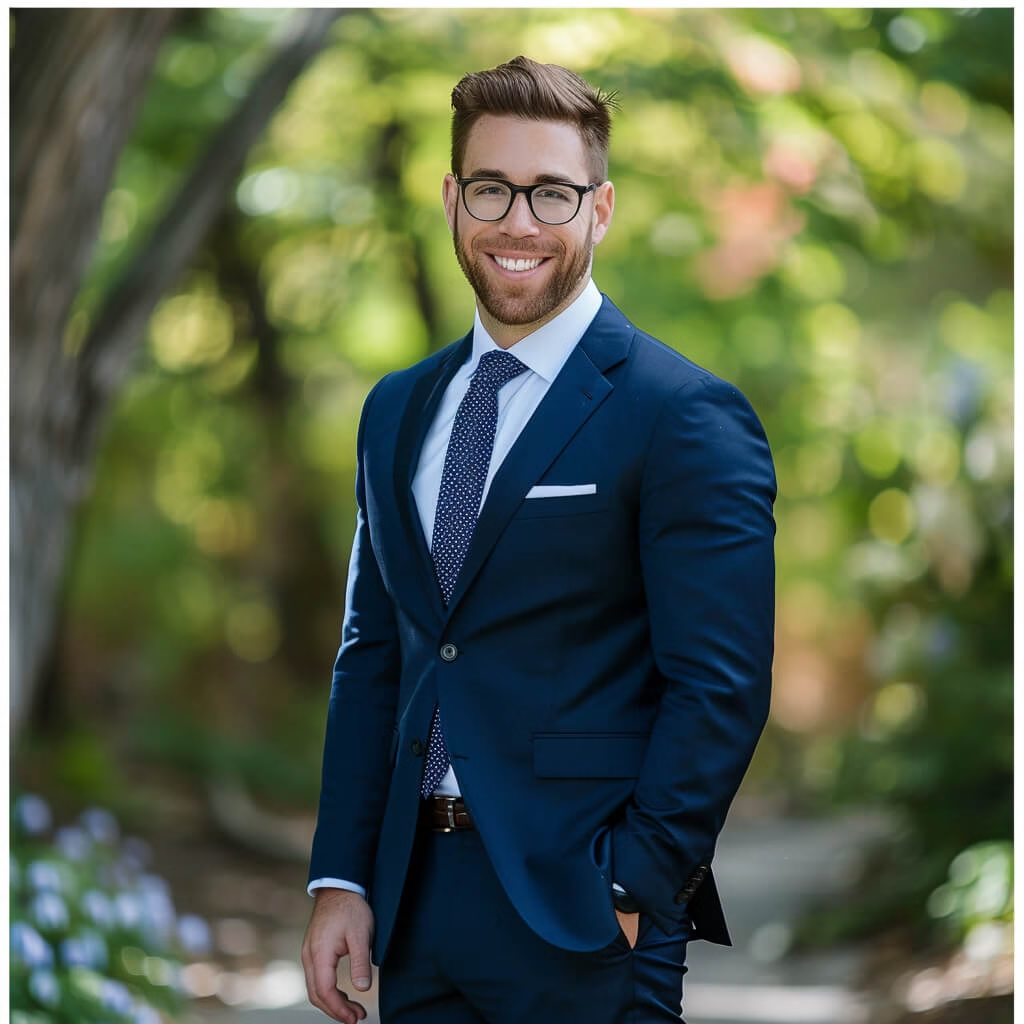
Frame them thoughtfully: Chest-up or head-and-shoulders framing. Give them a little headroom. Position slightly off-center—more visually interesting than dead-center. If you want to see an example of professional headshot, here’s a reference for the kind of clean, confident look that pairs perfectly with testimonial clips.
The Questions That Get Real Answers
Ask open-ended questions that invite storytelling. Avoid yes/no questions. Here are the questions that consistently deliver:
“What were you worried about before hiring me?” This surfaces their real concerns. Potential clients will see themselves in this answer.
“What were you looking for when you started searching for a photographer?” Establishes the problem or need they had.
“What made you decide to work with me specifically?” Gets at your differentiators without you listing them yourself. Way more credible from a client.
“Can you walk me through what the experience was like?” Invites storytelling. People are natural storytellers—give them space to describe specific moments and how they felt.
“What changed after you saw the photos?” Forces concrete results. “I got three job interviews” or “My LinkedIn profile views doubled” is gold.
“If a friend asked you who to hire for headshots, what would you tell them?” This often surfaces specific, memorable details that generic reviews miss. Maybe it was turnaround time, how you directed them, or a particular photo that surprised them.
Notice none of these are “Did you like working with me?” Those get you nowhere.
During the Shoot: Creating Comfort
Your client might feel nervous when the camera starts rolling. Your job is making them comfortable enough to be themselves.
Start with small talk: Don’t immediately jump into questions. Chat for a minute. Remind them there’s no pressure and you can re-do any response.
Give them a practice run: “I’m going to ask you a question—just answer like we’re having coffee. Don’t worry about being perfect, we’re warming up.” Often their “practice” answer is the best because they’re not overthinking it.
Be expressive and engaged: React naturally. Nod, smile, show you’re listening. Your energy helps them relax.
Use calm guidance throughout: If they look uncertain about positioning or where to look, gentle direction works better than letting them flounder. A quiet “that’s perfect” or “just relax your shoulders” keeps them confident without making them self-conscious.
Don’t interrupt when they’re on a roll: If they start sharing something genuine, even if they’re rambling, let them finish. You can edit later. Some of the best moments come when people get past initial nervousness and really talk.
Multiple takes are fine: If they stumble, “Want to try that again?” works. Keep it light.
What to Avoid: Common Mistakes
Don’t give them a script: The moment you hand someone specific words, you’ve killed authenticity. They’ll sound like they’re reading—because they are.
Don’t make it too long: Respect their time. A 15-minute session is about right.
Don’t ignore comfort levels: If someone really doesn’t want to be on camera, don’t push it. A written testimonial from an enthusiastic client beats video from someone who’s uncomfortable.
Don’t forget written permission: Have a simple release form ready. Doesn’t need to be complicated—just confirmation they’re okay with you using footage for marketing.
After the Shoot: Quick Turnaround Matters
The faster you turn around the testimonial, the more value you get. Your client’s excited right now. If you send them the video within a few days, they’re more likely to share it on their own social media and tag you.
I try to get testimonial clips edited and shared within a week. Simple trim + captions is often all you need. Captions matter for Instagram Reels, LinkedIn, and anywhere people watch with sound off.
Using Video Testimonials Effectively
Once you have great testimonial footage, use it everywhere:
- Website homepage: Short compilation of different clients
- Service pages: Pair testimonials with specific services they’re discussing
- Social media: 30-60 second clips perform well on Instagram Reels, Facebook, LinkedIn
- Email marketing: Include in welcome sequences or newsletters
- Proposals and follow-ups: Share relevant testimonials with prospective clients
If you’re offering video coverage and content creation services, testimonials become even more valuable. You can capture client testimonials as part of your event coverage or headshot sessions, then use that footage across your marketing. It’s content that works for you long after the shoot.
The more places your testimonials live, the more they work for you.
According to Wyzowl’s Video Marketing Statistics, 85% of people say watching a video has convinced them to buy a product or service, which is exactly why testimonials work so well for service businesses.
Final Thoughts: Preparation Creates Authenticity
When you prepare thoughtfully—when you think through your questions, set up proper audio and lighting, create a comfortable environment, and put your client at ease—you’re not manufacturing fake emotion. You’re removing barriers that prevent genuine emotion from coming through.
You’re making it easier for your client to share their real experience instead of feeling self-conscious about the camera.
Whether you’re a photographer looking to capture client testimonials or any service provider wanting to showcase real experiences, this approach works. Keep it conversational, keep it real, and respect your client’s time and comfort.
After 30 years and 600+ five-star reviews, I’ve learned the best marketing isn’t about perfect polish. It’s about real people sharing real experiences. And that starts with preparation.
FAQ
How long should a video testimonial be?
Final edited testimonials work best at 60-90 seconds for social media, or 2-3 minutes for website use. The recording itself might run 10-15 minutes—you’ll edit down to the best moments.
Should I shoot horizontal or vertical?
Shoot horizontal for website and YouTube. Shoot vertical (9:16) for Instagram Reels, TikTok, and Stories. If you can only do one, horizontal gives you more flexibility—you can always crop to vertical later.
Do I need a release form?
Yes. A simple written release confirming they consent to you using the footage for marketing purposes. It doesn’t need to be complicated, but you need it before publishing.
What’s the best mic for phone testimonials?
A basic lavalier (lav) mic that plugs into your phone runs $20-30 and makes a huge difference. Rode SmartLav+ or Purple Panda are solid options. If you’re using a camera, a shotgun mic like the Rode VideoMic works great.
What if my client freezes up on camera?
Stop recording. Chat with them for a minute about something unrelated. Then remind them you’re just having a conversation and you can edit out any stumbles. Sometimes I’ll put my phone down and just talk for a minute until they relax, then pick it back up.
How soon after the session should I capture the testimonial?
Right after if possible. Their experience is fresh, their emotion is genuine, and they’re already there. If I’m shooting corporate headshots, I often grab a quick testimonial while we’re wrapping up. Waiting days or weeks means less authentic responses.
Ready to create professional content that showcases your business? Whether you need headshots, event coverage, or video testimonials, I help businesses in Northern New Jersey, NYC metro area, Long Island, and the Hudson Valley tell their story authentically. Contact Alex Kaplan Photography to discuss your project.
Reply...


