


Your Headshot day should feel relaxed, joyful, and completely yours.
I’m Alex Kaplan, a Headshot Photographer and videographer based in New Milford, NJ, serving Northern.
Browse by Category:
headshots
view more

REQUEST INFORMATION
Want to feel like THIS on your Headshot day?
Availability is limited. Check Your Date Here
Most candidates I meet already have a photo they have been using for years. It came from a phone, a family event, or an old work directory, and it has been cropped and resized so many times that it barely holds together on a screen.
Political campaign photography solves a larger problem than a single dated portrait. A well planned session gives a candidate a working library of images that hold up on a website, a mailer, a press release, and a social feed without looking like they were gathered from five different places.
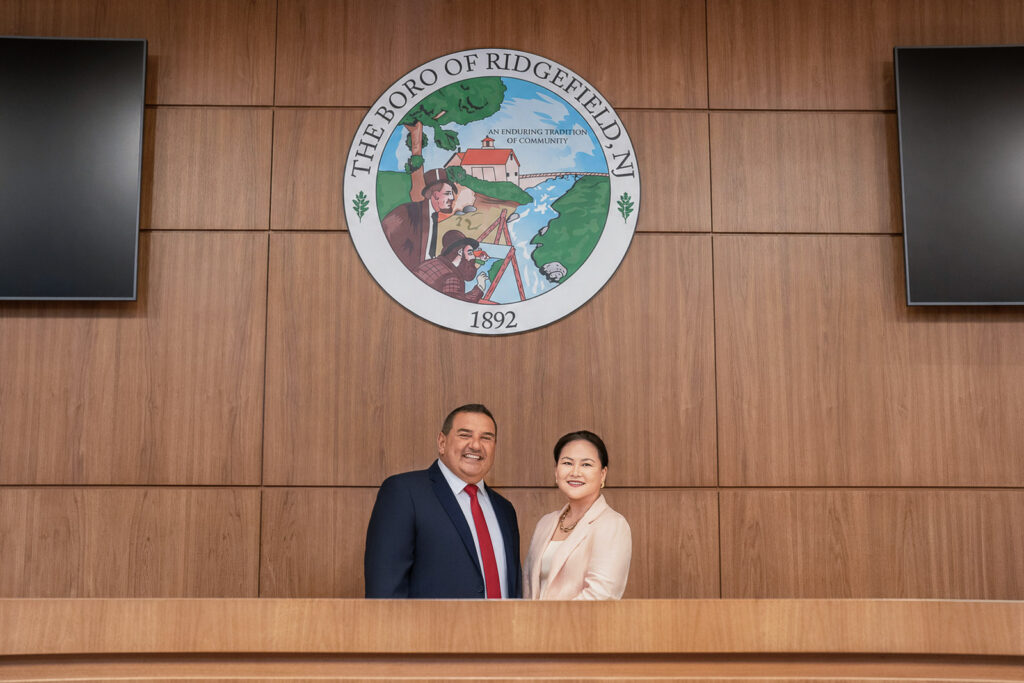
I recently photographed Ridgefield Borough Council candidates Gino Ramundo and Sarah Kim throughout their own town for Alex Kaplan Photography. That session is a useful example of what campaign imagery should actually accomplish, so I will use it here to show how I think through this kind of work.
What follows applies to any candidate, not just theirs.
What Is Political Campaign Photography?
Political campaign photography creates professional images of candidates for campaign websites, social media, printed materials, advertising, press, and community outreach. Strong campaign photography combines credibility and professionalism with approachable imagery that helps candidates visually connect with the communities they seek to represent.
Why Professional Photography Matters in a Political Campaign
Campaign photographs are usually the first thing a voter sees. They appear on the website, the door hanger, the local news article, and the shared post, often before anyone reads a single line of campaign copy.
That means the picture is doing communication work whether or not it was planned. A blurry crop says one thing. A stiff, over lit studio portrait says something else, and neither one may be what the candidate intended.
There is also a practical cost to skipping this step. Campaigns without professional photos for political candidates end up screenshotting group pictures, cropping strangers out of frame, and running images that quietly undercut the message they paid to send.
The standards here are not that different from the professional headshots I photograph for executives and teams across Bergen County and Northern New Jersey, with one addition: a candidate also needs to look like they belong to the place they are asking to serve.
What Makes a Strong Political Candidate Photo?
A strong political candidate photo holds two things at once. It reads as capable and credible, and it still feels like someone you could stop and talk to on a sidewalk.
Push too far toward polish and the image starts to feel corporate and distant. Push too far toward casual and the credibility slips. The useful territory sits between those two, and getting there is mostly a matter of direction rather than gear.
This is where political candidate photography differs from a standard business portrait. A candidate is not selling expertise alone. They are asking to represent people, and the picture has to carry some warmth alongside the competence.
What I Watch For During Political Campaign Photography
When I photograph political candidates, I am not only thinking about whether they look professional. I am also considering how the location, expression, body language, and composition work together to make the candidate feel approachable and connected to the community.
Small things carry a lot of weight. Shoulders angled slightly rather than squared to the camera, a chin brought forward an inch, hands that have somewhere to go, an expression caught a half second after a real reaction instead of on command.
Wardrobe matters too, though usually in the direction of restraint. Solid colors, clean lines, nothing that competes with the face, and something the candidate would genuinely wear to a town meeting.
Why Community-Based Locations Matter in Campaign Photography
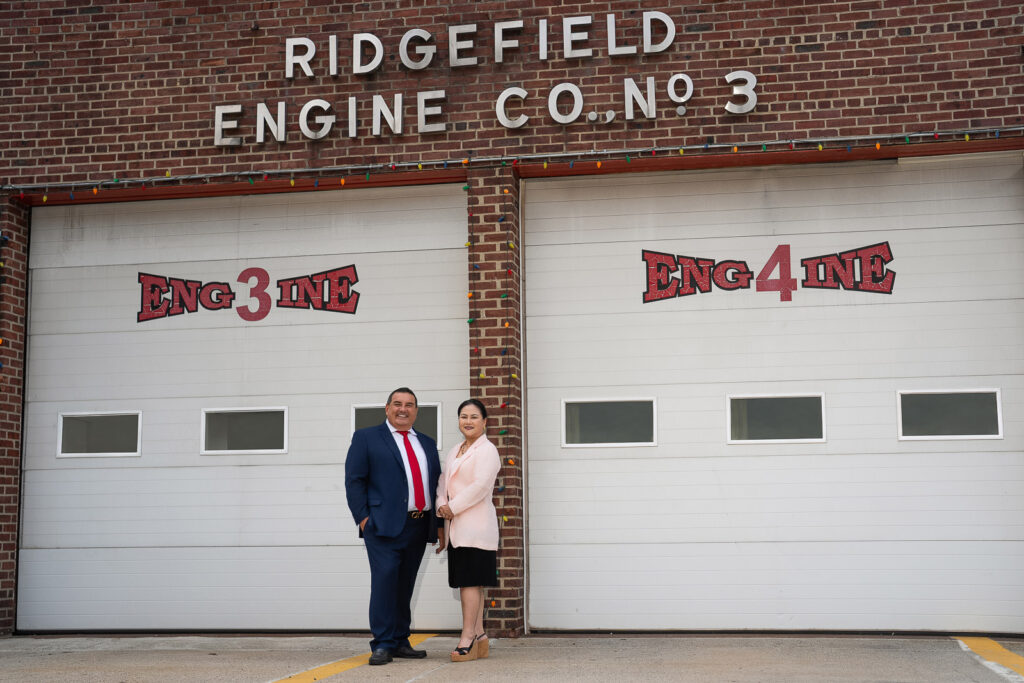
This is the part that separates campaign work from a standard portrait session. In Ridgefield, I did not look for the prettiest backdrop in town. I looked for the places residents would recognize instantly.
We worked in the borough council chamber, outside the firehouse, and at the police department. Someone who lives three blocks away sees those photos and knows exactly where they were taken, and that recognition does something a seamless backdrop cannot.
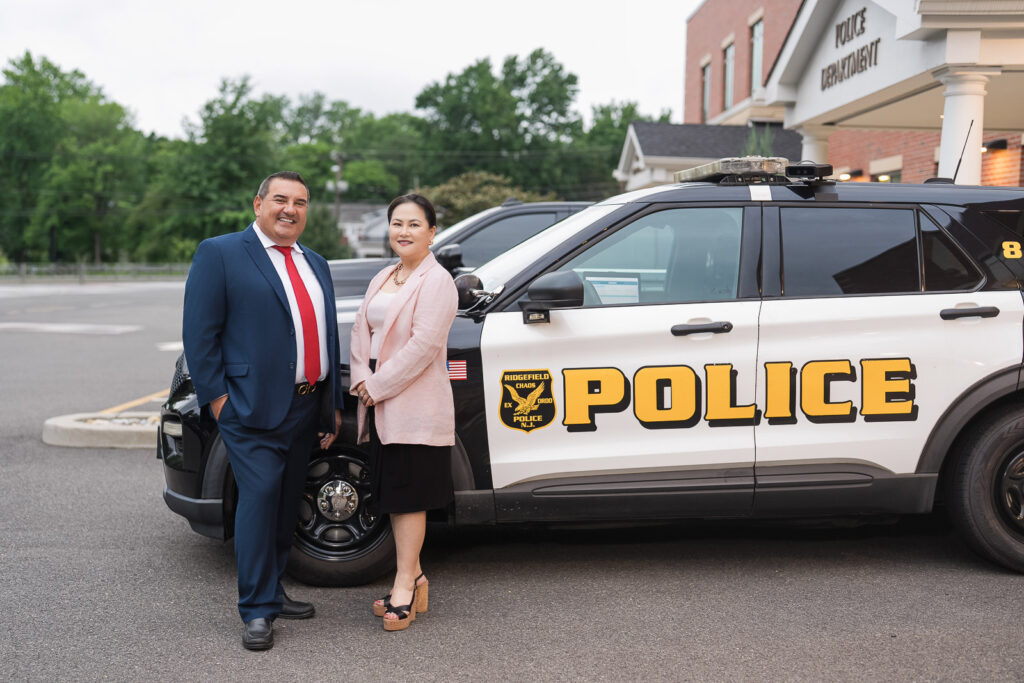
Environment establishes context. It tells a viewer that the candidate stood in a real place on a real day, rather than in a rented studio, and that quiet signal of familiarity is worth more than perfect lighting.
Good political campaign photography treats location as information, not decoration. The background should answer a question the caption never gets to: where is this person from, and do they actually spend time here. I take a similar approach when I write about choosing outdoor locations for professional portraits, though the goals shift when a community is the subject as much as the person.
More Than a Headshot: Building a Complete Campaign Image Library
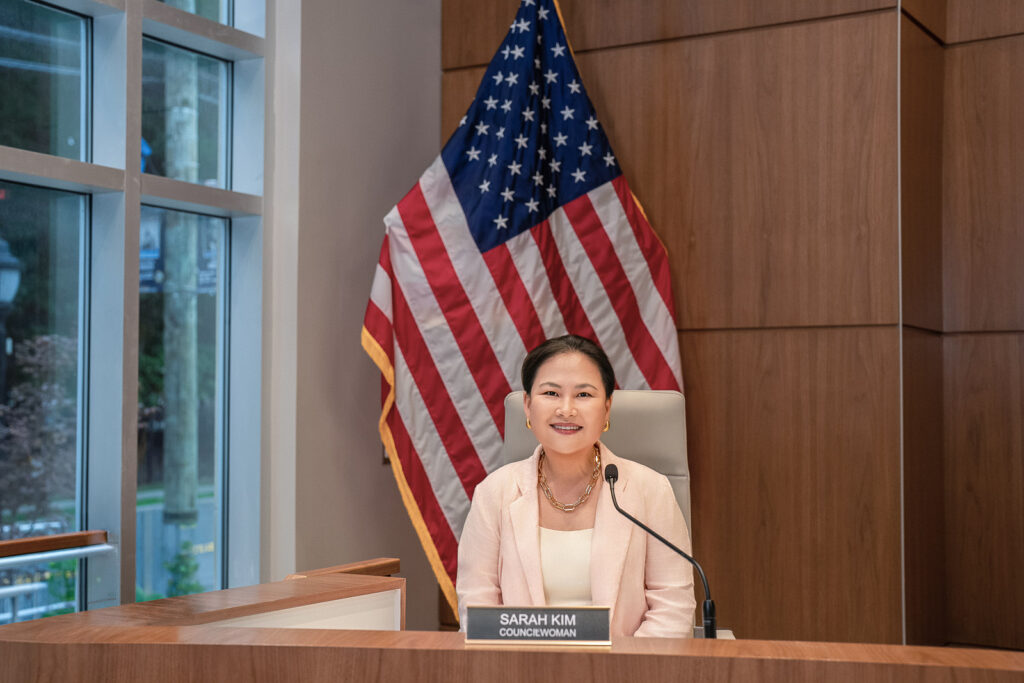
One polished headshot is not enough for a campaign. A team running social media, a printer laying out a mailer, and a reporter requesting a photo all need different files, and they usually need them the same week.
A single session with Alex Kaplan Photography should produce all of it:
- Individual candidate portraits and traditional campaign headshots
- Environmental portraits that place each candidate in a real setting
- Photographs of running mates together, framed for shared materials
- Community based imagery showing recognizable local locations
- Both close compositions and wider contextual frames
- Horizontal and vertical versions of the strongest setups
That range is what keeps a campaign from reusing the same picture until voters stop seeing it.
It also protects the schedule. When a request arrives on a Friday afternoon, the campaign has a file that fits instead of a session it does not have time to book.
How to Look Professional Without Looking Overly Staged
Heather Garcia, who helped coordinate the Ridgefield campaign, was clear from the start: the photographs needed to feel professional while staying approachable and community focused. That brief shaped how I worked the whole session.
The practical answer is movement and conversation. I keep candidates walking, turning, talking to each other, and reacting to something real, then photograph in the moments between the posed frames.
Interacting with the environment helps as well. A candidate standing at the council dais where they actually sit, or in the firehouse lot on an ordinary evening, reads as a person in their town. The same candidate squared up against a blank wall reads as a photo shoot.
Planning Campaign Photos for Different Platforms
I think about the end use while I am still shooting, because a photograph that works beautifully on a website can fail completely as a mailer.
A website header needs horizontal framing and negative space for text. Social profiles need tight vertical and square crops. Print pieces need room around the subject for the designer to work, and press requests usually want a clean single portrait with nothing distracting behind it.
Solo frames and paired frames matter too, since candidates running together need both, and the same setup usually needs to exist in two orientations. If a campaign is also planning community based video, as this one is, I keep the visual approach consistent so the photographs and the footage look like they came from the same effort.
Political Campaign Photography in New Jersey
As a political campaign photographer in NJ, I work with candidates, elected officials, and civic leaders on location throughout the state, in the settings that actually mean something to their work. The Ridgefield project in Bergen County is a recent example, and the approach travels to any municipality here.
New Jersey campaign photography also has a logistical side worth naming. Municipal buildings, parks, and public spaces each have their own access rules, so I confirm what is permitted before a session rather than on the morning of it.
Timing tends to be the real constraint. Filing and ballot deadlines are published by the New Jersey Division of Elections, and campaigns that book photography before those dates arrive end up with far more usable material than the ones scrambling afterward.
After more than 30 years behind a camera, I have learned that the sessions that work best are the ones where we talk through the plan first: where the images will run, who needs what, and which parts of town belong in the frame.
If you are a candidate, campaign coordinator, or community leader who needs professional campaign imagery, get in touch with Alex Kaplan Photography and we will map out the session together.
Reply...


