


Your Headshot day should feel relaxed, joyful, and completely yours.
I’m Alex Kaplan, a Headshot Photographer and videographer based in New Milford, NJ, serving Northern.
Browse by Category:
headshots
view more

REQUEST INFORMATION
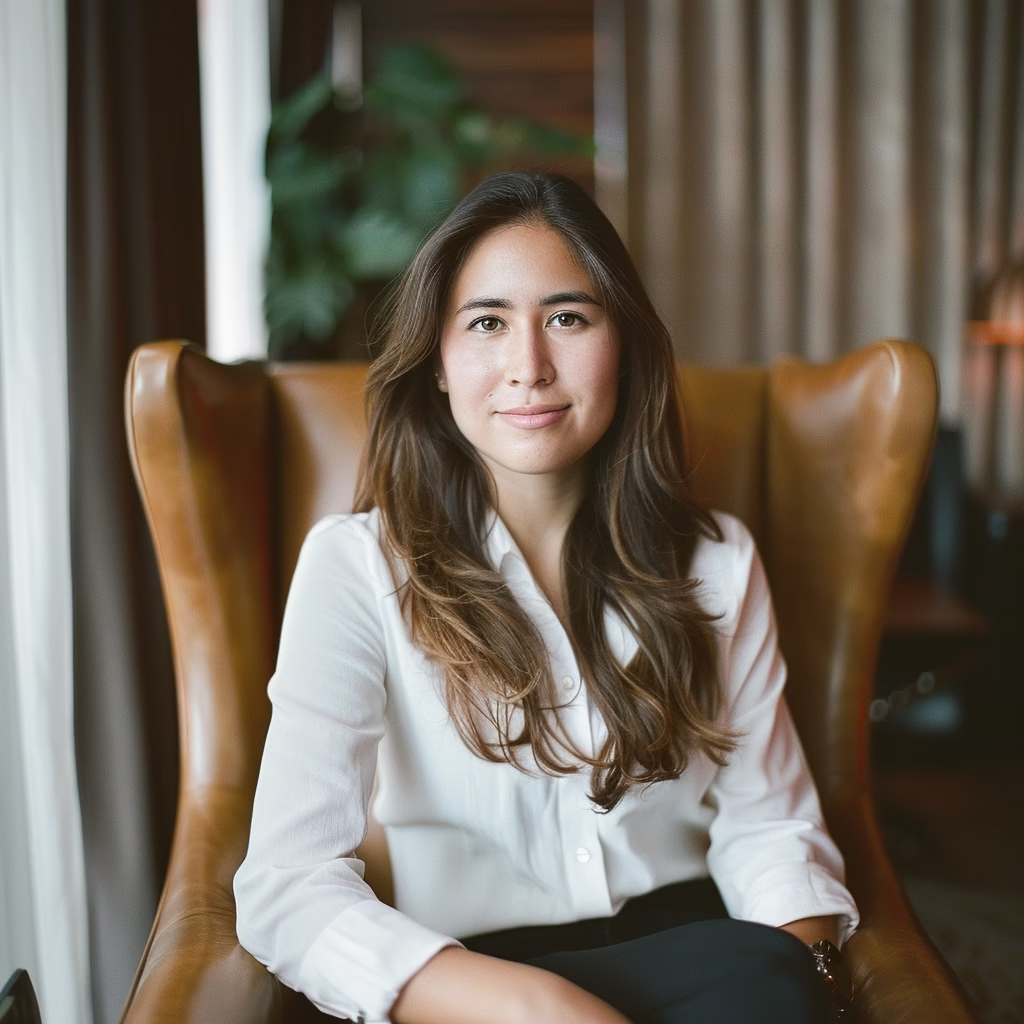
Want to feel like THIS on your Headshot day?
Availability is limited. Check Your Date Here



Your Team Changes. Your Visual Brand Shouldn’t.
Someone always misses photo day. A new director starts in March, two analysts join in the fall, and a partner finally retires his old portrait.
Each of those people needs a headshot, and each one lands on the same team page as everyone else. If you’re responsible for corporate headshots in New Jersey, that’s the part that quietly gets hard: keeping the whole gallery looking like it came from one company.
I’ve been photographing professionals for more than 30 years, and the fix is having a standard. The portraits here come from my work with Alvarez & Marsal and show that standard holding; for the service side, here’s how I approach professional headshots for company teams.
Why Consistent Employee Headshots Matter
Nobody views a team page one photo at a time. They scroll, and in two seconds they’ve seen twelve faces, plus twelve lighting setups if nobody planned for it.
Company headshots travel, too: LinkedIn profiles, press releases, the second slide of a proposal, a conference speaker bio, the internal directory.
When they match, it reads as intention. A client never thinks “nice lighting”; they sense the firm pays attention. That’s why I built a repeatable process, which you can read about on my background and approach page.
Alvarez & Marsal Corporate Headshots: A Real-World Example
When photographing professionals from Alvarez & Marsal, the goal wasn’t to make every portrait identical. It was to create individual headshots that could stand alone while still feeling cohesive when viewed as part of the same organization.
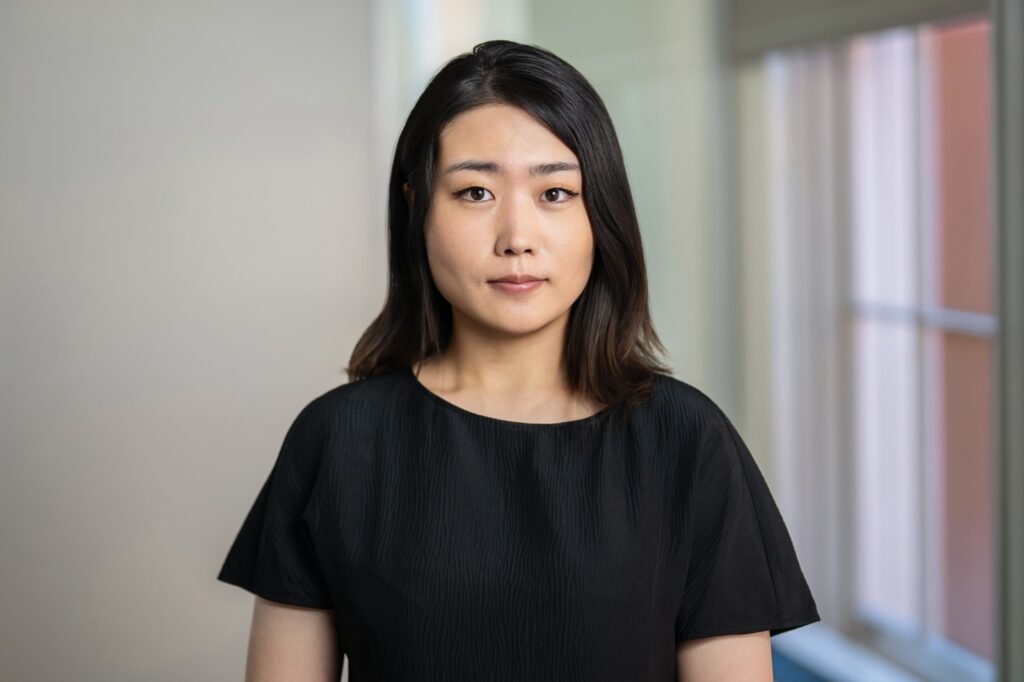
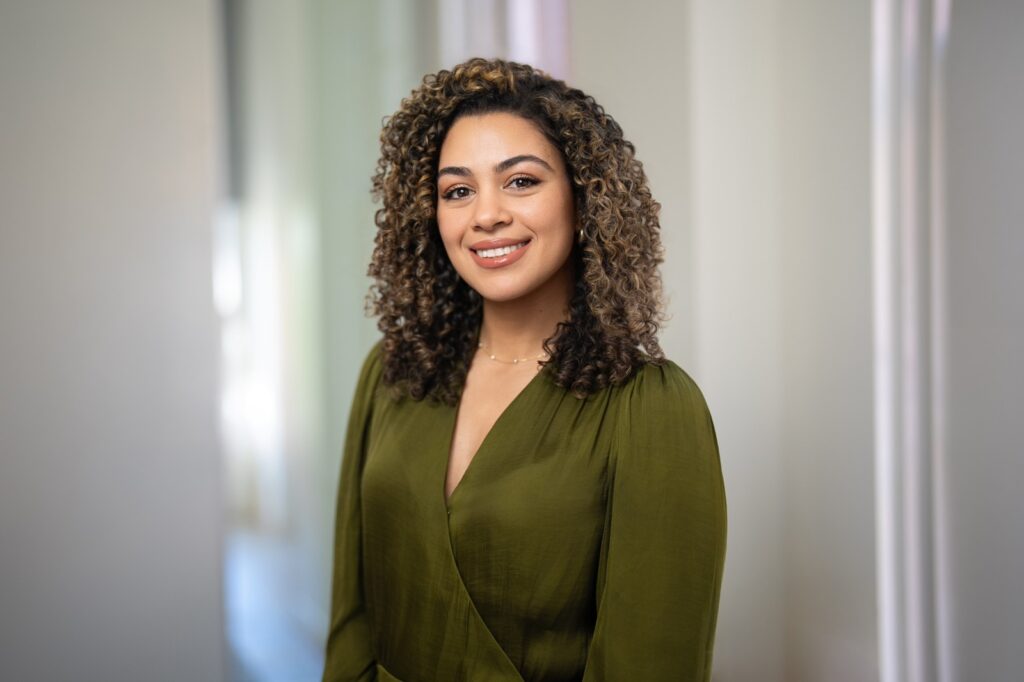
Look at these portraits together and the pattern shows up fast. The same soft, even light sits on every face, and the same pale wall and bright windows fall out of focus behind each person, sometimes with a warm hint of brick through the glass.
Then look at the people. Nobody is dressed alike, nobody holds their face the same way, and nobody looks pressed into a template.
My earlier corporate team headshot case study covers the logistics of one on-site day in Manhattan. This one is about the longer game: what you hold steady, what you let go, and how you keep it going as people come and go.
What Should Stay Consistent Across Corporate Headshots?
The technical choices should stay fixed: lighting direction and softness, background treatment, framing, camera height, and color and retouching style. Those are the things a viewer’s eye compares across a gallery without realizing it. Get them right and the people in the photos can be as different as they actually are.
- Lighting. Same direction, same softness, same brightness on skin, so nobody looks lit by a different window.
- Background. Here, a softly blurred office with daylight at the edge of the frame, which gives context without pulling focus.
- Framing. Chest up, with the face at roughly the same height in the frame, so the gallery lines up cleanly in a grid.
- Camera perspective. Lens at eye level and the same working distance, which keeps faces the same size and the background blur the same depth.
- Color and finish. One retouching standard for everyone, so no single portrait looks more processed than the one beside it.


]Compare these two. A navy blazer and a crisp white shirt, a closed smile and a wide one, yet the light falls on both faces the same way.
That’s what a visitor’s eye does on your team page: it compares. Give it a steady baseline and it starts noticing the people instead.
What Doesn’t Have to Be Identical?
Wardrobe, expression, pose, and personality don’t need to match. A cohesive team gallery comes from shared technical treatment, not from asking everyone to wear the same jacket and give the same smile. When the light and framing hold steady, individual differences read as character instead of inconsistency.
Across the A&M portraits there’s a black mock neck with glasses, an olive wrap top with a big open smile, a navy blazer over an oxford shirt, a sleeveless black button front, and a cream knit polo with a quieter, more reserved look.

I see the same two people at almost every company session. One has been dreading it all week and steps onto the mark with hands clasped, chin slightly lifted, waiting to be told what to do; the other has done this every year and asks where to look before I say a word.
I don’t try to make them look alike. I work with each until they look like themselves on a good day, and let the setup handle consistency.
Glasses stay on; I shift the light until the lenses go clear. In the portrait above, the frames are there but nothing reflects back at you.
How Do You Match Headshots When New Employees Join Later?
You match new hires by recording the original setup and rebuilding it: the same light positions and modifiers, background choice, camera height, lens and distance, crop, and editing profile. A photographer who documents those details can photograph someone months or years later and have the new portrait sit comfortably beside the originals.
Most companies don’t think about this until it’s a problem. The first photographer did lovely work, moved on, and nobody wrote down the setup.
I keep an archive of every corporate setup I photograph. When a company calls about three new hires, I’m not guessing from an old JPEG; I’m working from the lighting positions, distances, and editing preset from the original day.
On-Site Corporate Headshots Make Team Updates Easier
Asking twenty people to drive to a studio on twenty different days is how photo projects stall. For corporate team headshots, bringing the setup to the office is simpler.
I set up in a hallway or empty conference room, and people come in between meetings. Most are back at their desks before the next calendar reminder goes off.
What an On-Site Day Looks Like for Corporate Headshots in New Jersey
From my studio in New Milford, many Bergen County offices are an easy drive, and the kit is the same in Newark or Midtown.
Once the setup is built, it doesn’t move. The first person of the morning and the last person before lunch stand on the same mark, under the same light, at the same distance from the lens.
Leadership teams who need executive headshots in New Jersey for bios and proposals may also want my guide to headshots for consultants and executives.
Planning Corporate Headshots for a Growing Team
A little planning saves a lot of patching later. Settle these before anyone steps in front of a camera.
Decide the standard first. Agree on background, framing, and formality before the first session, not after the first proofs.
Think about where the images will live. A website grid, a round LinkedIn crop, and a vertical speaker graphic each need different room around the head, so frame for the tightest one.
Give wardrobe guidance, not a uniform. A short note about solid colors and no busy patterns creates cohesion without a dress code.
Plan for the people who aren’t hired yet. Ask how your photographer will recreate the look next year.
Keep the same photographer if you can. It’s far easier when whoever built the look rebuilds it.
Questions About Corporate Headshots in New Jersey
Should all employee headshots have the same background?
Not necessarily. What matters more is a consistent visual treatment that suits your brand, meaning the same kind of background rendered the same way. A softly blurred office works well because small differences between rooms disappear, while a solid studio color has to match exactly across every session to hold together.
How can new employee headshots match older company photos?
A photographer can reproduce the established lighting, composition, background treatment, camera perspective, and editing standards during future sessions. It works best when those details were recorded the first time. I archive every corporate setup, so a new hire photographed a year later can join the same team page without looking out of place.
Should everyone wear the same thing for corporate headshots?
Usually no. Coordinated levels of professionalism and simple wardrobe guidance create cohesion without identical clothing, and solid colors with a similar level of formality across the team are usually enough. People also photograph better in clothes they feel comfortable in, and that ease shows up in their expression.
Can corporate headshots be taken at our office?
Yes. On-site photography is especially practical for larger teams and companies that expect to photograph more employees over time. I bring the full lighting setup, build it in a hallway or meeting room, and photograph people between meetings, so the workday keeps moving and everyone is photographed under identical conditions.
Corporate Headshots That Look Consistent, Not Cookie-Cutter
A cohesive company gallery shouldn’t erase anyone. The goal is for every employee to look like themselves while every portrait still feels like part of the same organization.
If you’re an HR lead, marketing director, or office manager in Northern New Jersey or New York City planning corporate headshots in New Jersey for a growing team, you may be photographing everyone at once or adding people a few at a time. Either way, I can create a style designed to stay cohesive as your team evolves, and keep the record to match it next year.
Call me at 917-992-9097 or 201-834-4999, or send a note through the contact page with your headcount. With 30+ years behind the camera and 670+ Google reviews, I’m glad to talk it through first.
Reply...


