


Your Headshot day should feel relaxed, joyful, and completely yours.
I’m Alex Kaplan, a Headshot Photographer and videographer based in New Milford, NJ, serving Northern.
Browse by Category:
headshots
view more

REQUEST INFORMATION
Want to feel like THIS on your Headshot day?
Availability is limited. Check Your Date Here


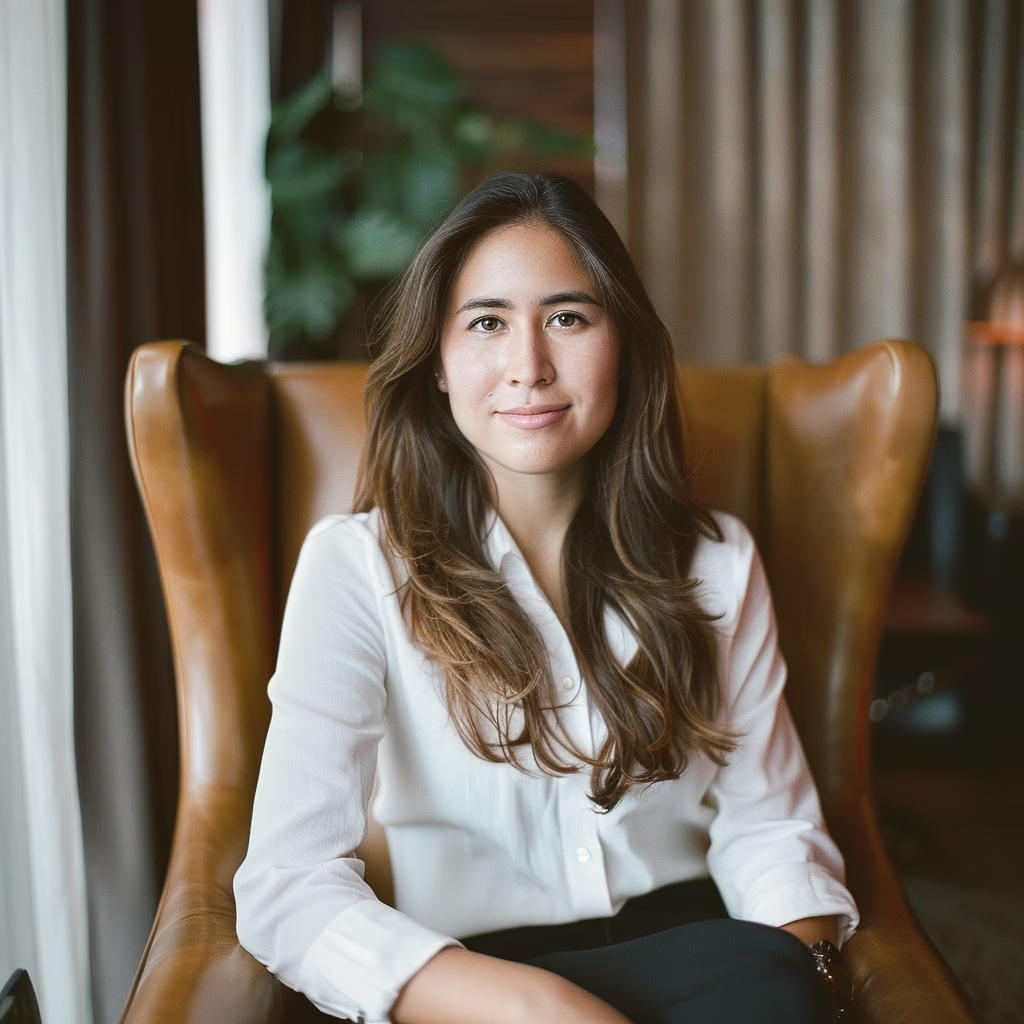
“I’m just not photogenic.”
I hear that line almost every week, usually within two minutes of someone setting their bag down in the studio. It arrives like an apology, or a warning label.
Here is what thirty years behind a camera has taught me. That belief is rarely about the face.
It is about the light that face has been photographed in. Professional lighting for headshots exists to do something your ceiling fixtures and your phone screen were never built to do, which is shape a face rather than simply brighten it.
At Alex Kaplan Photography, most of a session’s work happens before anyone smiles: where the light sits, how far back the camera stands, and what I am watching while you settle in.
The most stubborn misconception I run into is that certain face shapes just do not photograph well. In my experience the problem is light placed for a room instead of for a person.
Why Most People Think They Aren’t Photogenic
Why Phone Cameras Distort Facial Proportions
Your phone is not lying to you exactly, but it is not telling the whole truth. A front-facing lens sits a few inches away, and at that distance whatever is closest to the camera gets exaggerated, usually your nose and forehead.
Why Overhead Lighting Creates Harsh Shadows
Then there is the light you actually live under. Overhead office fixtures push light straight down, which carves shadows beneath the eyes, under the nose, and along the jaw.
Stack those two together and you get an image that is technically accurate and personally unrecognizable. That is the picture most people quietly judge themselves against.
The attorneys, physicians, and realtors who book professional headshots in NJ often arrive certain they photograph badly. In most cases they have simply never sat in front of light placed for them.
If you are refreshing a firm bio or a practice page, our corporate headshots work shows what a controlled setup does for the same faces that hate their own selfies.
Professional Lighting Is Designed to Flatter, Not Just Illuminate

Illumination only makes you visible. Good headshot lighting decides which parts of your face step forward, which settle back, and where a viewer’s eye lands first.
That difference is why professional portraits can look like a different person than your camera roll does. Nothing was corrected. Something was decided.
What Light Actually Does to a Face
Professional portrait lighting comes down to a handful of placement decisions made in the right order. Soft, directional light creates a gradual travel from bright to shadow across your cheek, and your eye reads that gradient as dimension.
Flat overhead light collapses that gradient, which is why fluorescent snapshots look strangely two-dimensional.
Placement does the rest. Raise the main light slightly and the jawline defines itself. Add a gentle fill on the shadow side and the skin evens out without looking retouched.
The eyes get most of my attention. A catchlight, that small reflection of the light source in the iris, separates a portrait that looks alert from one that looks tired. Executives reviewing our executive headshots in NJ often go straight to the eyes without being able to say why.
Every Face Shape Benefits from Different Lighting Techniques
Face shape is a starting point, not a formula. The charts floating around online treat it like a lookup table, and that has never matched what actually happens in front of me.
A rounder face often benefits from light arriving more from the side, since the resulting shadow adds definition along the cheek. A longer or narrower face may benefit from broader, more frontal light, because it reduces side-to-side contrast and helps the face read with greater balance.
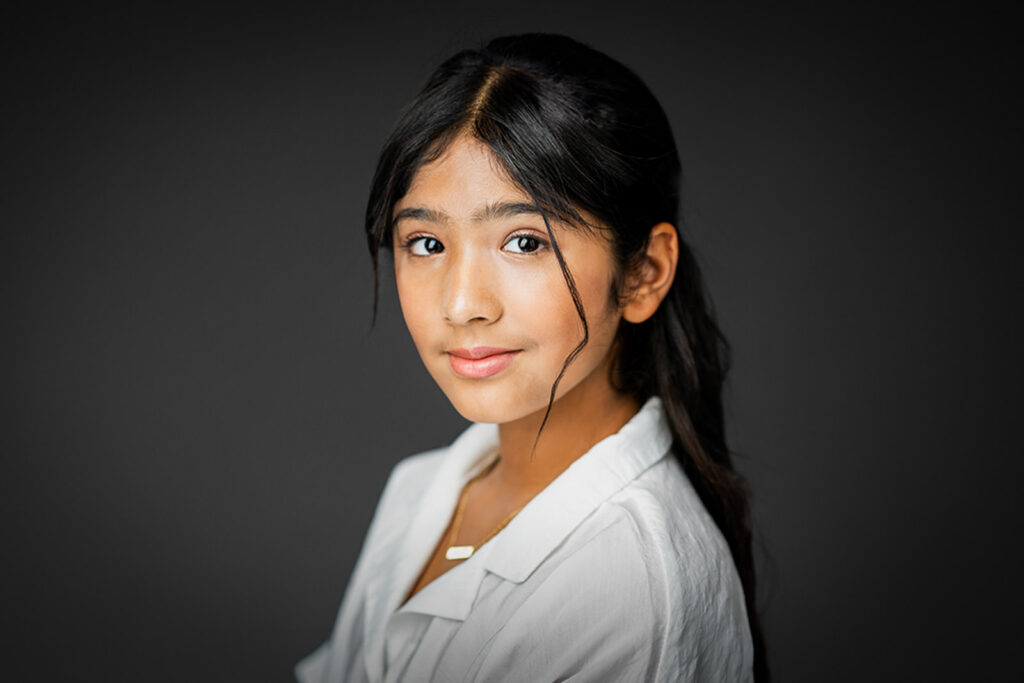
But I have photographed round faces that wanted the opposite of what the chart says, because the eyes sat deep and side light lost them entirely.
Why Face Shape Is Only the Starting Point
What the light responds to is a longer list than bone structure. Asymmetry, which nearly everyone has.
Glasses, and where the frames want to throw a reflection. Hairline, hair volume, skin texture that day.
Expression matters as much as anatomy. A cheek changes shape when someone genuinely relaxes, and light that flattered the held smile may not flatter the real one.
Context matters too. A litigator and a pediatrician can walk in with similar bone structure and still need different treatments.
And preference: some want more shadow and edge, others want softer and more open. I ask rather than assume.
How Professional Lighting for Headshots Adapts to Your Features
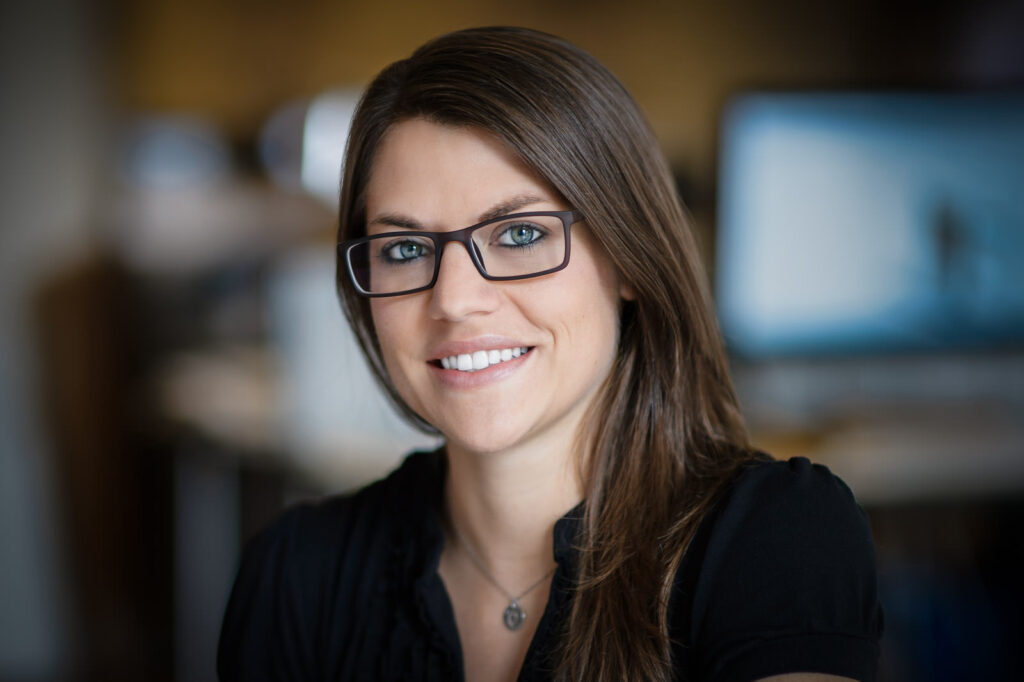
I do not decide any of this before you arrive. I watch your face through the first few frames, notice which side you naturally favor, and adjust from there.
That is corrective work in the ordinary craft sense, not anything proprietary. The Professional Photographers of America has published guidance on matching lighting to a subject’s features rather than forcing one look onto everyone, and you can read more about how I approach it on our about page.
You will never hear me announce which pattern I am using. You should just notice that your face looks like your face, on a good day.
It’s Never Just About the Lighting
Light gets the credit, but it works alongside decisions most people never see happening.
Why Camera Distance Matters More Than Lens Choice
Distance is the one that gets misunderstood most, including by photographers who should know better. Perspective is controlled by how far the camera sits from your face, not by the lens itself.
A phone held at arm’s length is close, and that closeness stretches whatever is nearest it. A longer focal length looks more flattering because it lets me stand eight or ten feet back and still fill the frame.
The lens buys the distance. The distance does the flattering.
How Posing, Wardrobe, and Background Complete the Portrait
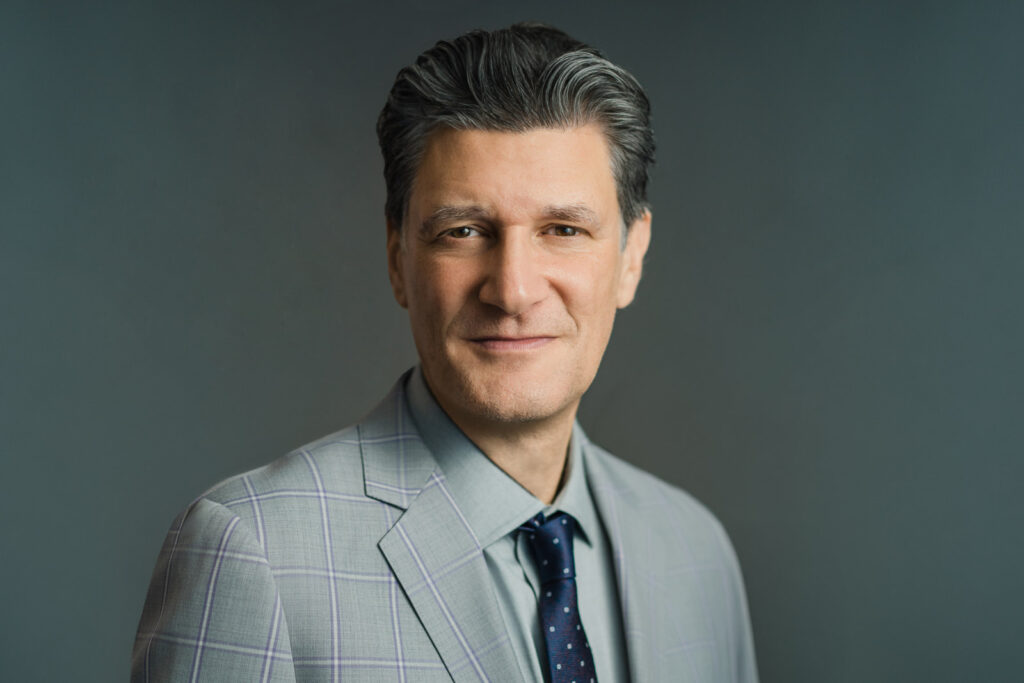
Camera height matters next. A lens set slightly above eye level opens the eyes and lengthens the neck, while a camera set below eye level tends to do the reverse.
Then comes the body. Shoulders angled rather than squared, weight on the back foot, chin forward and slightly down. Very little of it feels natural while it happens, and almost none of it shows in the final frame.
Wardrobe and background finish the job quietly: simple colors, clean lines, a background that separates you rather than competing with you. Our guide to what to wear for a corporate headshot goes deeper, and it is the part professionals updating their LinkedIn headshots underestimate most.
What Helps Create a Flattering Headshot
Flattering headshots are not accidents. Most of the ones I deliver at Alex Kaplan Photography come from the same short list of controllable elements:
- Deliberate professional lighting placement built around your features
- Camera height set relative to your eye line
- Enough working distance to render proportions naturally
- Relaxed body posture and shoulder angle
- A natural expression rather than a held smile
- Simple, professional wardrobe with clean lines
- Gentle posing adjustments made in real time
- A photographer guiding the session out loud
None of those require you to be photogenic. They require someone to be paying attention.
Why Confidence Changes Everything
What Changes Once a Client Relaxes
Something predictable happens once people see a frame they like. The shoulders drop, and the rest of the session gets easier for both of us.
She came in for a professional headshot that needed to feel polished without looking stiff or overworked. In the first few frames, her shoulders were slightly raised, and the smile was there, but the expression had not settled yet.
I kept the light soft and close to the camera axis, raised the camera slightly, and talked her through a small change in posture instead of asking for a bigger smile. Once her shoulders relaxed, the eyes changed with them.
The next frame felt open, confident, and still recognizably her. That is the point of the process.
I am not changing the person. I am removing what gets in the way.
Why Coaching Matters During a Headshot Session
So I talk through the whole session. What I am adjusting, what to do with your hands. Silence in a studio makes people anxious, and anxiety shows up in the eyes first.
Business owners booking business headshots in NJ often tell me afterward that they expected to endure the session and instead found it easier than they thought. That is not luck. It is a process.
That is the argument for hiring an experienced professional photographer in NJ rather than borrowing a colleague with a nice camera. The gear is the easy part. Reading a nervous person and adjusting in real time is what takes years.
Questions About Professional Lighting for Headshots
Does lighting really affect how your face looks in photos?
Yes, more than almost any other single factor. Lighting controls where shadows fall, which shapes how your jawline, cheekbones, and eyes are perceived. The same face photographed under overhead office light and under placed studio light can read very differently, with no editing involved.
What lighting is best for professional headshots?
There is no single best setup. Strong results usually come from soft, directional light placed slightly above eye level, with controlled fill on the shadow side, then adapted to your specific features. The right answer depends on your face and how the photo will be used.
How do photographers make faces look slimmer?
Through angle, distance, and shadow rather than editing. Turning the face slightly, raising the camera a little above eye level, and letting light fall off on one side adds natural definition. Working from farther back also renders proportions closer to how people see you in person.
Can lighting make you look younger in photos?
A broad, soft light source reduces the harsh texture that hard overhead lighting emphasizes. It does not erase anything or pretend you are someone else. It stops exaggerating what direct, unflattering light would otherwise dramatize, which is usually what people mean when they say a photo aged them.
A Great Headshot Should Look Like the Best Version of You
Professional lighting does not change who you are. It removes the interference standing between you and a photograph that actually resembles you.
That is the whole job, and after three decades of it, watching someone see themselves accurately is still the best part of the day.
If you have ever felt that you simply aren’t photogenic, I’d love to show you what thoughtful lighting, relaxed coaching, and professional posing can do. Serving executives, attorneys, healthcare professionals, and business owners across Northern New Jersey and the NYC metro area, Alex Kaplan Photography would be glad to hear what you need. Get in touch here and together, we’ll create a headshot that feels authentic, confident, and unmistakably you.
Reply...


