


Your Headshot day should feel relaxed, joyful, and completely yours.
I’m Alex Kaplan, a Headshot Photographer and videographer based in New Milford, NJ, serving Northern.
Browse by Category:
headshots
view more

REQUEST INFORMATION
Want to feel like THIS on your Headshot day?
Availability is limited. Check Your Date Here


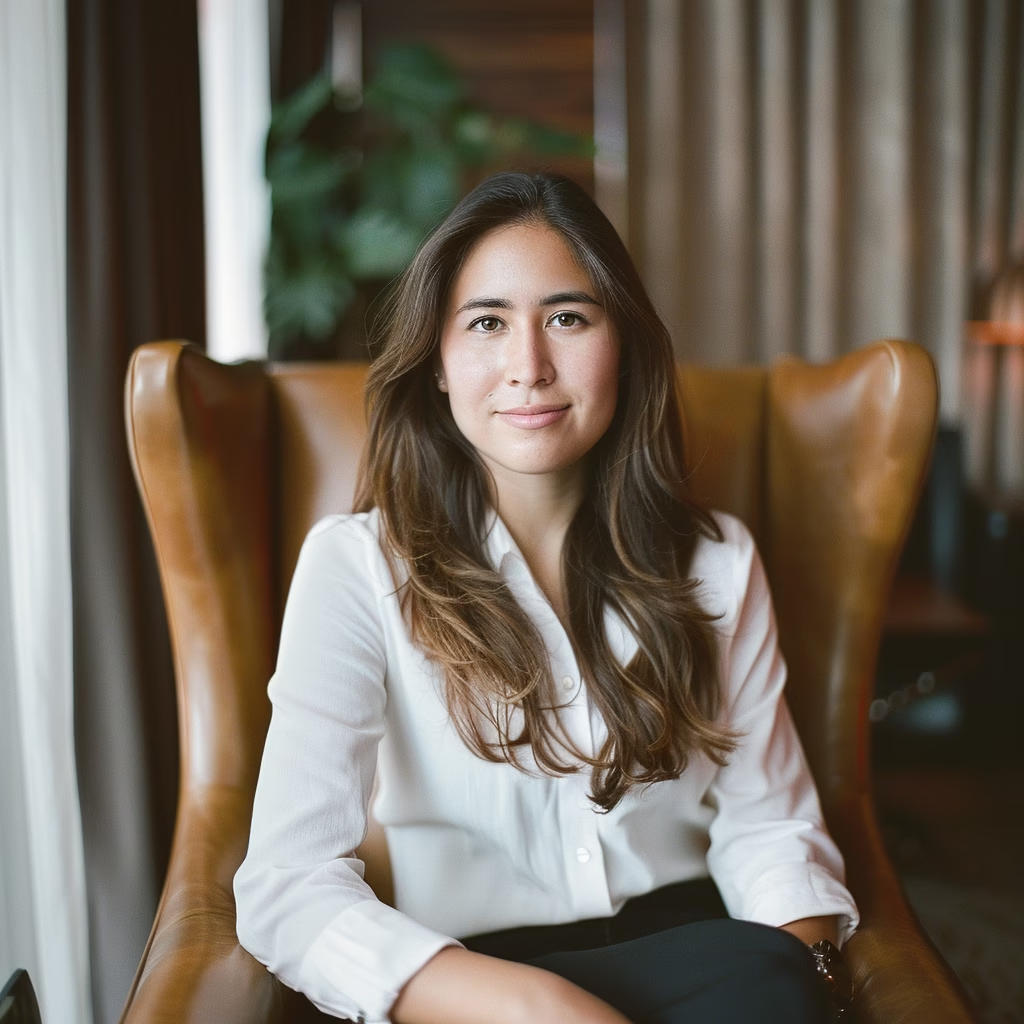
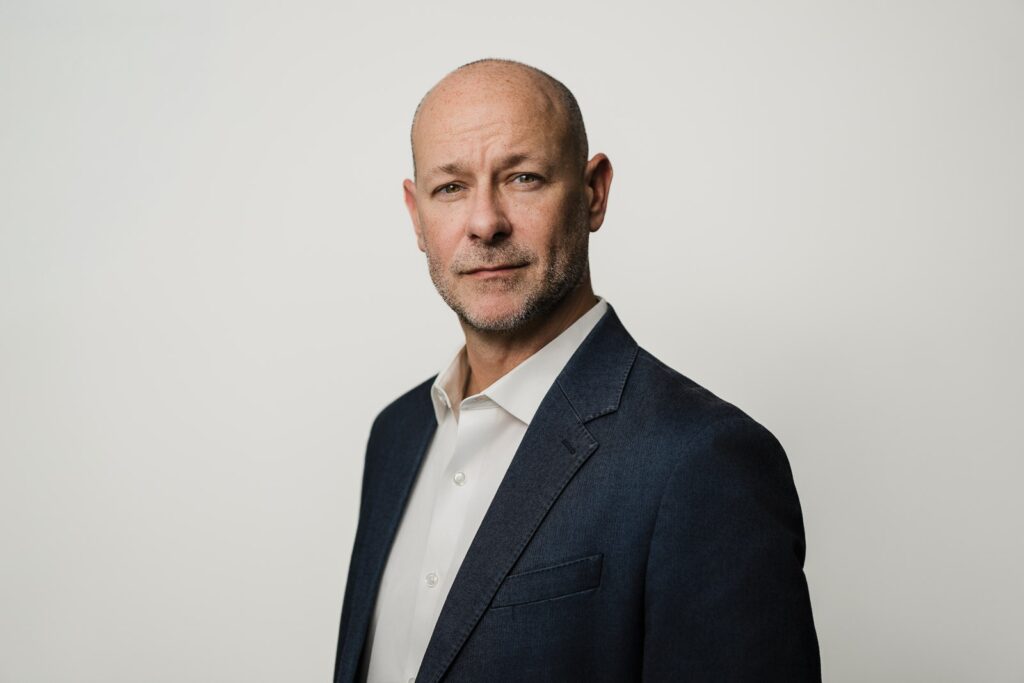
Before a stranger reads your name, your title, or a single line of your bio, they’ve already decided how they feel about you, and the eyes do most of that work. Eye contact is one of the fastest signals the human brain uses to judge trust, confidence, warmth, and authority, often in a fraction of a second. In a professional headshot, that makes the gaze the single most important element in the frame. After more than 30 years behind the camera, I can usually tell whether a portrait will work the moment I look at the eyes. Everything I know about headshot eye contact comes back to one idea: the eyes are where people decide whether to lean in or look away.
Most people walk into a session worried about their jawline, their hair, or their smile. The viewer on the other end is rarely thinking about any of that. They’re answering a much simpler question: do I trust this person? And the answer starts above the cheekbones.
Why Is Eye Contact Important in Headshots?
Eye contact matters because it creates instant connection and credibility. When your eyes meet the viewer’s, the brain reads it as openness and self-assurance. That direct gaze quietly signals you have nothing to hide, which builds trust before a word is exchanged. In a still image, that’s the only sentence your face gets to say.
We’re wired for this. Long before language, humans read intention in each other’s eyes, and that instinct never left us. A headshot simply borrows it. This is also why most of the small things that help you look more confident in a headshot begin with the gaze, not the posture.
What Do Your Eyes Communicate in a Photo?

Your eyes broadcast far more than mood. In a single frame, they signal warmth, competence, openness, emotional availability, and social confidence, all at once, all before the viewer is consciously aware of it. A relaxed gaze reads as approachable. A steady one reads as capable. Tension around the eyes reads as nervousness, even behind a wide smile.
That last point is where most headshots quietly fail. A mouth will smile on command; the eyes are much harder to fake. When someone is genuinely at ease, the muscles around the eyes soften and crinkle slightly, and the whole face becomes believable. That’s the real mechanics behind smiling with your eyes, and it’s the difference between a portrait that feels alive and one that still feels a little forced, even with good lighting.
Can Eye Contact Build Trust Online?
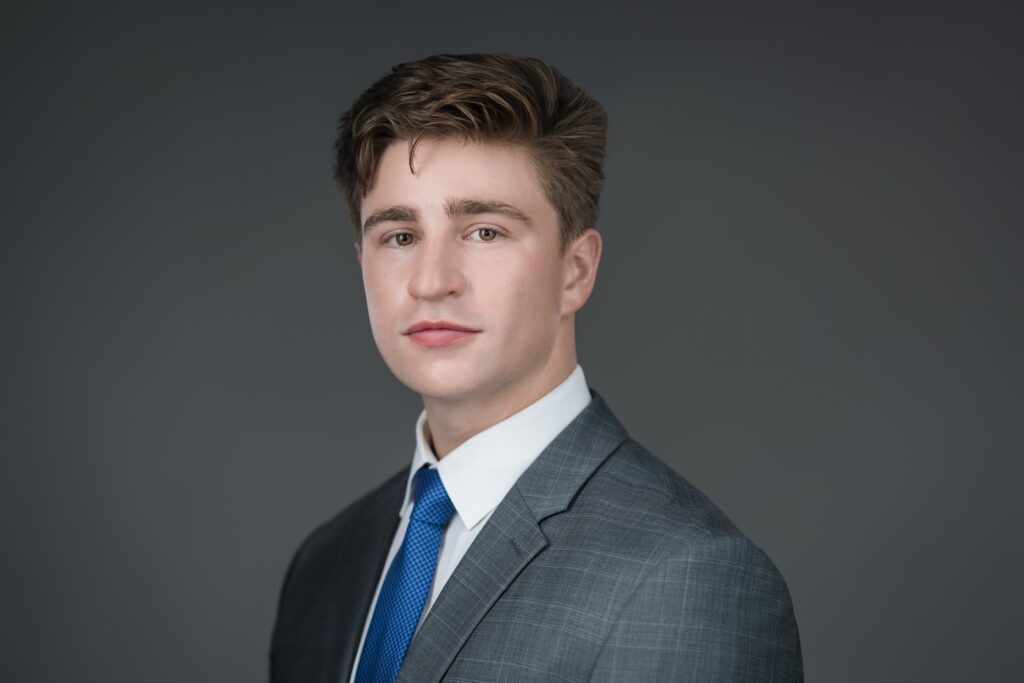
Yes, and faster than most people expect. We tend to assume a viewer studies a headshot before forming an opinion. In reality, most of the judgment happens before they realize they’re making one. Princeton researchers Janine Willis and Alexander Todorov found that people form impressions of trustworthiness and competence from a face in about a tenth of a second, and that extra time to look barely changes the verdict. It mostly makes them more confident in the snap judgment they’ve already made.
On LinkedIn, a firm bio, or a profile page, your headshot is working before you ever speak to the person viewing it. A natural, engaged gaze is what produces trustworthy headshots, the kind that make a viewer feel they’ve already met you. That’s why this matters so much for client-facing professionals across Bergen County, where a physician, attorney, or advisor is often judged by a thumbnail before a first meeting is ever booked. You can see how that plays out in real sessions on the professional headshots in Bergen County, NJ page.
How Do Photographers Create Confident Expressions?
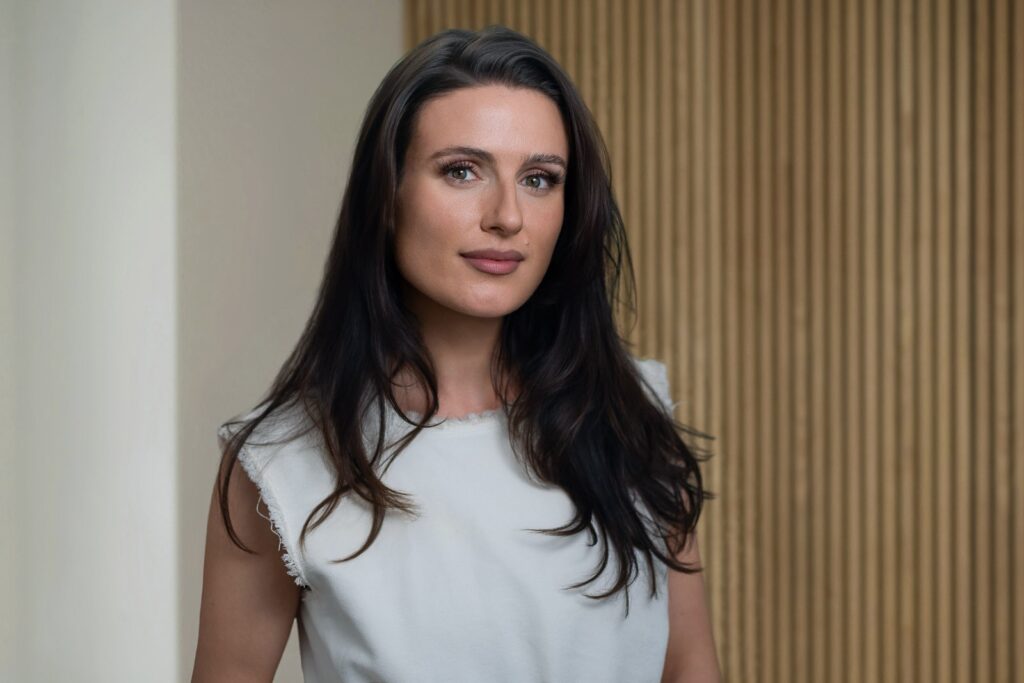
Photographers create confident expressions through small redirections (where you look, how you breathe, what you’re thinking about), not by asking you to “look confident.” And here’s the part most people get backward: they assume confidence is what produces good eye contact. In a headshot, it’s usually the reverse. Once someone feels genuinely seen and at ease during the session, the confident gaze shows up on its own.
I watched this happen with an executive who was certain she wasn’t photogenic. Every time I raised the camera, she gave me the same polite smile. The smile arrived right on cue. The eyes didn’t. They stayed somewhere far away, waiting for it to be over. So I put the camera down and asked about the team she’d just finished building. The second she started describing it, something settled in her face. The eyes came back into the room. The next frame was the one she used everywhere.
Nothing mechanical changed. Her attention changed, and the eyes followed. That’s the entire craft of professional headshot photography: not capturing a pose, but catching a present moment at exactly the right beat.
Small Eye Adjustments That Change the Entire Portrait
After enough years of watching people in front of a lens, you learn that a handful of small, technical choices quietly decide whether the eyes connect at all:
- Catchlights. Those tiny reflections of light in the eyes are what make them look bright and alive. Without them, even a tack-sharp photo falls flat.
- The pre-shot beat. Looking slightly away, then back to the lens a half-second before the frame keeps the gaze fresh instead of frozen.
- Sharp focus on the near eye. When the closest eye is crisp, the viewer is pulled straight into the connection.
- Chin and eye line. Too high reads as aloof, too low reads as unsure. The narrow sweet spot in between reads as open and steady.
Done well, none of this is visible to the person viewing the final image. The craft disappears, and only the connection remains.
What Your Eyes Decide for You
Most people worry about how they look in a headshot. The people viewing it are usually deciding something simpler and more important: whether they trust the person looking back at them. More often than not, that decision is made above the smile, in the first tenth of a second, and it sticks.
If you’re a professional in Bergen County, Ridgewood, or anywhere across Northern New Jersey, or commuting into NYC, here’s something worth knowing before you book anything. Most people who call me aren’t really worried about photography. They’re worried about looking like themselves. That’s exactly what we’ll focus on. You can reach out here to start the conversation, and we’ll create a headshot that feels like the person clients actually meet.
Reply...


