


Your Headshot day should feel relaxed, joyful, and completely yours.
I’m Alex Kaplan, a Headshot Photographer and videographer based in New Milford, NJ, serving Northern.
Browse by Category:
headshots
view more

REQUEST INFORMATION
Want to feel like THIS on your Headshot day?
Availability is limited. Check Your Date Here
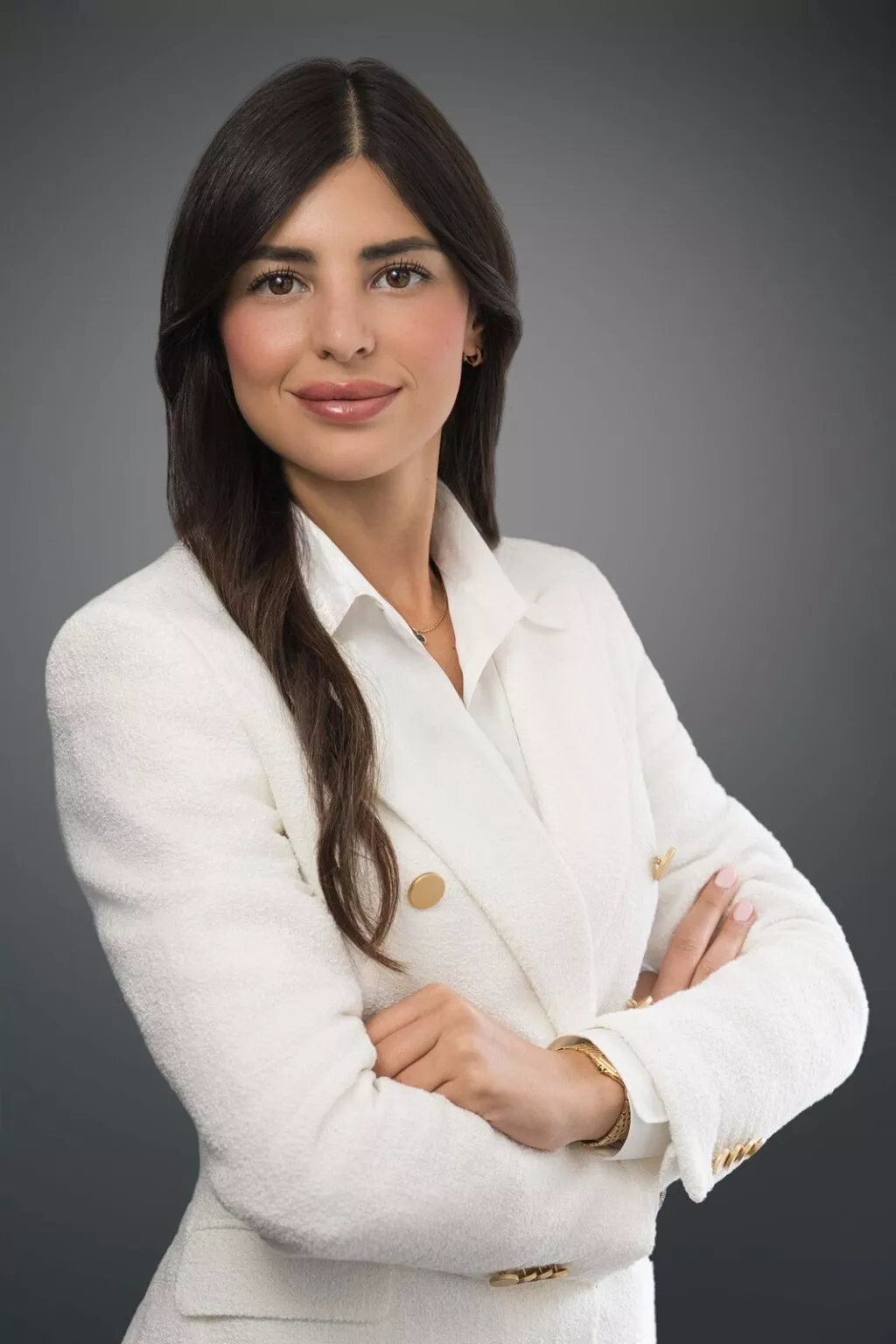

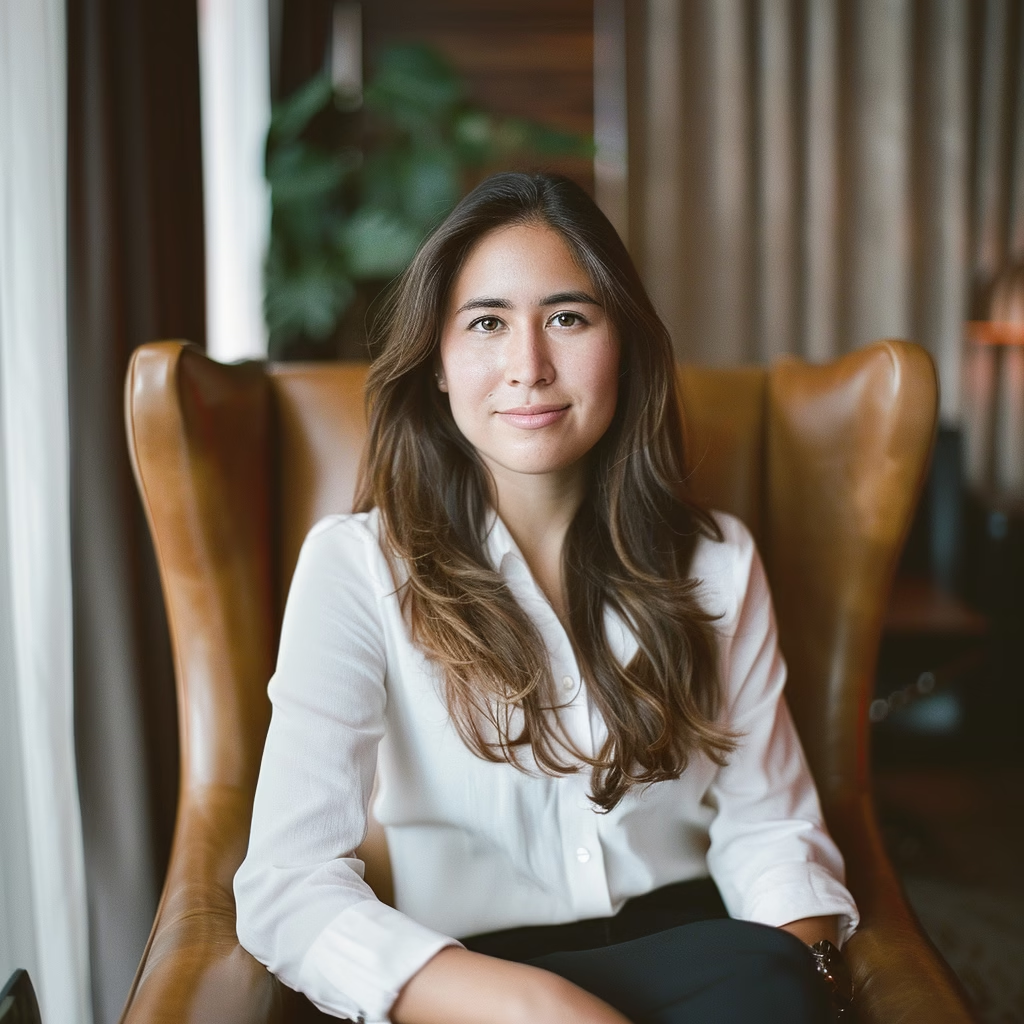
You’ve probably already tried it. Phone propped against a stack of books, a desk lamp angled toward your face, forty nearly identical frames, and not one of them feels like you. That quiet frustration is where most DIY professional headshots begin and end. The photo looks acceptable on your screen, then somehow looks wrong the moment it lands next to your name on LinkedIn or a company bio. After more than 30 years photographing executives, founders, and nervous first-timers across Northern New Jersey and NYC, I can tell you the problem is almost never the camera. It’s everything the camera can’t decide on its own.
This isn’t about talking you out of trying. It’s about understanding what actually separates a self-portrait from the kind of image we create in a corporate headshot session in NYC and Jersey City: the difference between a photo of your face and a photo people instinctively trust.
Can I Take My Own Professional Headshot?
Yes, you can technically take your own professional headshot. But capturing a decent selfie and creating an image that earns trust are two different skills. A real headshot depends on lighting, lens choice, expression, and direction working together at the same moment. Most people can manage one or two of those alone. Almost no one manages all four.
The gap isn’t effort. The people who show up to my studio after months of DIY professional headshots worked hard at it. The gap is feedback. You can’t see your own jaw tension, your own forced smile, or the slight chin drop that quietly makes you look unsure, not while you’re also operating the camera. Someone has to be watching your face so you can finally stop watching it yourself.
Why Do DIY Headshots Look Unprofessional?
DIY headshots often look unprofessional because of three things working against you at once: inconsistent lighting, awkward shooting distance, and a frozen expression. A phone held at arm’s length stretches your nose and flattens your eyes. Ordinary indoor light erases the dimension that makes a face look alive. And a self-timer forces you to hold a smile, which almost always reads as strain instead of warmth.
Here’s the part most people miss. In a well-known Princeton study on first impressions, people formed judgments about faces in roughly a tenth of a second, with trustworthiness among the strongest of those impressions, long before they read a single word beside it. That snap judgment runs on subtle cues: the steadiness of the eyes, the ease in the shoulders, the quality of the light. When those cues are slightly off, people don’t think “bad lighting.” They think “something feels off about this person.” That is the real cost of DIY professional headshots. They work against the exact trust you’re trying to build.
Are iPhone Headshots Good Enough?
For a casual profile or an internal team page, iPhone headshots can be good enough. For professional branding photography meant to win clients, land a role, or earn investor confidence, they usually fall short. Modern phones capture beautifully sharp files. But sharpness was never the issue. Lens compression, lighting control, and real-time direction are, and a phone supplies none of those on its own.
The phone isn’t the weak link. The missing photographer is. A proper portrait lens sits you at a distance that keeps your features natural, while a phone pulled in close does the opposite and subtly distorts everything it sees. I go deeper into this in my breakdown of professional headshots versus iPhone photos and what actually hurts your credibility, because the distinction shapes how you’re perceived more than most professionals realize.
What’s the Difference Between DIY and Professional Headshots?
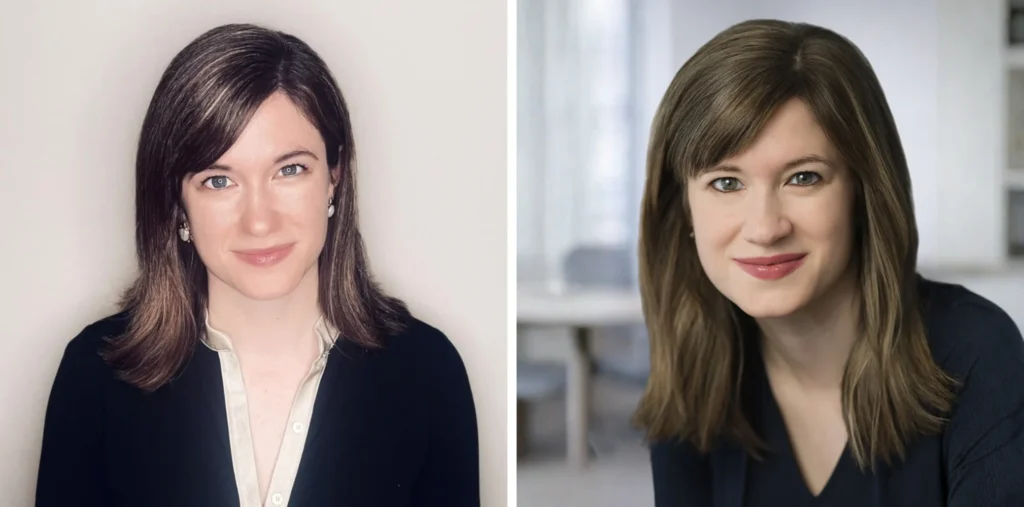
The difference between DIY and professional headshots comes down to one word: direction. A professional manages lighting, angle, and expression while reading you in real time and coaching you through it. DIY leaves all of that to luck and repetition. One approach produces a likeness. The other produces a presence people trust.
In practice, that direction shows up as a few things you can’t fake with a timer:
- Lighting shaped for your specific face, not whatever the room happened to offer
- A lens and distance that keep your proportions honest
- Expression coaching that draws out a real, relaxed look instead of a held pose
- Consistency, so your image matches your team’s and your brand’s standard
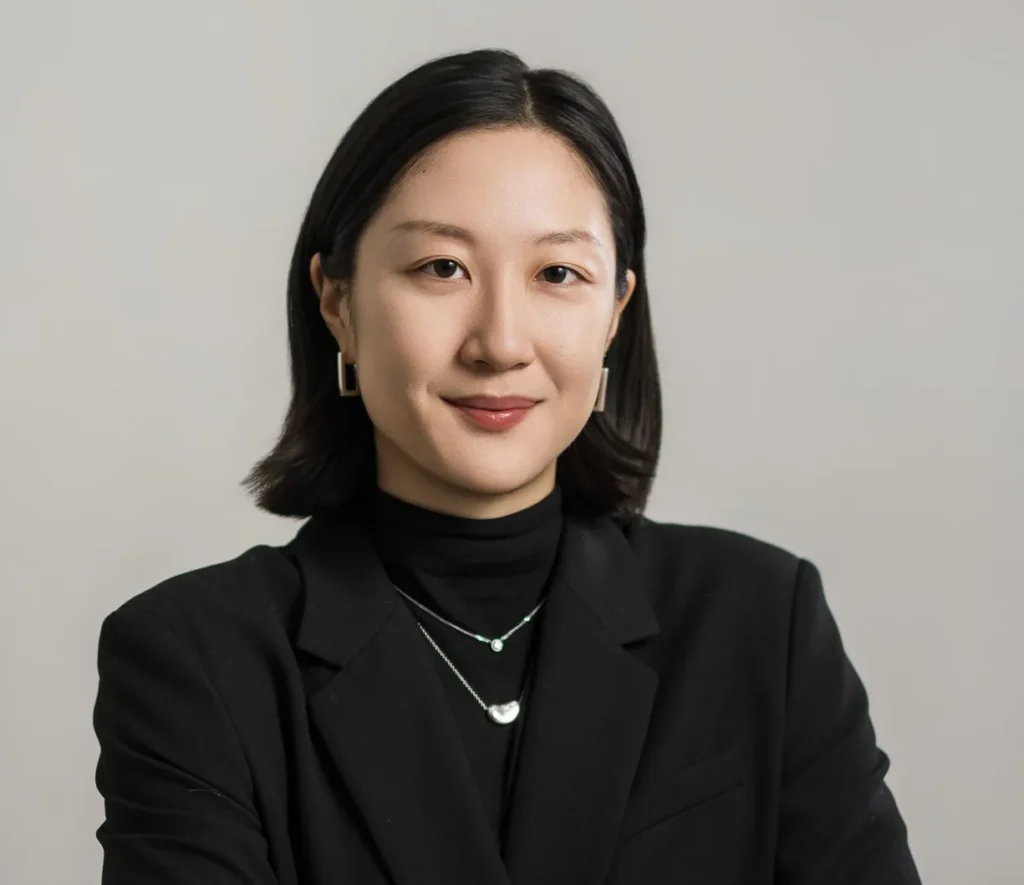
It’s also why shortcuts like AI rarely solve the problem. They smooth the surface without understanding the person. If you’re weighing that route, my comparison of AI headshots versus professional photography is worth a read, alongside this closer look at the difference between a good headshot and a great one.
What a Professional Actually Fixes in the Session
The work most people picture, the clicking of the shutter, is the smallest part of what happens. The first few minutes aren’t even about photography. They’re about getting you talking until your face unclenches, because almost everyone arrives slightly armored and it shows around the eyes and jaw.
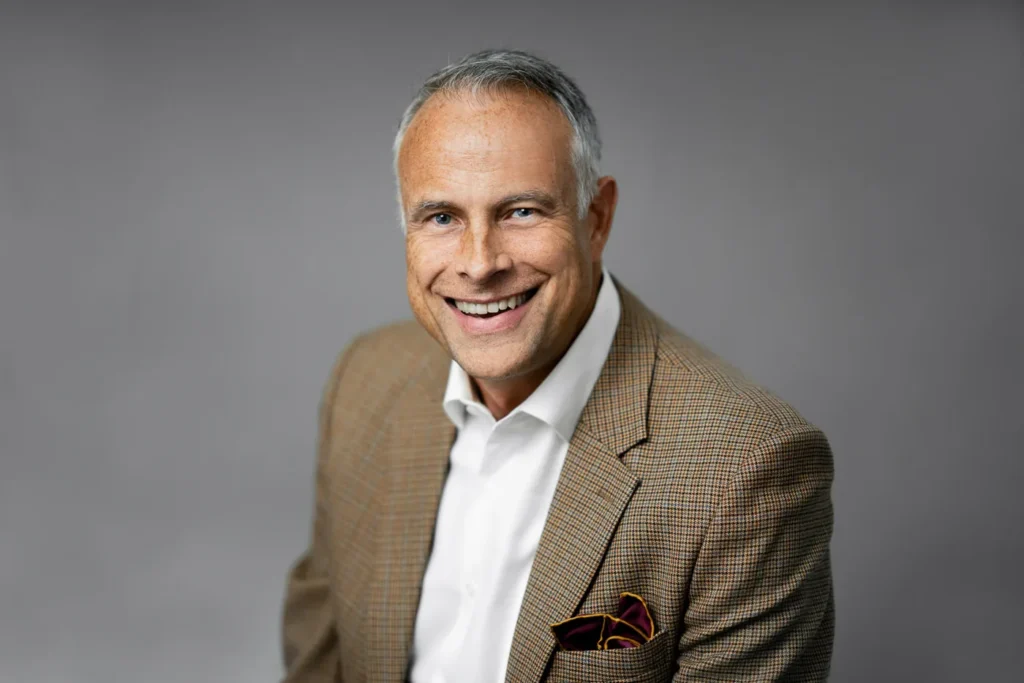
From there it’s a series of small corrections you can’t make on yourself. Weight shifts onto the back foot so the stance reads as ease, not attention. The shoulders turn a few degrees off square so you don’t look like a passport photo. The chin comes forward and slightly down, which sounds wrong and looks right, defining the jaw and keeping the gaze open instead of guarded. The light gets shaped to one side so your face has depth, rather than the flat overhead glow of an office or the hard window light of a kitchen.
Then comes the part a self-timer can never do: I’m watching your face in real time and adjusting to it. A real prompt instead of “say cheese,” a beat of genuine reaction, the frame caught in the half-second your expression actually softens. That live feedback loop is the entire difference between a photo of you and a photo that looks like you on a good day.
The Real Cost Is Trust, Not Time
Most people weigh DIY professional headshots in terms of money and minutes saved. The more honest measure is trust. Your headshot is often the first impression you make before you’ve said a word, sitting on a proposal, a panel bio, a homepage, a pitch deck.
Here’s a pattern I see constantly. Someone arrives after a long season of DIY attempts: sharp outfit, good phone, plenty of effort, and every image makes them look braced rather than confident. Nothing is technically wrong with the photos. They just don’t read as someone you’d hand your most important work to. So we slow down. A few minutes of conversation, the shoulders come down, we find the version of the smile that actually reaches the eyes, and the light gets shaped to give the face some weight. The final frame isn’t a different person. It’s the same person, finally looking the way they show up when they walk into a room.
That is what direction and expression coaching really do. They don’t manufacture confidence. They remove the small tensions that hide it. A camera can record you. Only a photographer who’s watching can help you look like yourself on your best day.
Frequently Asked Questions
Can I take my own professional headshot?
You can, but a flattering selfie and a trust-building headshot are different skills. A strong result needs lighting, the right lens distance, and genuine expression working together, plus someone watching your face to catch the relaxed moment. Most people manage one of those alone, rarely all at once.
Why do DIY headshots look unprofessional?
Usually three things: flat lighting that erases dimension, a phone held too close that distorts your features, and a held, self-timer smile that reads as tension. Viewers can’t always name what’s off, but they feel it, and the image quietly works against the trust you want to project.
Are iPhone headshots good enough?
For a casual or internal profile, often yes. For headshots meant to win clients, roles, or investor confidence, usually not. Phones capture sharp files, but they can’t supply portrait-lens compression, controlled lighting, or real-time direction, the things that make a face read as confident and credible.
What’s the difference between DIY and professional headshots?
Direction. A professional shapes the light, sets the right lens and distance, and coaches your expression while reading you in real time. DIY leaves all of that to luck. One produces a likeness of your face; the other produces a presence people instinctively trust.
Headshots That Represent the Real You
If you’re a professional in Northern New Jersey, Jersey City, or NYC who’s tired of fighting your phone for an image that finally feels right, that’s exactly the work I do. Three decades of sessions have taught me that the people who “hate having their photo taken” usually just haven’t been directed well, and they’re often the ones most surprised by their own results.
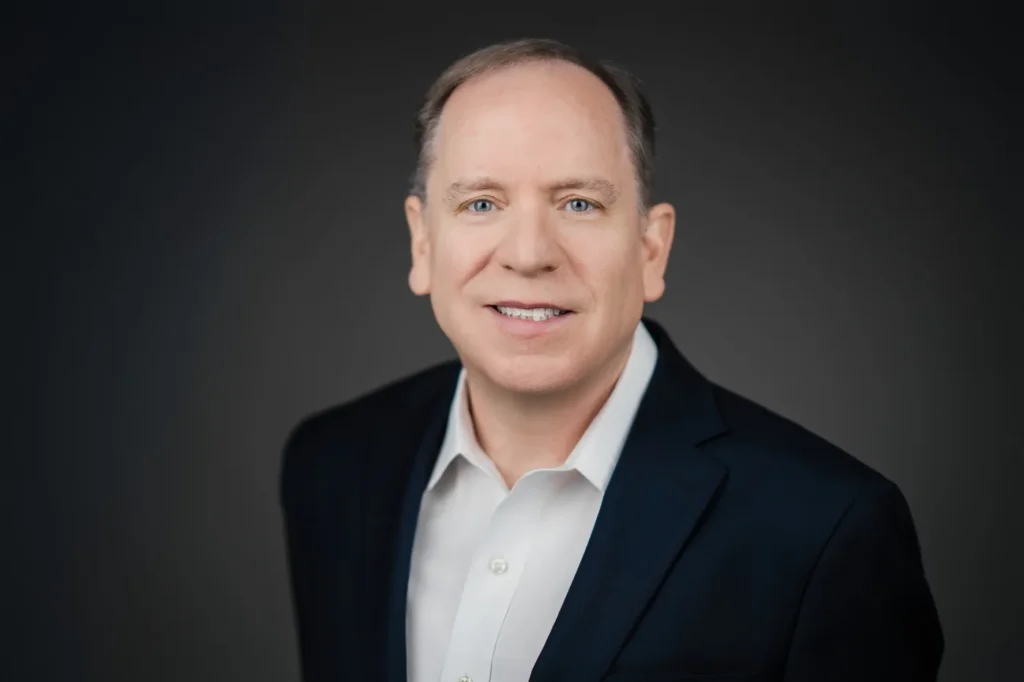
When you’re ready for professional headshots made with calm, steady direction, the kind that build trust instead of quietly undercutting it, reach out through my contact page and let’s talk about what you need.
Reply...


