


Your Headshot day should feel relaxed, joyful, and completely yours.
I’m Alex Kaplan, a Headshot Photographer and videographer based in New Milford, NJ, serving Northern.
Browse by Category:
headshots
view more

REQUEST INFORMATION
Want to feel like THIS on your Headshot day?
Availability is limited. Check Your Date Here



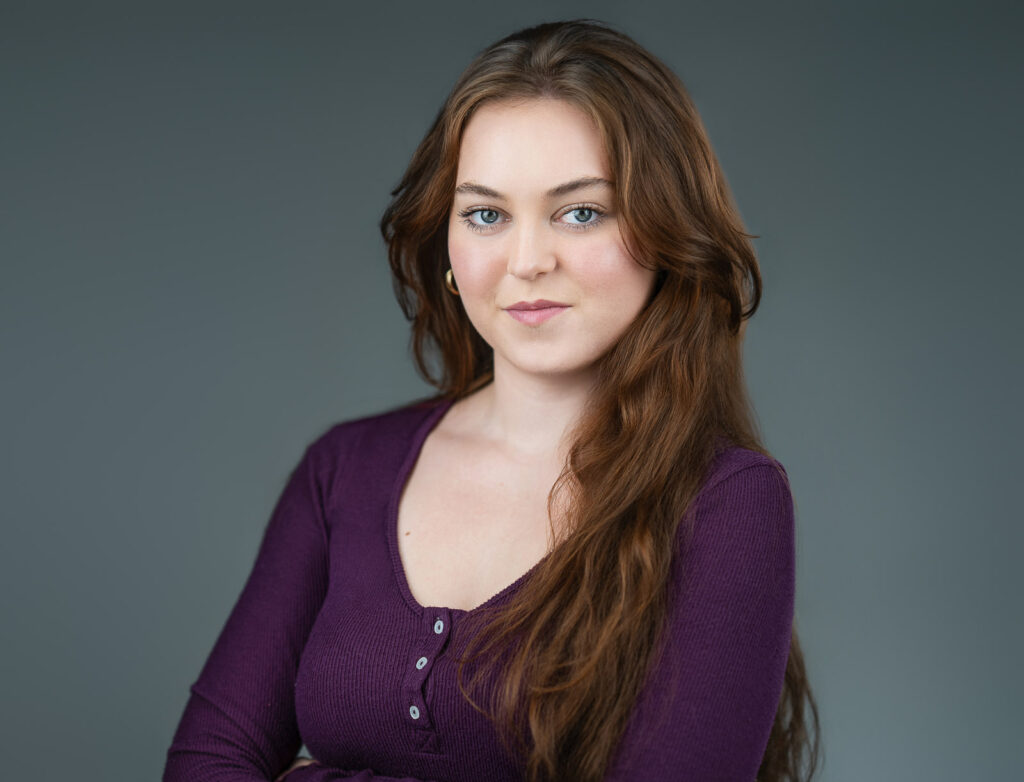
Most actor headshots don’t fail because they’re bad photos. They fail because they’re solving the wrong problem.
The assumption is: if I look good, auditions follow. Casting decisions don’t work that way. They happen in seconds, based on a question that has nothing to do with how attractive you are or how well you were lit.
If you’ve been wondering why your actor headshots in NYC and New Jersey aren’t generating the callbacks you expected, the answer usually starts here.
The Real Job of a Headshot (Not What Most Actors Think)
Here’s the shift that changes everything: a headshot is not a portrait. It’s a tool.
Its job isn’t to show that you’re attractive or photogenic. Its job is to answer one question, instantly: where does this person fit?
Casting directors are working fast, matching faces to types, making gut decisions with very limited information. Your headshot needs to give them immediate clarity. That means your casting type has to be obvious at a glance, your expression has to feel real, and the overall image has to be consistent with who you actually are when you walk into the room.
When a headshot does all of that, it works. When it doesn’t, nothing else about it matters.
I can usually tell within the first few minutes of a consultation whether an actor has thought about this. The ones who come in asking “how do I look castable?” get very different results from the ones who come in asking “how do I look good?” Same studio, same lighting, completely different outcomes. Knowing what the photo needs to accomplish before you walk in front of the camera is what separates a session that produces results from one that produces a nice-looking problem.
Why Most Actor Headshots Don’t Get You Called In
The most common problems aren’t technical. They’re conceptual.
Over-styling is probably the biggest one. When a headshot looks too polished, too editorial, too much like a photographer’s portfolio piece, it stops reading as castable and starts reading as a fashion shoot. Casting directors need to see a person, not a production.
The second issue is appearance mismatch. If you show up to an audition and look noticeably different from your headshot, you’ve already started the meeting at a disadvantage. Your headshot has to look like you, specifically, today.
Third is the generic expression problem. A neutral, pleasant face that says “I’m smiling because someone told me to” doesn’t communicate anything about who you are or what you can play. It fills space. What casting directors actually respond to is something considerably more specific than that.
And fourth is the lack of type clarity. If a casting director can’t quickly place you in a category or role family, you don’t give them a reason to call you in for anything. Specificity is not a limitation. It’s the point. For more on the specific factors that separate headshots that book from ones that don’t, actor headshots that get you cast is worth reading before your next session.
What Actually Makes a Headshot Work
The headshots that generate real results tend to share a few qualities.
Authenticity over perfection. The goal is never to look like an idealized version of yourself. It’s to look like the most castable version of yourself. There’s a meaningful difference. One is about aesthetics. The other is about function.
Strong eye connection. The camera needs to feel like a person you’re communicating with. When that happens, the image has presence, and presence is what registers across a thumbnail on a casting platform.
Believable expression. Not blank. Not forced. Something that suggests an interior life, a specific mood, a recognizable human state. That quality is what makes a casting director want to know more.
Role alignment. If you’re primarily going in for dramatic roles, your headshot should lean that way. If commercial work is your focus, the energy shifts considerably. Knowing which direction to go matters, and understanding the difference between commercial and theatrical headshots is a real part of building a headshot strategy that actually works.

The Difference Between “Looking Good” and “Booking Work”
This is where a lot of actors get stuck.
A polished headshot and a castable headshot are not the same thing. Polished means technically well-executed, flattering, professionally lit. Castable means instantly readable, believable, and genuinely useful to the person making a decision.
Actors often come in wanting to look their best. That’s understandable. But “best” from a photographic standpoint and “best” from a casting standpoint don’t always point in the same direction.
The most effective headshots consistently prioritize believability over beauty, specificity over style, and clarity over complexity. They don’t try to impress the viewer. They inform the viewer.
Casting directors are not choosing the best photo. They’re choosing the most usable person. Those are very different filters, and most headshots are optimized for the wrong one.
The question is never “do I look good in this photo?” The question is “does this photo tell a casting director exactly who I am and where I fit?”
Why This Matters Even More in NYC and New Jersey
The NYC and Northern New Jersey market is not a forgiving one. The submission volume is high, the competition is real, and decisions happen fast. Whether you’re submitting from Hackensack, Jersey City, or midtown Manhattan, you’re competing in the same pool.
In smaller markets, a mediocre headshot might still get you through the door based on relationships and reputation. In this market, your headshot is often the first thing anyone knows about you. It has to do the work on its own.
That’s not meant to be discouraging. It’s just the reality of working in one of the most active casting markets in the country. And when your headshot is doing its job correctly, this market is full of opportunity for actors who show up with the right materials.
What Casting Directors Actually Respond To
The consistent answer from people who have spent time on the casting side is clarity.
Not complexity. Not drama for its own sake. Not a photo that requires interpretation. They want to look at a headshot and immediately understand: this person is believable in this type of role, they look like their photo, and they have something specific going on behind their eyes. When all three of those things are true, the headshot is doing exactly what it should.
Consistency matters too. If your reel says one thing and your headshot says another, the message gets muddled. Everything needs to point in the same direction.
When It’s Time to Update Your Headshots
Most actors don’t realize their headshot stopped working months ago. By the time they notice it’s not producing, it’s usually been costing them calls for a while.
There are three situations where new headshots move from optional to necessary.
You don’t look like your photos anymore. This happens gradually. Weight changes, haircuts, aging, whatever the reason, if you have to explain to a casting director that “this is actually me now,” the photo has already done real damage.
You’re not getting auditions. If submissions are going out consistently and callbacks aren’t coming back, the headshot is a logical starting point to examine. It may not be the only issue, but it’s the most visible one and the one you can actually change.
Your type has shifted. If the roles you’re right for today are different from the roles you were targeting when your last headshots were taken, it’s time for photos that reflect where you actually are.
Most actors wait too long on all three. I’ve had actors come in for a session and show me their current headshots, and the person in those photos looks like a different person from five years ago. Sometimes more. The photo hasn’t been doing any work for a long time, and they didn’t realize it.
What makes a great actor headshot?
A great actor headshot clearly shows your casting type, looks natural and believable, and matches how you appear in real life. It should help casting directors instantly understand where you fit.
Headshots That Work Start With Getting This Right
I’ve been photographing actors in New York and New Jersey for over 30 years. The sessions that produce headshots actors actually use, the ones that generate real auditions, are the ones where we work through the “what are you going for” question before the camera ever comes out.
That’s the conversation I have at the start of every actor headshot session. Not “what do you want to look like?” but “what do you need casting directors to see?” The answer shapes everything that follows.
If you’re an actor in Northern New Jersey or the NYC metro area and you’re ready to approach this strategically, I’m happy to talk through where you are. Even if you’re not sure yet, or you just want a second opinion on whether your current headshots are still doing their job, reach out. I can usually tell pretty quickly, and pointing someone in the right direction costs nothing.
Call or text: 917-992-9097 or 201-834-4999
Alex Kaplan has 625+ five-star Google reviews. If your experience was worth sharing, we’d love to hear from you.
Reply...


