


Your Headshot day should feel relaxed, joyful, and completely yours.
I’m Alex Kaplan, a Headshot Photographer and videographer based in New Milford, NJ, serving Northern.
Browse by Category:
headshots
view more

REQUEST INFORMATION
Want to feel like THIS on your Headshot day?
Availability is limited. Check Your Date Here

When professionals in Northern New Jersey start thinking about updating their headshots, one of the first questions that comes up is the difference between studio headshots vs environmental portraits. It happens more often than you might expect: someone books a session without fully understanding what each style actually does, and they end up with beautiful photos that do not work where they need them to work. Both are legitimate professional headshot styles, but they serve different purposes and communicate different things about you. Understanding what sets them apart can save you time, money, and the frustration of ending up with photos that do not match what you actually needed.
This guide breaks down both styles honestly, so you can make a smart decision before you ever walk into a session.
Studio headshots vs environmental portraits: studio headshots are photographed in a controlled setting with a clean, neutral background, while environmental portraits are photographed in a real-world location that adds context and personality. Studio headshots usually work best for LinkedIn, corporate websites, and professional directories. Environmental portraits usually work better for personal branding, marketing materials, and content that benefits from story and visual depth.
At a Glance: Which Style Fits Your Situation?
| Studio Headshots | Environmental Portraits | |
|---|---|---|
| Best for | LinkedIn, team pages, directories, speaking bios | Personal branding, websites, social media |
| Background | Neutral and controlled | Real-world and contextual |
| Strength | Consistency and versatility | Personality and story |
| Shelf life | Longer | More variable |
| Ideal for | Corporate professionals, executives, attorneys | Entrepreneurs, consultants, creatives |
What Are Studio Headshots?
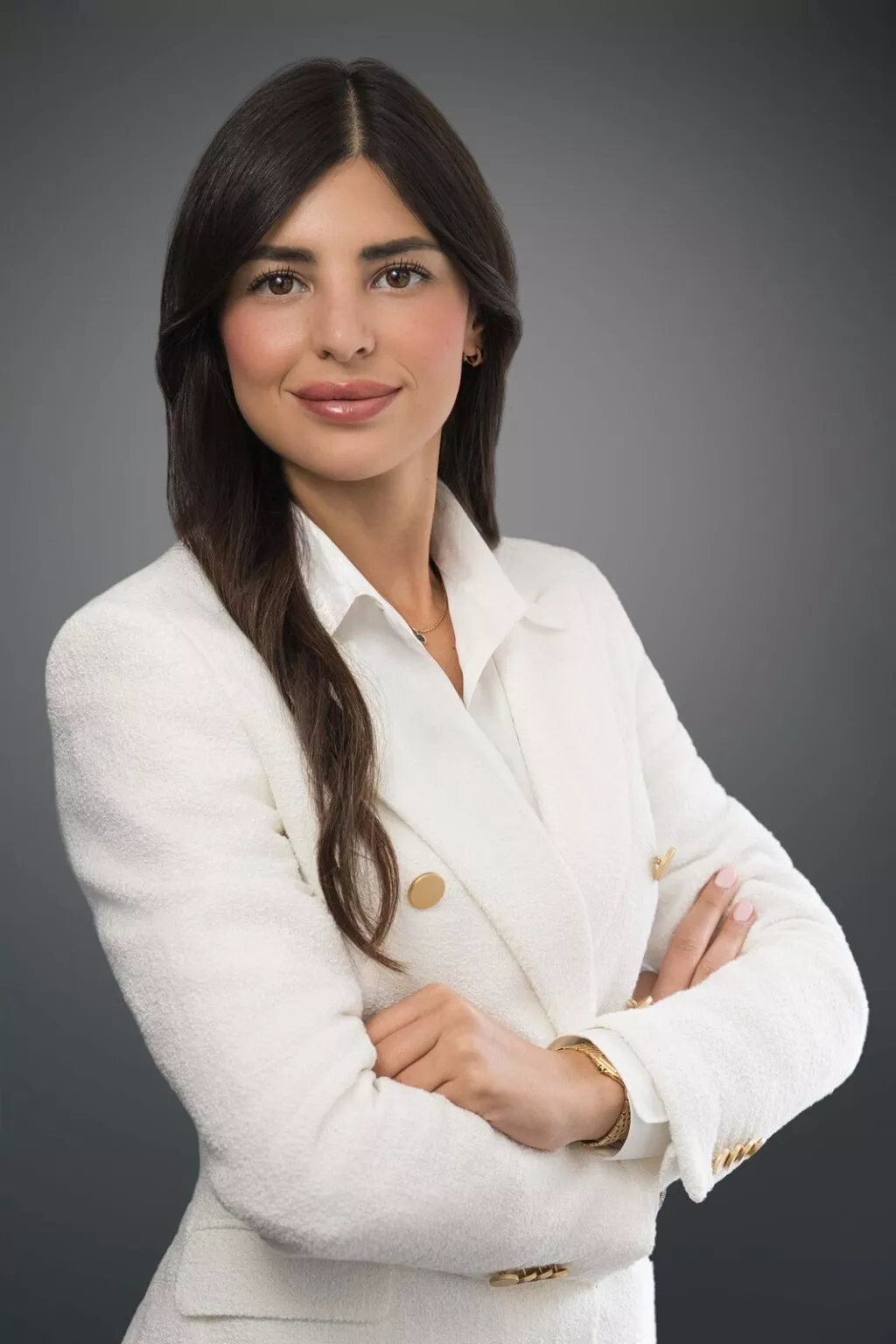
Studio headshots are taken in a controlled setting, typically against a seamless background in neutral tones like gray, white, or charcoal. The lighting is precise and intentional, usually a combination of key lights, fill lights, and background lights that together create a clean, polished look with no distractions.
The image at the top of this post is a good example of what a well-executed studio headshot looks like. The subject is sharp, the background is neutral, and everything in the frame supports the person rather than competing with them. You read the face, the expression, the presence, and nothing else gets in the way.
Studio headshots tend to be the go-to choice for:
- LinkedIn profile photos where you need to stand out in a small thumbnail
- Corporate websites and team pages where consistency across staff matters
- Law firm and financial services profiles where a polished, authoritative look is expected
- Speaking bios, press kits, and media pages where the image needs to work across many contexts
- Executive portraits where the emphasis is on gravitas and professionalism
One of the biggest advantages of studio headshot photography is control. Because nothing in the environment changes, a skilled photographer can focus entirely on you, on your expression, your posture, and the subtle shifts that make one frame significantly better than another. No outdoor light changes, no background pedestrians, no unpredictable shadows. Every variable is locked down.
Studio headshots also hold up well over time. A clean gray background from a session three years ago looks just as current today as it did then, which matters if you want photos that last.
What Are Environmental Portraits?
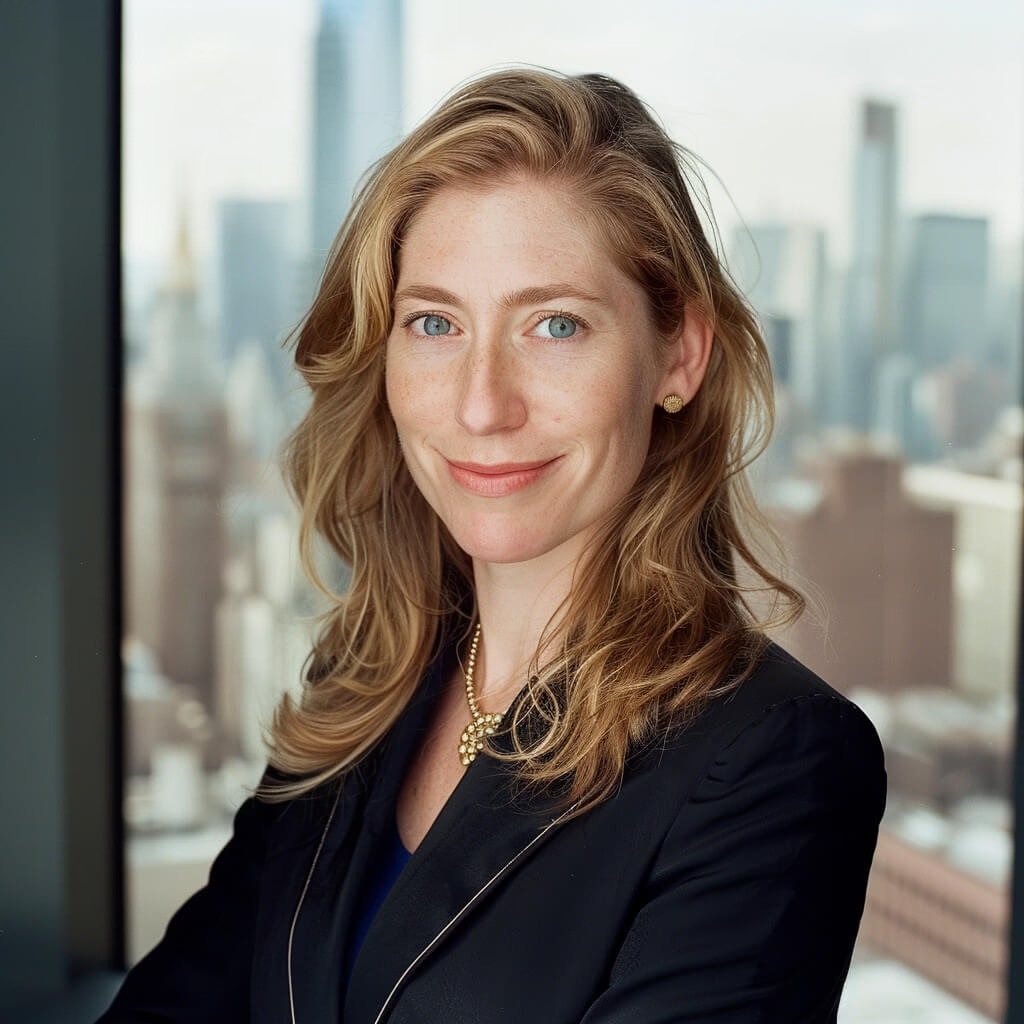
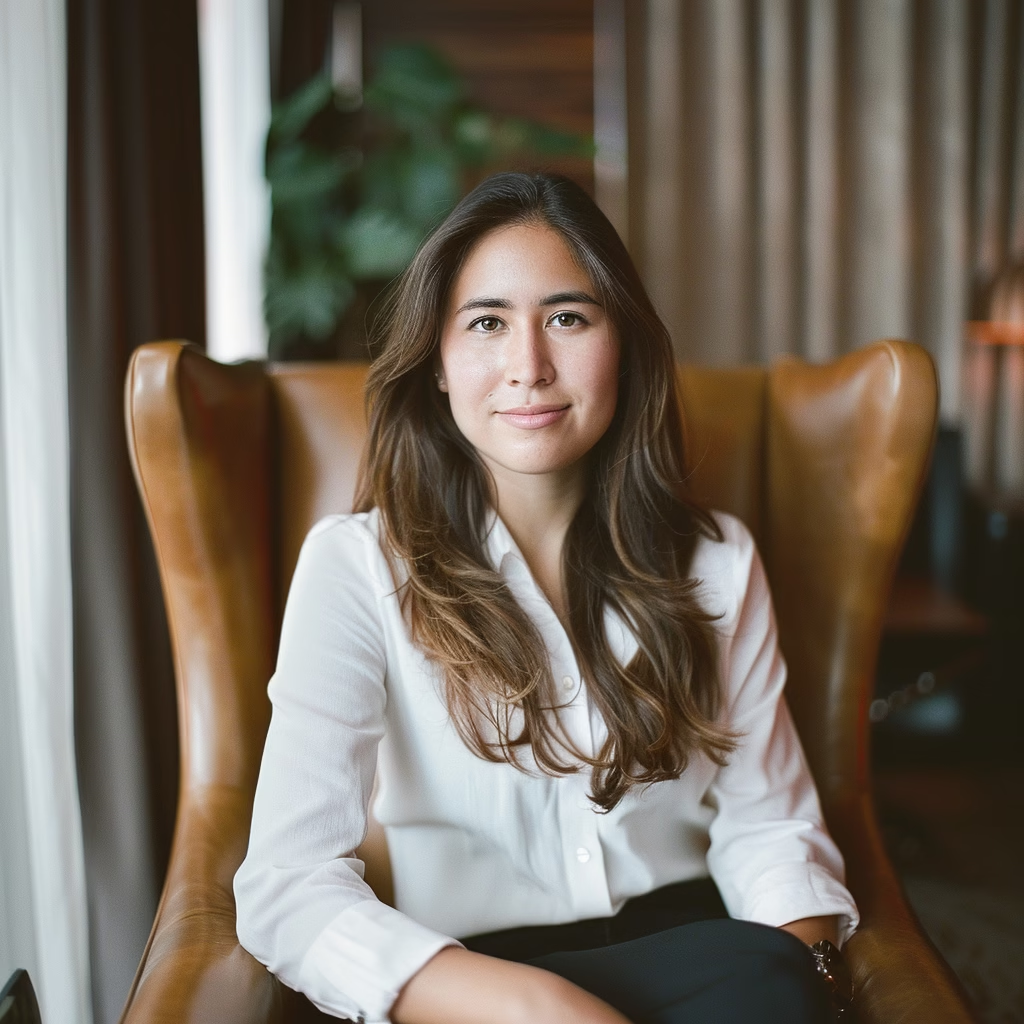
Environmental portrait photography places you in a real-world setting, usually a location connected to your work or your industry. That might mean a modern office lobby, a conference room with floor-to-ceiling windows, an outdoor courtyard near your building, or a street setting in a city like Jersey City or Hoboken that reflects your professional world.
The background in an environmental portrait is intentional and informative. It adds context. A real estate agent photographed against the glass and steel of a downtown Newark building communicates something different than the same person in front of a seamless gray backdrop. An architect photographed in a space they designed tells a story a studio shot simply cannot.
Environmental portraits work especially well for:
- Personal brand photography for entrepreneurs, consultants, coaches, and creatives
- Professionals who want to communicate personality and approachability alongside competence
- Business owners who want to show their workspace, their brand, or their environment
- Social media content where variety and storytelling perform better than a single static image
- Marketing materials like website banners, brochures, and About pages that benefit from visual depth
Environmental headshot photography requires a different skill set than studio work. The photographer needs to read light in real time, adjust to changing conditions, and find backgrounds that flatter rather than distract. Done well, it feels natural and lived-in. Done carelessly, it looks like a snapshot taken in a parking lot.
The Key Differences Side by Side
Here is a simple way to think about it:
Control vs. Context. Studio headshots give the photographer maximum control over every element. Environmental portraits trade some of that control for story and specificity.
Consistency vs. Personality. If you need five partners at a law firm to all look cohesive on a website, studio is almost always the right call. If you are a solo practitioner building a personal brand on Instagram, environmental variety serves you better.
Versatility vs. Specificity. A great studio headshot goes almost anywhere: LinkedIn, conference programs, email signatures, press releases, speaking bios. An environmental portrait can be harder to repurpose because the background anchors it to a specific feel or setting.
Shelf Life vs. Freshness. Studio portraits tend to have a longer shelf life because nothing in them dates quickly. Environmental portraits can look more current and dynamic, but if the setting changes, they may not age as gracefully.
Quick Answer: Which Style Is Right for You?
Choose studio if:
- You need images for LinkedIn, a team page, a professional directory, or a speaking bio
- You want one image that works reliably across many contexts
- Consistency and longevity matter more than variety
Choose environmental if:
- You are building a personal brand and need images with story and context
- Your website or social content needs more visual depth than a neutral background provides
- Your profession is tied to a visible environment, location, or workspace
Choose both if:
- You need one clean foundation image and several personality-driven images for social and web content
- You want to cover LinkedIn, your website header, and Instagram without booking two separate sessions
Here is something worth knowing: many of the professionals I photograph in Bergen County and across the NYC metro end up doing exactly that. A strong studio headshot gives them a foundation image that works everywhere. A few environmental portraits give them content for Instagram, a website header, and an email newsletter. The combination covers all the bases without overcomplicating the session.
How Location and Industry Shape the Decision
In practice, the right choice often comes into focus quickly once you think about your industry and where you work.
Attorneys at Bergen County firms almost always need studio. Firm websites, directory listings, and speaking materials all call for consistency, and a clean headshot travels well across every format the firm uses. Finance professionals in Jersey City often benefit from both: a studio headshot for LinkedIn and institutional profiles, and a handful of environmental frames for a personal brand that lives on a website or social media. Solo consultants and creatives in Hoboken or Newark typically lean toward more environmental variety because their audience wants to see personality and context, not just a polished face against a gray wall.
None of this is a hard rule. But thinking about where your photos will actually be used, and who will be looking at them, usually makes the answer obvious.
What Makes Either Style Actually Work
Whether you choose corporate studio headshots or environmental portraits, the quality of the final image comes down to the same things: lighting, direction, and genuine expression.
On platforms like LinkedIn, where your photo is seen first at a small size and often without context, simplicity matters. A clean background, strong eye contact, and a clear expression tend to outperform busier images because the photo has to read instantly. That is not just preference. It is how profile photos get processed when someone is scrolling a feed or scanning search results. Studio headshots are built for exactly that environment.
Environmental portraits work differently. The background is part of the message. A location that adds context and signals something true about how you work can make a portrait more memorable and more useful for building a brand. The risk is that a distracting or generic background undercuts the subject rather than supporting them. A good environmental portrait requires the same discipline as a good studio headshot: everything in the frame should be intentional.
A clean background does not automatically produce a good headshot. And a beautiful location does not automatically produce a compelling portrait. The work happens in the dynamic between the photographer and the subject, in the moments when the direction lands, the body language opens up, and the expression reflects something real rather than something performed.
If you want to see an example of a professional headshot and get a sense of what a deliberate, well-directed session looks like, that portfolio page gives a clear picture of the approach.
Ready to Book Your Session?
Most people do not need a long consultation to figure out which direction is right for them. Usually, once I know where the photos will be used first — LinkedIn, a company website, a personal brand, speaking materials, or social media — the right direction becomes pretty clear, and we can build the session around that.
Whether you are leaning toward studio headshots vs environmental portraits or still weighing your options, the best next step is a quick conversation. No pressure, just a practical conversation about what you need before you commit to anything.
I work with professionals throughout Northern New Jersey and the NYC metro, and I am happy to talk it through first.
Call or text 917-992-9097 or 201-834-4999, or reach out through the contact page to get started.
Reply...


