


Your Headshot day should feel relaxed, joyful, and completely yours.
I’m Alex Kaplan, a Headshot Photographer and videographer based in New Milford, NJ, serving Northern.
Browse by Category:
headshots
view more

REQUEST INFORMATION
Want to feel like THIS on your Headshot day?
Availability is limited. Check Your Date Here



After 30+ years behind the camera and photographing homes across Northern New Jersey and the NYC metro area, I’ve learned one thing: great real estate photos start before I ever arrive.
Your home doesn’t need to be perfect. It just needs to be clean, bright, and distraction-free so buyers can focus on the space. Most people see a listing on their phone first, late at night, and you have a few seconds to make them stop scrolling. This real estate photography checklist will help you get there.
Quick Top 10 Checklist (The Essentials)
Before we dive into the room-by-room details, here are the ten most important things to handle:
- Turn on all lights that match in color temperature
- Remove all trash cans from every room
- Clear kitchen and bathroom countertops completely
- Make all beds like you’re expecting company
- Hide all pet supplies (bowls, toys, beds, litter boxes)
- Empty the driveway completely (no cars, bikes, or equipment)
- Open all curtains and blinds fully
- Turn off all TVs and ceiling fans
- Close all cabinet doors in the kitchen
- Put toilet seats and lids down in every bathroom
Now let’s break down each space in detail.
The Whole House: General Prep Rules
These basics apply to every room I’ll be photographing:
Lighting:
- Turn on overhead lights, lamps, and accent lighting
- If bulbs are mismatched (warm yellow vs. cool white), turn off that fixture
- Flickering bulbs? Turn them off and let natural light do the work
Turn off:
- Ceiling fans (they create motion blur)
- All TVs (black screens photograph cleaner)
Remove from sight:
- All trash cans
- Pet supplies (bowls, toys, beds, litter boxes)
- Personal mail or documents
- Family photos that show close-up faces or names
Privacy note: Tuck away anything with personal information – diplomas with your name, mail on counters, or photos where faces are very prominent. Most buyers aren’t focused on this, but it’s smart to be cautious.
Kitchen: The Room That Sells Homes
The kitchen is often the deciding factor for buyers, so this room deserves extra attention.
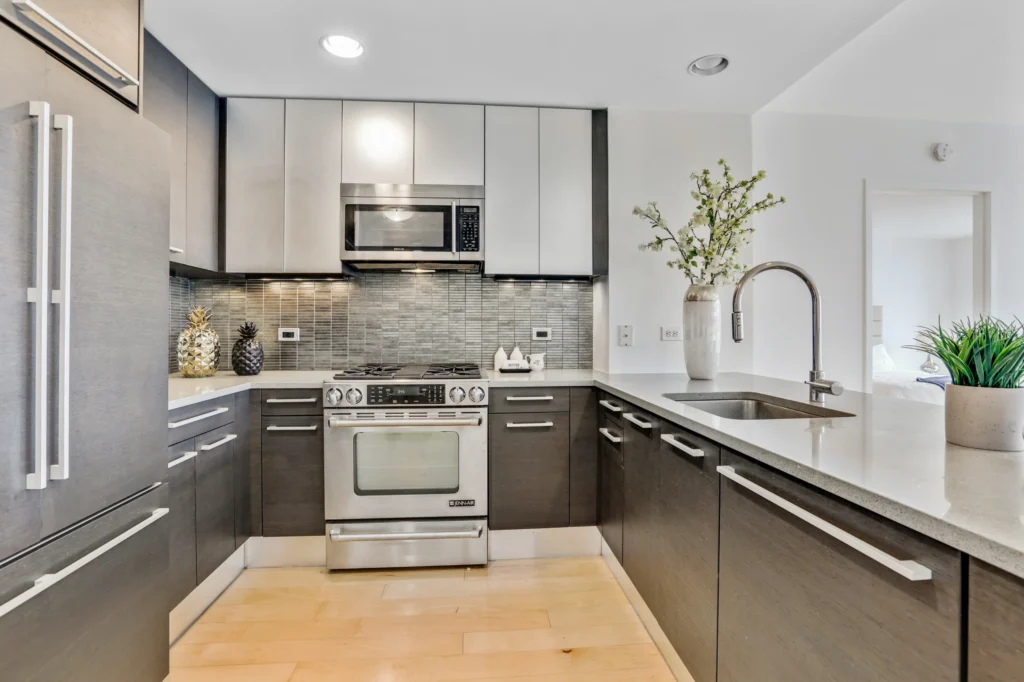
Clear the countertops almost completely:
- Coffee maker is fine if it’s nice
- Maybe a bowl of fresh fruit or small plant
- Everything else goes away – no dish soap, no mail, no small appliances
Cabinet doors should all be closed. If you have under-cabinet lighting, turn it on – unless it’s inconsistent. One light out or flickering? Turn them all off. Uneven lighting looks worse than no special lighting.
Turn on the stove hood light. It adds dimension and highlights a focal point.
The sink should be empty and completely dry. Wipe it down so it shines a bit.
Glass-front cabinets? Organize what’s inside. I can see in there, and so can buyers.
Living Room & Family Room: Show the Lifestyle
Buyers need to imagine themselves relaxing here, not see evidence of your life.
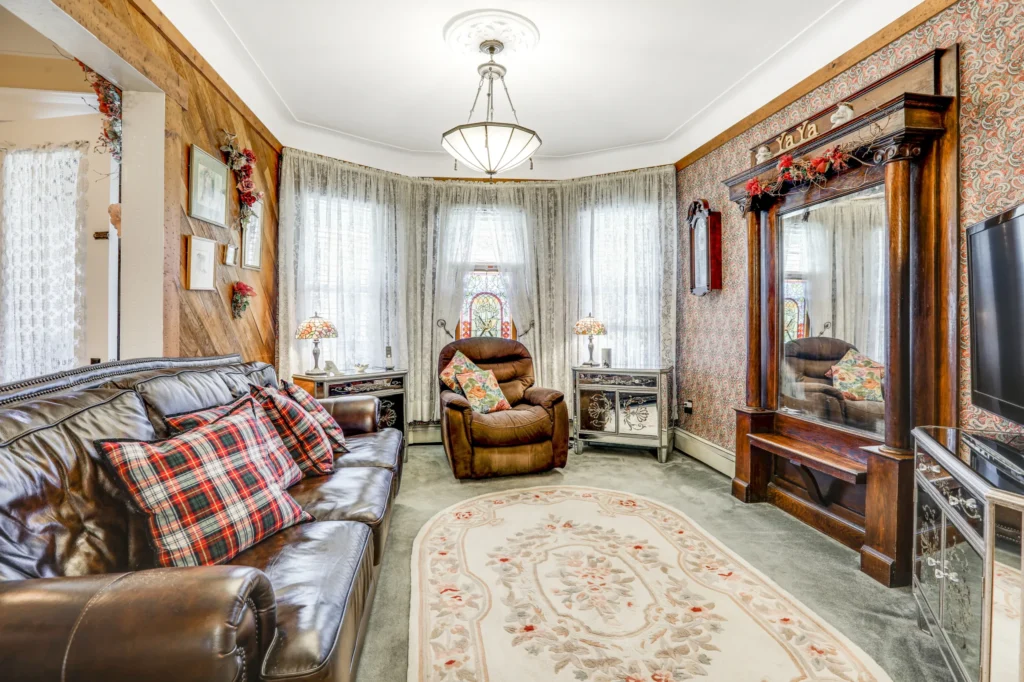
Simple staging touches:
- Fluff and arrange throw pillows
- Fold blankets neatly or drape them intentionally
- Hide remote controls and any table clutter
- Open curtains and blinds completely
The goal is to show off the space and natural light, not your decor.
Bedrooms: Clean and Impersonal
Bedrooms are personal spaces, which is exactly why they need to look neutral when we shoot them.
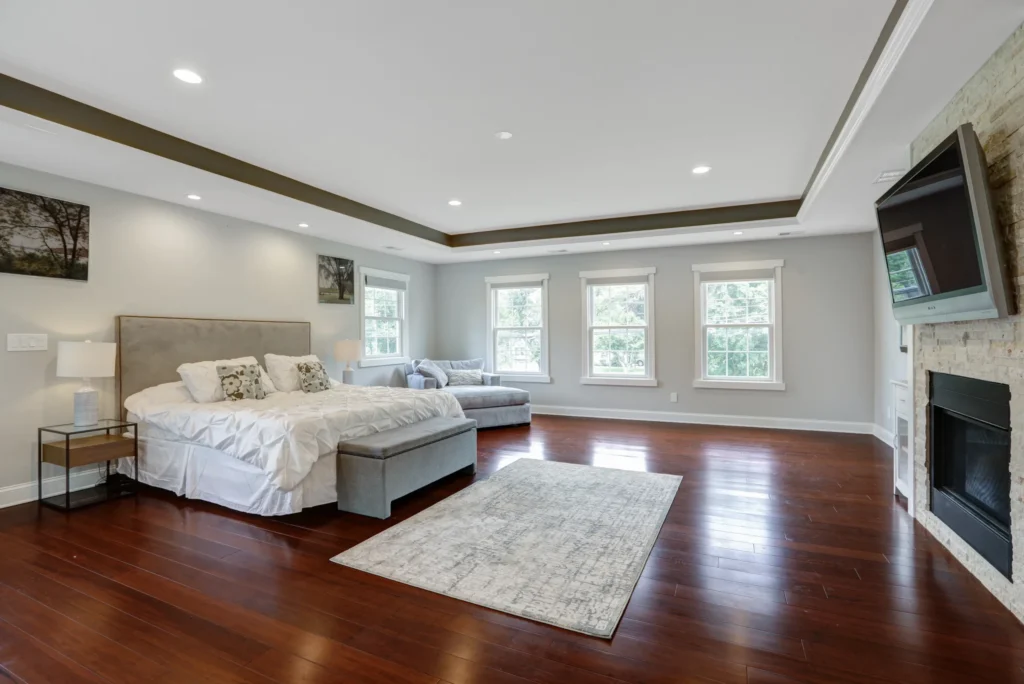
The bed is the focal point:
- Make it well – smooth duvet, arranged pillows
- Hospital corners if you can manage them
- Nothing visible underneath (I shoot from different angles)
Nightstand lamps should match. Both on or both off. If one’s burned out, turn both off for consistency.
Put away laundry hampers. Clothes should be in closets or drawers, not draped over chairs.
Window treatments fully open. If one blind is broken, adjust all of them to the same level so it looks intentional rather than damaged.
Personal photos are fine in moderation. A few framed family photos add character, but don’t cover the walls. Buyers need to envision their own memories here.
Bathrooms: Sparkling Clean, Period
There’s no wiggle room in bathroom photos. These spaces need to be spotless.
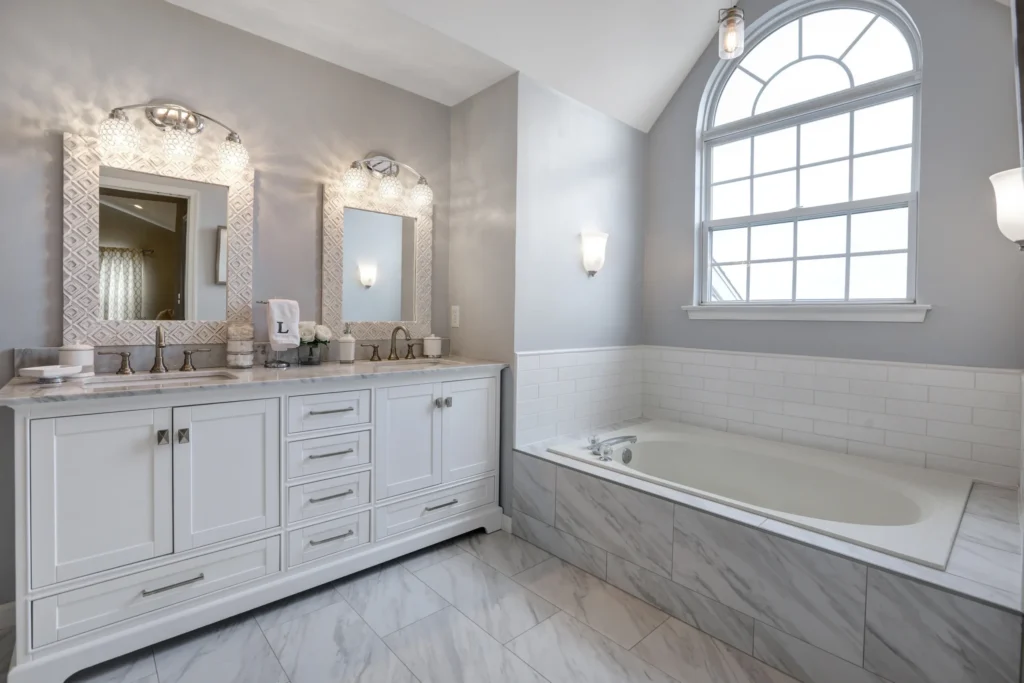
Non-negotiables:
- Toilet seats down, lids down
- Shower curtains open (fully or halfway to show the showerhead and tile)
- Towels folded like you work at a spa
- Countertops completely clear except maybe one soap dispenser or small plant
- Plungers and cleaning supplies hidden
- Toilet paper neatly on the roll
If you want to get fancy with that triangle fold hotels do, go for it. Details matter.
Dining Room: Less Is More
You can go one of two ways here – completely clear or lightly staged.
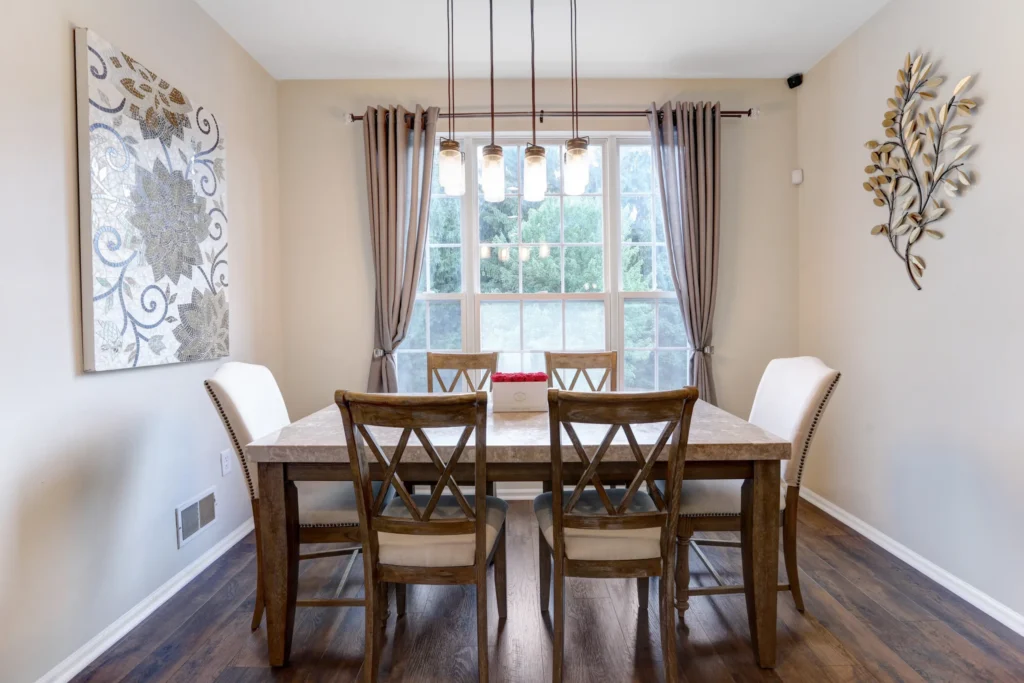
If you’ve got a beautiful table, a simple centerpiece works – fresh flowers, a bowl of fruit, or a nice runner. But if you’re not confident in your staging, go completely clear. An empty table photographs beautifully and lets buyers see the space.
Turn on the chandelier or pendant light. These fixtures are often selling points.
Push in all chairs uniformly. Consistent spacing makes the room look more spacious and intentional.
Home Office or Den: Functional Workspace
More people work from home now, so dedicated office space matters to buyers.
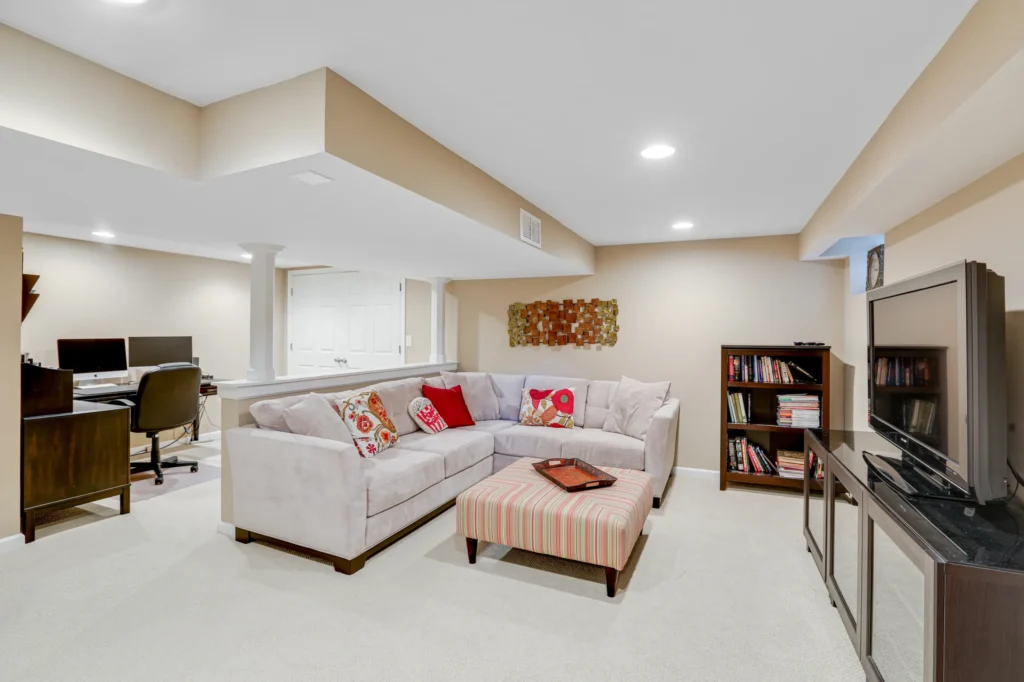
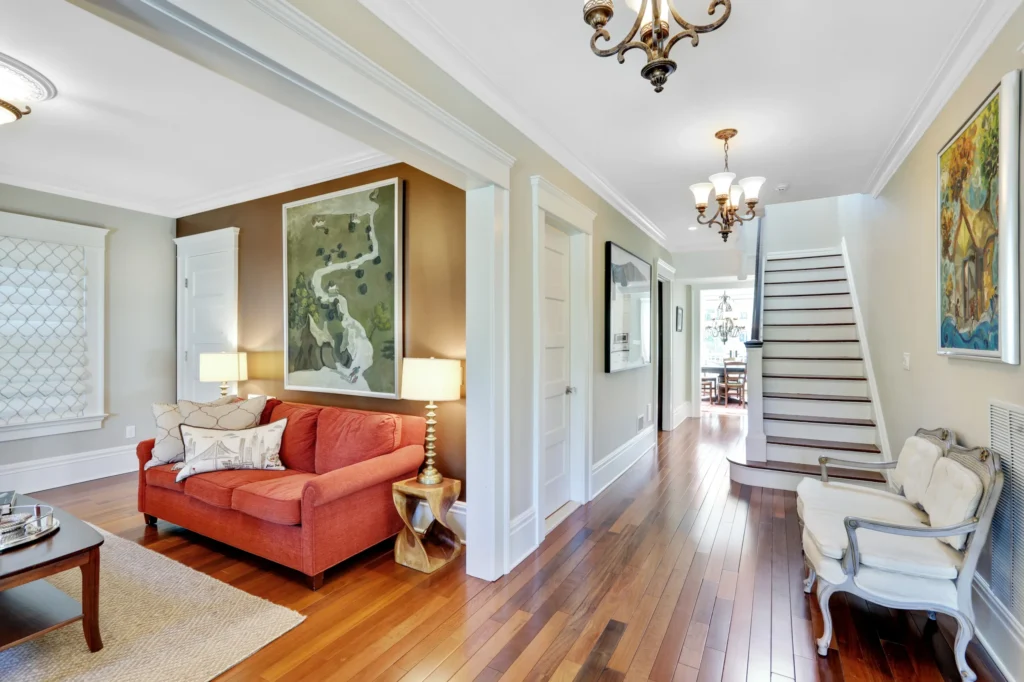
Organize the desk:
- A lamp, maybe a plant, perhaps one book
- No piles of paperwork, visible cables, or coffee mugs
Bookshelves should look organized, not stuffed. Mix in a few decorative objects to break up rows of books.
Computer monitors can stay but should be off. Blank screens look cleaner.
Basement: Don’t Skip This Space
Whether finished or unfinished, this space has potential and buyers want to see it looking its best.
If it’s finished, treat it like any other living space – same rules about clutter, lighting, and staging.
If it’s unfinished, make it as tidy as possible. Organize storage, sweep the floor, make sure nothing looks hazardous.
Turn on all the lights. Basements can be naturally dark, so every light source helps.
Exterior: First Impressions Matter Most
The exterior shot is the very first image buyers see. If it doesn’t look inviting, they might not click through to see the rest.
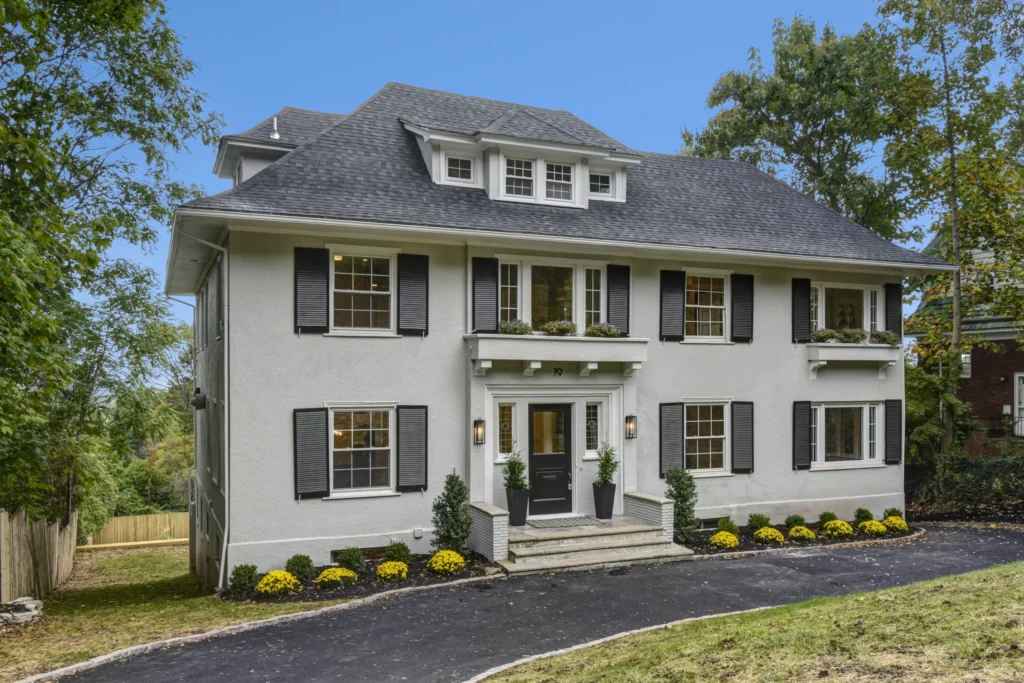
The driveway must be completely empty:
- No cars, bikes, basketball hoops, or anything else
- This makes the house look more spacious
Trash and recycling bins can’t be visible anywhere. Even if it’s trash day, move them.
Lawn maintenance:
- Freshly mowed and edged
- Rake leaves if it’s fall
- Weed and mulch flower beds if it’s spring/summer
Hide water hoses. Coil them up and tuck them away – they’re visual clutter.
Power wash if needed. Dirty walkways and driveways age a house instantly.
Front porch staging (minimal):
- Maybe a couple of planters with fresh flowers
- A welcome mat in good condition
- Don’t overdo it with seasonal decorations
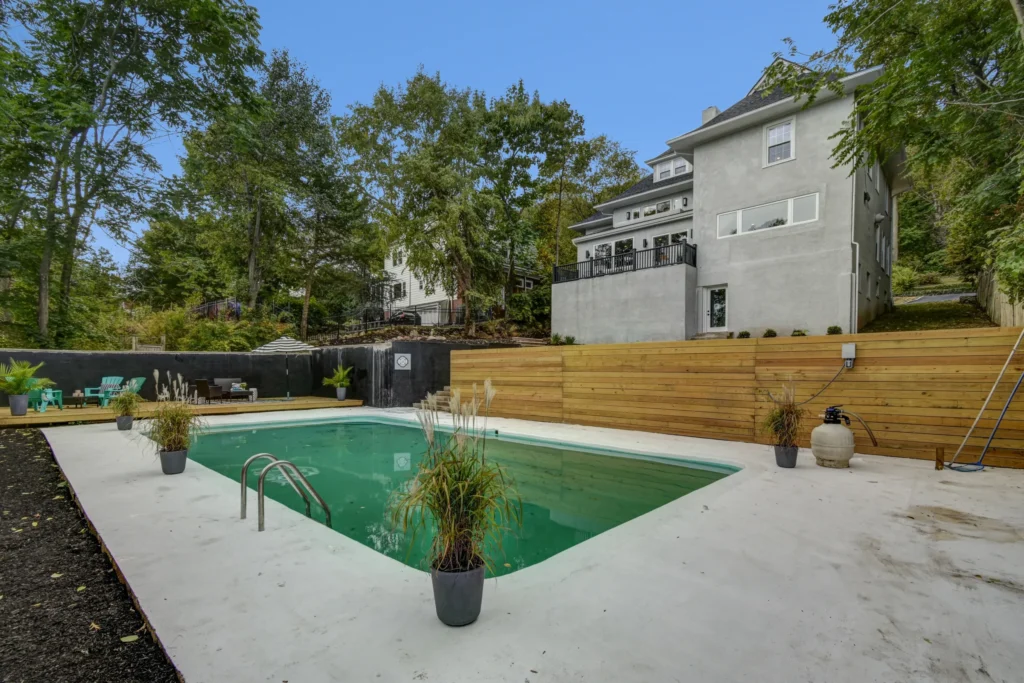
Pool areas:
- Skim the pool
- Put away toys and floaties
- Arrange deck furniture neatly
- If you have a cover, make sure it’s taut and neat
What NOT to Do Before Real Estate Photos
Just as important as what to do is knowing what to avoid:
- Don’t leave mixed color bulbs on – warm and cool lighting together looks unprofessional
- Don’t leave wet sinks or soap bottles out – dry and clear is the goal
- Don’t shoot with cars in the driveway – it makes the property look smaller
- Don’t leave floor mats, pet bowls, or trash cans visible – these are distractions buyers don’t need to see
- Don’t forget ceiling fans and TVs – both should be off during the shoot
How Long Does a Real Estate Photography Session Take?
Condo or small home: 45-75 minutes
Average single-family home: 1-2 hours
Large homes or estates: 2+ hours
The time varies based on the number of rooms, exterior features, and any special requests like twilight shots or video walk-throughs.
Day-of-Shoot Tips to Prepare Your Home for Real Estate Photos
Timing matters. I usually shoot during the day when natural light is best – typically mid-morning to early afternoon. This gives us the brightest, most even light throughout the house.
During the shoot:
- Pets should be out of the house or confined to one room I won’t photograph
- Kids should either be out or understand they need to stay in one area
- You’re welcome to stay, but most sellers find it easier to run errands
Do a final walk-through 30 minutes before I arrive:
- Check that all lights are on
- Make sure nothing’s been left out since your prep
- Open all blinds and curtains
- Turn off fans and TVs
Frequently Asked Questions
What should I remove from countertops before listing photos?
Remove almost everything – dish soap, sponges, small appliances, mail, and clutter. You can leave one nice item like a coffee maker, a bowl of fruit, or a small plant, but less is more.
Should all lights be on for real estate photos?
Yes, but only if the bulbs match in color temperature. If you have mismatched warm and cool bulbs, turn off those fixtures and let natural light and the photographer’s lighting do the work.
What time of day is best for real estate photography?
Mid-morning to early afternoon works best for interior shots because natural light is brightest and most even. For exterior “twilight” shots, we shoot just after sunset.
Do I need to leave the house during the shoot?
You don’t have to, but many sellers find it easier to run errands during the 1-2 hour session. If you stay, just know that you’ll need to stay out of the rooms being photographed, and pets and kids should be managed.
How much does real estate photography cost in New Jersey?
Pricing varies based on property size, location, and services needed (photos only vs. photos + video + drone). For a detailed quote based on your specific property, call me at 917-992-9097 or email alex@alexkaplanphoto.com.
Can you also photograph commercial properties?
Absolutely. I photograph commercial real estate including office spaces, retail locations, and specialty buildings. The same preparation principles apply, though we’ll also focus on highlighting functional business spaces and traffic flow. If you need professional business photography or corporate headshots, I handle those services as well.
Final Thoughts
A little prep goes a long way. The cleaner and simpler the space, the more buyers can picture themselves living there, and the stronger your listing looks online.
After three decades of real estate photography in Northern New Jersey, I’ve seen how proper preparation helps your listing look stronger online, which can lead to more clicks, more showings, and better momentum when your property hits the market. The homes that move quickly are the ones where sellers took an hour or two to stage properly before the shoot.
This home staging checklist for real estate photography isn’t about perfection – it’s about presentation. You’re creating a blank canvas that lets buyers imagine their own life in your space.
If you’re listing a home in Northern NJ, the NYC metro area, or the Hudson Valley, I can help with professional real estate photography, video walk-throughs, and content optimized for your listing and social media marketing. I’ll keep it simple, fast, and easy, so your listing looks clean and market-ready.
Ready to schedule your real estate photography session? Check out my portfolio at alexkaplanphoto.com/realestate or call me at 917-992-9097.
Reply...


